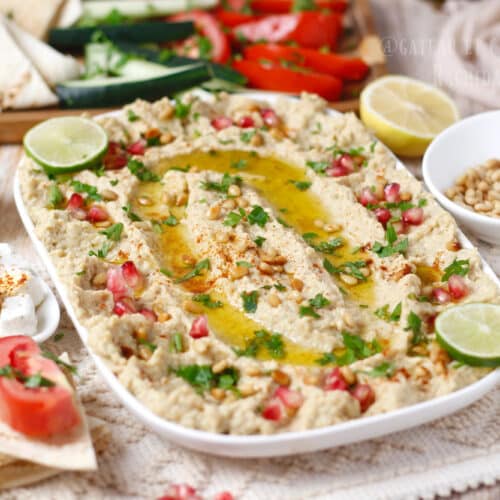
Baba Ganoush or Baba ghanouj Recipe
Baba Ganoush, also spelled baba ghanouj and known as moutabal, is a creamy, smoky eggplant dip typical of Lebanese cuisine. Made with grilled eggplant, tahini, garlic, and lemon, it can be enjoyed as a dip, a spread, or a side dish.
QUANTITÉ:6
IMPRIMER
ÉPINGLER
ENREGISTRER
INGRÉDIENTS
- 4 medium eggplants about 550 g / 1.2 lb of roasted, peeled, and drained flesh
- 80 g tahini adjust according to desired texture
- 2 tablespoons lemon juice 35 ml / 1.2 oz
- 3 small garlic cloves minced
- Salt to taste
- 2 pinches black pepper
- 2 tablespoons Greek yogurt optional, adjust for a creamier texture
- 1 teaspoon sumac optional
- Espelette chili or cumin optional, for sprinkling
- Fresh flat-leaf parsley chopped, for garnish (as desired)
- Olive oil for drizzling and optionally 1 teaspoon in the mixture
- Pomegranate seeds for serving (optional)
- 2 tablespoons pine nuts optional
PRÉPARATION
Start by Grilling the Eggplants
- Option 1: Grill Eggplants on the Stovetop
- Place a barbecue grill over the stovetop flame and set the eggplants on top. Turn them regularly with tongs to ensure even charring. The skin should be completely burnt and the flesh tender. This takes about 10–15 minutes and gives a nice smoky flavor.
- If you're using an electric or induction stove, grill the eggplants in a large frying pan over medium heat. Rotate them regularly until the skin is burnt and the flesh is tender, about 20-25 minutes.
- Option 2: Roast Eggplants in the Oven
- Preheat the oven to 200°C (392°F).
- Prick the eggplants with a fork and place them on a baking sheet, or cut them in half lengthwise and place them cut side down.
- Lightly brush the eggplant surfaces with olive oil.
- Roast the eggplants for 30-40 minutes, or until the flesh is tender.
- Once roasted, place the eggplants in a plastic bag to sweat. This helps loosen the skin, making them easier to peel.
Preparing the Baba Ghanoush
- Once the eggplants have cooled enough, peel them. You can scoop out the flesh with a spoon.
- Place the flesh in a colander over a bowl and let it drain for about 20 minutes. You can press gently with a spoon to speed up the draining.
- Finely chop the flesh on a cutting board with a large knife, or mash it with a fork until smooth.
- Transfer the flesh to a medium bowl and drizzle with half of the lemon juice.
- Add the chopped garlic and half of the tahini, then mix well. Next, add 2 tablespoons of Greek yogurt and the sumac. Season with salt and pepper to taste.
- Mix thoroughly, then add the remaining lemon juice to taste and adjust the texture with the rest of the tahini. Stir until smooth. Add a little more yogurt, if needed, to achieve a consistency that is neither too thick nor too runny.
- Transfer the mixture to a serving dish and drizzle with olive oil.
- Garnish with chopped parsley, toasted pine nuts (see note), and a few pomegranate seeds.
- Optionally, sprinkle with a pinch of Espelette pepper, cumin, or paprika.
Notes
To toast the pine nuts, place them in a frying pan with a few drops of oil over medium heat. Stir occasionally until they turn golden.