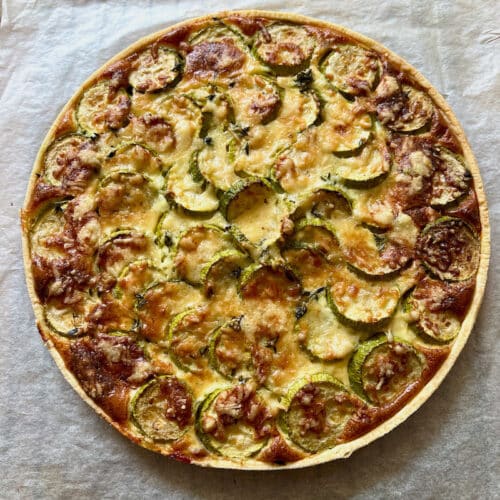
Savoury zucchini and tuna tart (easy and delicious recipe)
A delicious savoury zucchini and tuna tart that's easy to make .
Perfect for barbecues or as an quick meal with a small salad.
This is the perfect recipe for eating zucchini.
QUANTITÉ:10
IMPRIMER
ÉPINGLER
ENREGISTRER
INGRÉDIENTS
Shortcrust Pastry:
- 200 g all-purpose flour
- 100 g butter removed from the refrigerator 15 minutes before starting, it should be fairly firm, but neither too hard nor too soft
- 20 g egg yolk (about 1 yolk)
- 2 pinches of salt
- 40 ml cold water more or less depending on the flour’s absorption
The Filling:
- 3 medium zucchinis
- 75 g tuna drained 1 can
- 40 g grated cheese (Parmesan, Gruyère, Edam…)
- 1 onion
- 2 tablespoons mustard (heaping tablespoons) I used whole-grain mustard, but regular works too
- Salt and pepper to taste
- 4 tablespoons olive oil
- Aromatic herbs I used fresh thyme (optional)
- 200 ml heavy cream
- 2 eggs
- Salt pepper, and nutmeg, to taste
PRÉPARATION
Shortcrust pastry :
- You can use a stand mixer with a paddle attachment or a food processor to prepare it.
- In a bowl, mix the flour and salt, then add the butter, cut into small cubes.
- Rub the butter into the flour with your fingertips until the mixture resembles coarse crumbs, like couscous.
- Dilute the egg yolk in the cold water, then pour it over the crumbly mixture. Gently mix with your fingertips until the dough just comes together. Avoid kneading to prevent activating the gluten, which would result in a tough dough that’s difficult to roll out and may shrink during baking.
- Transfer the dough onto your work surface and perform a technique called fraisage (or frasage) using the heel of your hand. This helps create a dough that’s both crumbly and cohesive, without developing elasticity.
- Push small portions of the dough away from you with the palm of your hand, then gather it back. Repeat 2 or 3 times, then form the dough into a ball. Flatten slightly, wrap in plastic wrap, and chill in the refrigerator for at least 1 to 2 hours.
- Once chilled, the dough may be a bit firm. Allow it to come to room temperature just enough to make it pliable and easy to work with, it should be firm, but not brittle.
- Line a perforated baking sheet with parchment paper and place a buttered tart ring on top.
- Roll out the dough on a lightly floured surface or between two sheets of parchment paper to a thickness of about 3 mm (0.11 in). If it becomes sticky, chill it briefly to firm it up.
- Gently line the tart ring with the pastry and press it well into the base and sides. Use a rolling pin to trim off the excess dough by rolling it over the top of the ring.
- Prick the bottom with a fork to prevent it from puffing up during baking.
- You can place the tart shell in the freezer for 30 minutes before baking, this step is optional but helps it hold its shape better.
Prepare the filling:
- Wash and thinly slice the zucchinis.
- Sauté them for about 5 minutes in a heated frying pan with 2 tablespoons of olive oil. Season with a couple of pinches of salt and pepper.
- Remove them from the heat when they begin to turn slightly translucent. They should soften but not take on color.
- Transfer to a plate and let cool.
- Roughly chop the onion and sauté it in 2 tablespoons of olive oil until soft and translucent. Season with salt and pepper.
- Transfer to a bowl and let cool.
- Drain the canned tuna and crumble it. Set aside.
- In a bowl, whisk the eggs with the cream, salt, pepper, and nutmeg to taste. Mix until well combined.
- Preheat your oven to 180°C (350°F).
Assembly:
- Remove the baking sheet with the tart ring from the freezer.
- Spread the mustard over the base of the tart shell, then add the sautéed onions.
- Crumble the tuna evenly over the onions, then arrange the zucchini slices on top. Start from the edges, overlapping the slices slightly as shown in the picture below.
- Pour the egg and cream mixture over the filling, but avoid pouring it all the way to the edge to prevent overflow during baking.
- Sprinkle with grated cheese and a few fresh thyme leaves or a pinch of oregano. You can also use dried herbs.
- Bake the tart in the preheated oven for about 40-55 minutes, or until golden brown and the top is firm to the touch. (Baking time may vary depending on your oven.)
- Once baked, remove the tart from the oven and let it cool slightly before unmolding.
- Serve the zucchini and tuna tart warm or at room temperature, with a green salad for a balanced meal.
- This savory tart is perfect for a casual lunch or dinner. With its Mediterranean flavors and delightful mix of textures, it’s a dish that everyone will enjoy. Ideal to accompany barbecues or to take on a summer picnic with friends.