Autumn marks the return of some fruits and vegetables that we appreciate. Chestnuts are among them, and we love to enjoy them. However, peeling can be tedious and discouraging. Here, I’ll show you a tip to peel chestnuts very easily and how to boil them.
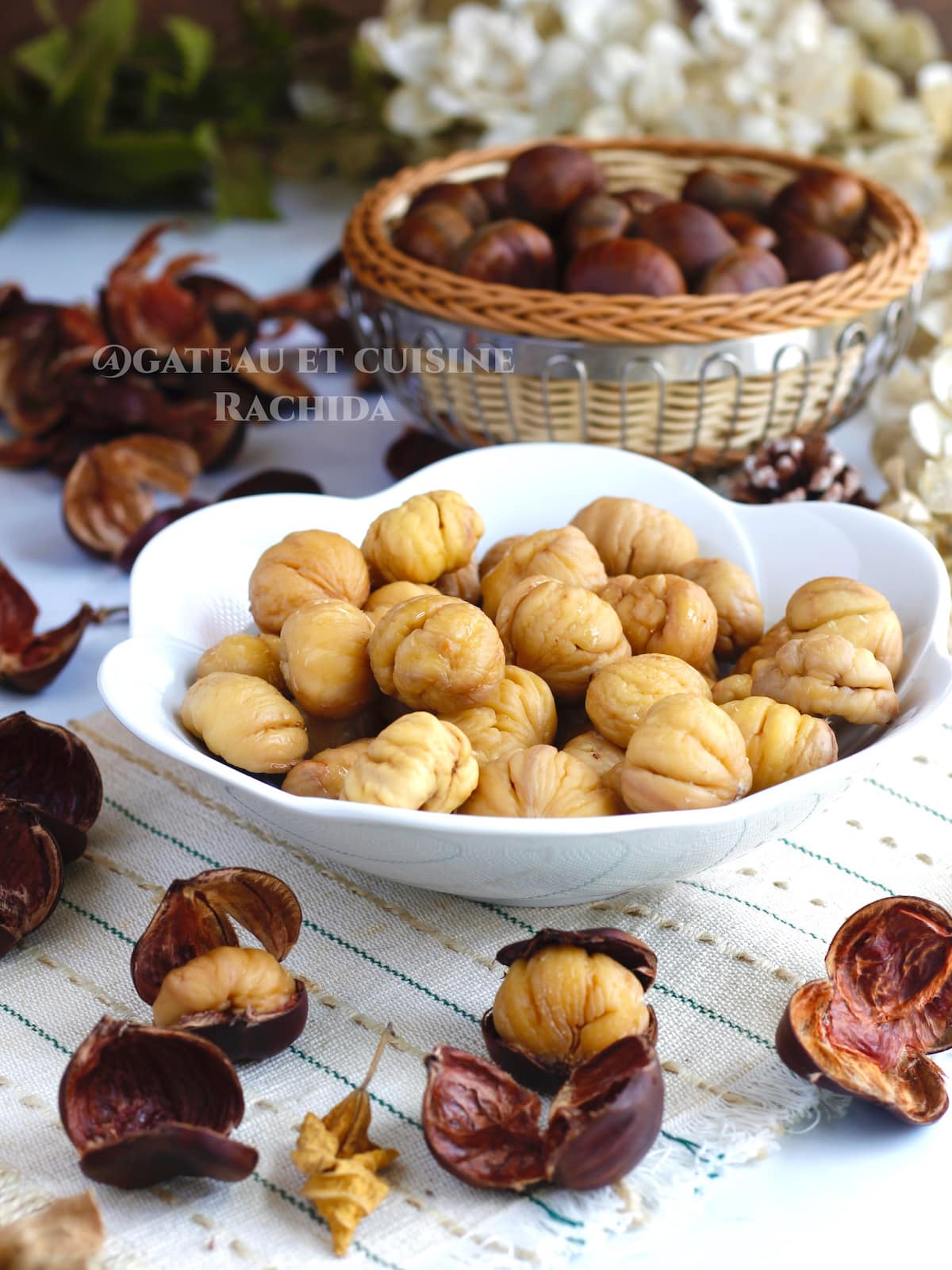
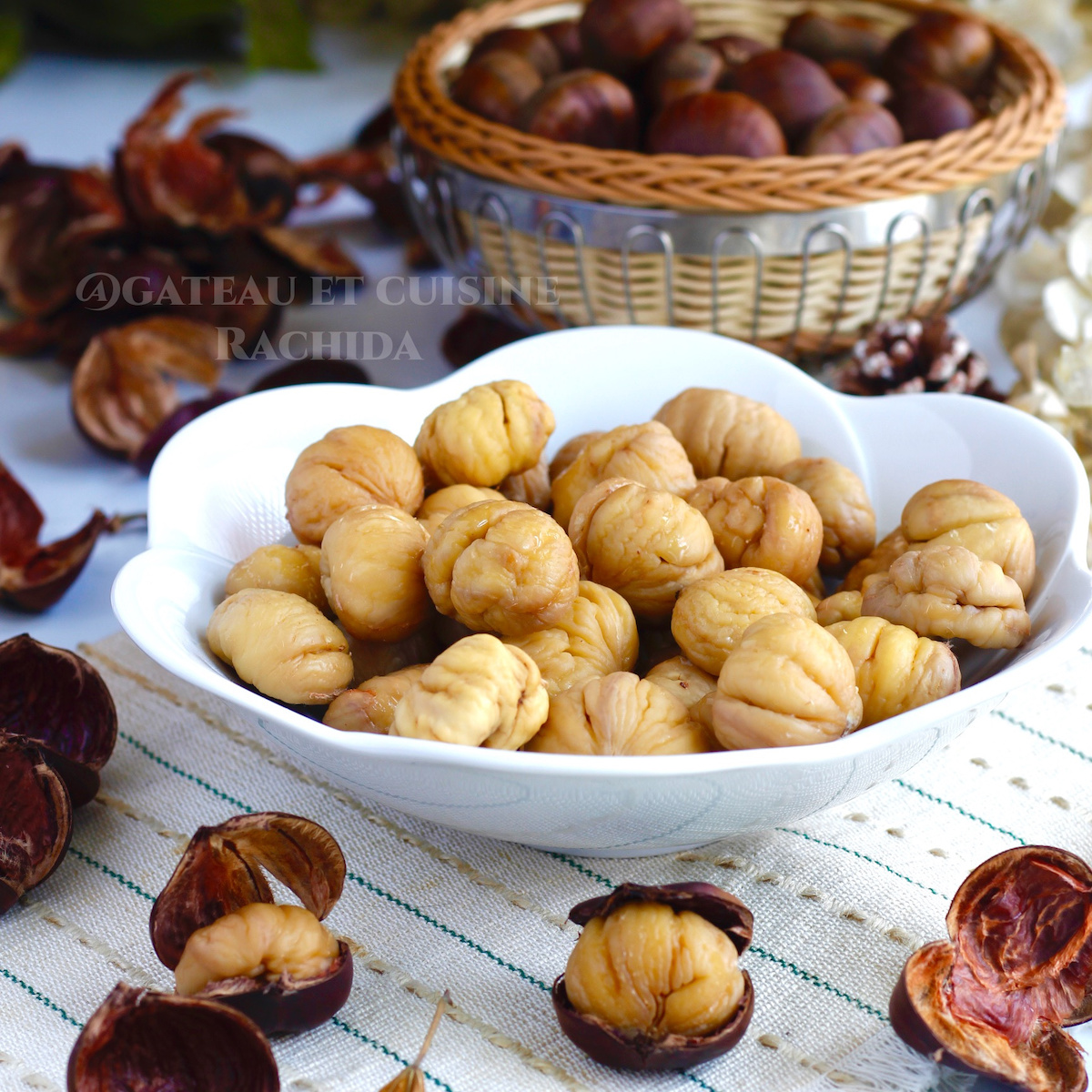
Peeled and Boiled Chestnuts
As soon as chestnuts appear at the market, we want to make the most of them. This rustic little nut, with its subtle hazelnut flavor and slightly floury texture, is simply delicious. Chestnuts are often associated with autumn and the holiday season, and they are used in many sweet and savory recipes, such as the famous turkey with chestnuts.
The simplest and quickest method is to enjoy oven-roasted chestnuts. This will save you the laborious step of peeling.
However, sometimes you need to peel them before cooking to prepare chestnut cream, make a velouté, a sauté, etc., or if you are one of those who like to enjoy boiled chestnuts.
With the tip I’ve been using for a few years, peeling chestnuts has never been easier. They almost peel themselves.
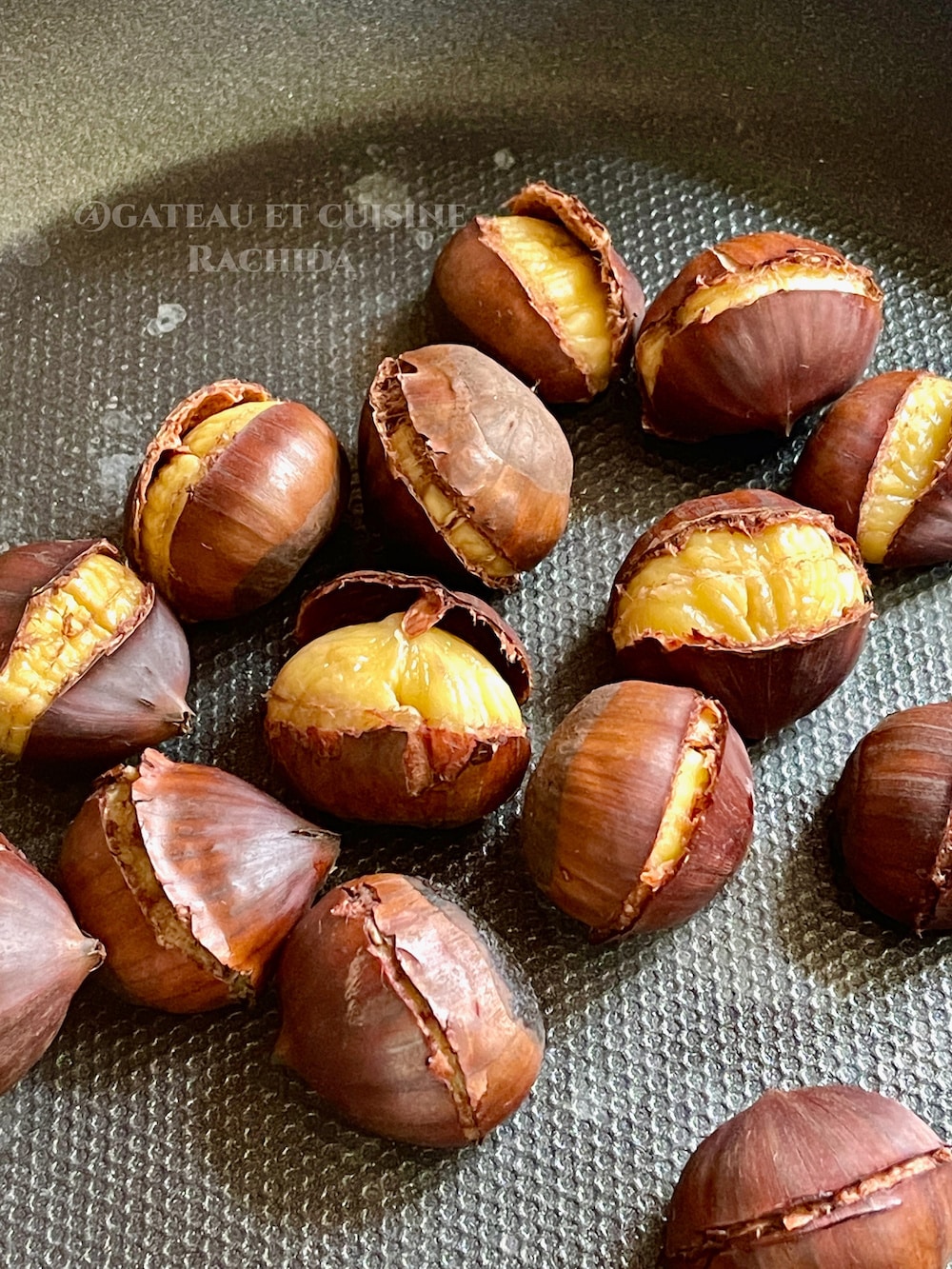
Table of Contents
Different Types of Chestnuts
Chestnuts come in several varieties, each with its own characteristics. Here are the main types:
Japanese Chestnut: Japanese chestnuts are sweet and mildly flavored, with a tender, slightly floury texture.
European Chestnut: European chestnuts have a more pronounced flavor and a slightly firmer texture than Japanese chestnuts. In France, the Ardèche region produces the most. Who hasn’t heard of the Ardèche chestnuts, especially Clément Faugier chestnut cream and glacé chestnuts?
Chinese Chestnut: Chinese chestnuts are smaller than other varieties but are sweet and crunchy.
Preparation Steps:
| Note: Find the recipe card at the end of the article, which you can print. Below are the instructions, which you can also view with images. |
Before boiling chestnuts, it’s important to prepare them properly. Start by sorting them, removing any that are wormy or moldy.
To do this, place the chestnuts in a large bowl of water and discard any that float. The chestnuts that sink to the bottom are full and heavy, indicating they are fresh and good to eat. Those that float should be thrown away.
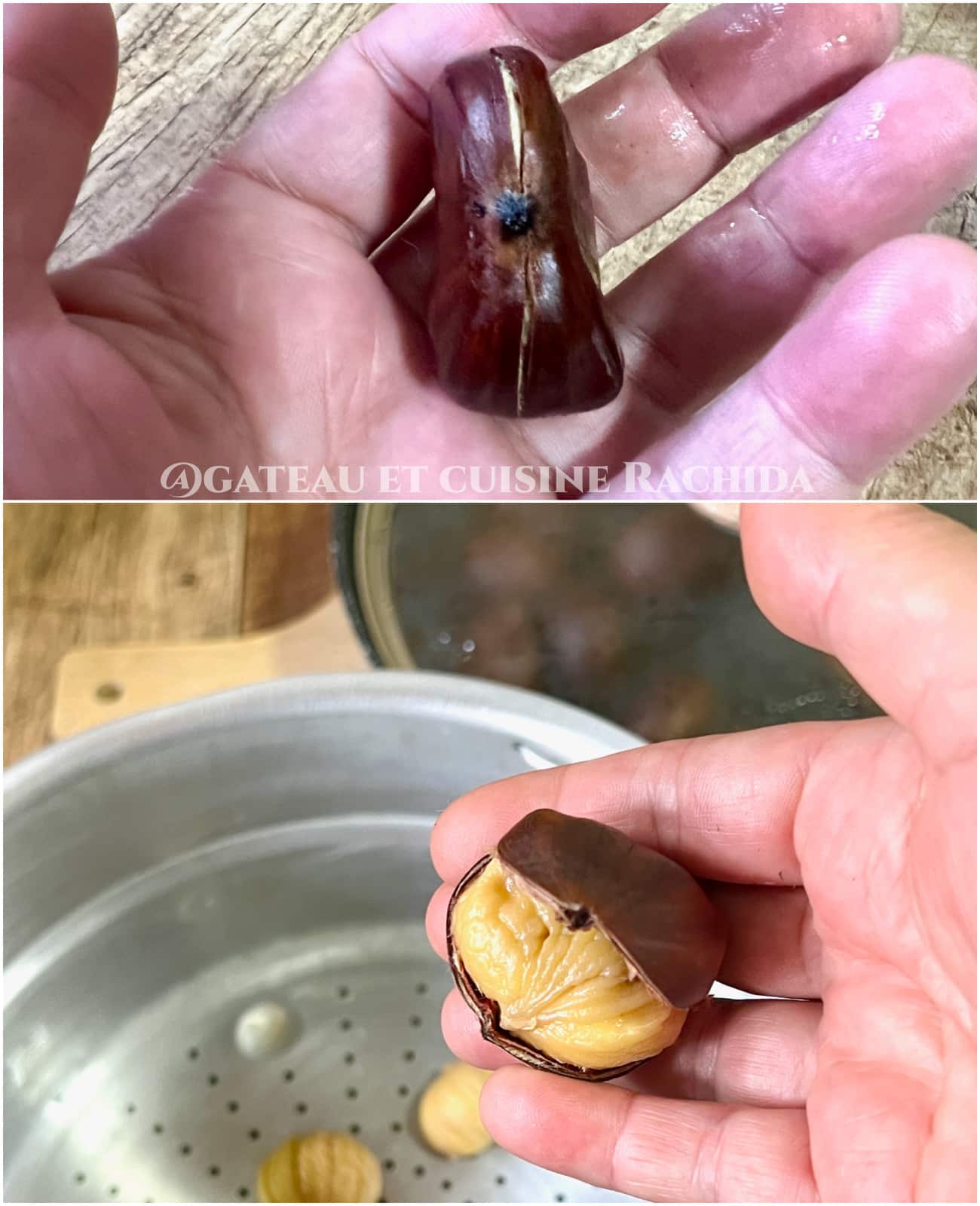
You can cook chestnuts with the skin on or peel them beforehand. In either case, you need to make a small cut on each chestnut before cooking. This will make peeling easier and prevent them from bursting during cooking.
Using a sharp knife, score the rounded side of each chestnut from one edge to the other. Be careful to cut only through the outer shell, avoiding the nut inside.
If you plan to make candied chestnuts (marrons glacés), make a cut on the top (as shown in the photo) to avoid damaging the chestnut.
How to Peel Chestnuts Easily?
With this method, you can peel chestnuts very easily. They practically peel themselves.
Work with about ten chestnuts at a time, as they need to be peeled while hot.
Place about ten chestnuts in a saucepan and bring to a boil. Cook for 2 minutes after boiling.
Meanwhile, heat a skillet with a lid. Remove the chestnuts with a slotted spoon and place them in the skillet. Cover and wait 5 minutes. Like magic, the shells will start to open.
Peel the chestnuts and repeat the process with the remaining ones.

I will show you in a new post how to make candied chestnuts.
Boiling Chestnuts
Boiling is one of the most common methods to cook chestnuts. It is simple and quick and results in tender chestnuts that are easy to peel if cooked with their shells on.
If you want to cook them after peeling, place the chestnuts in a steamer basket (like the one in a pressure cooker) to prevent them from turning into mush.
Place the chestnuts in a pot filled with cold water. Make sure the water completely covers them.
Tip: Add a pinch of salt to the water to enhance the chestnuts’ flavor.
Bring to a boil.
Cook for about 20 to 30 minutes, or until tender. Cooking time depends on the size of the chestnuts, so check them regularly to avoid overcooking.
Use a wooden skewer and pierce a chestnut. If it goes in easily, the chestnuts are cooked. You can also taste one to ensure it’s done and has the desired texture. It should be tender and easy to eat.
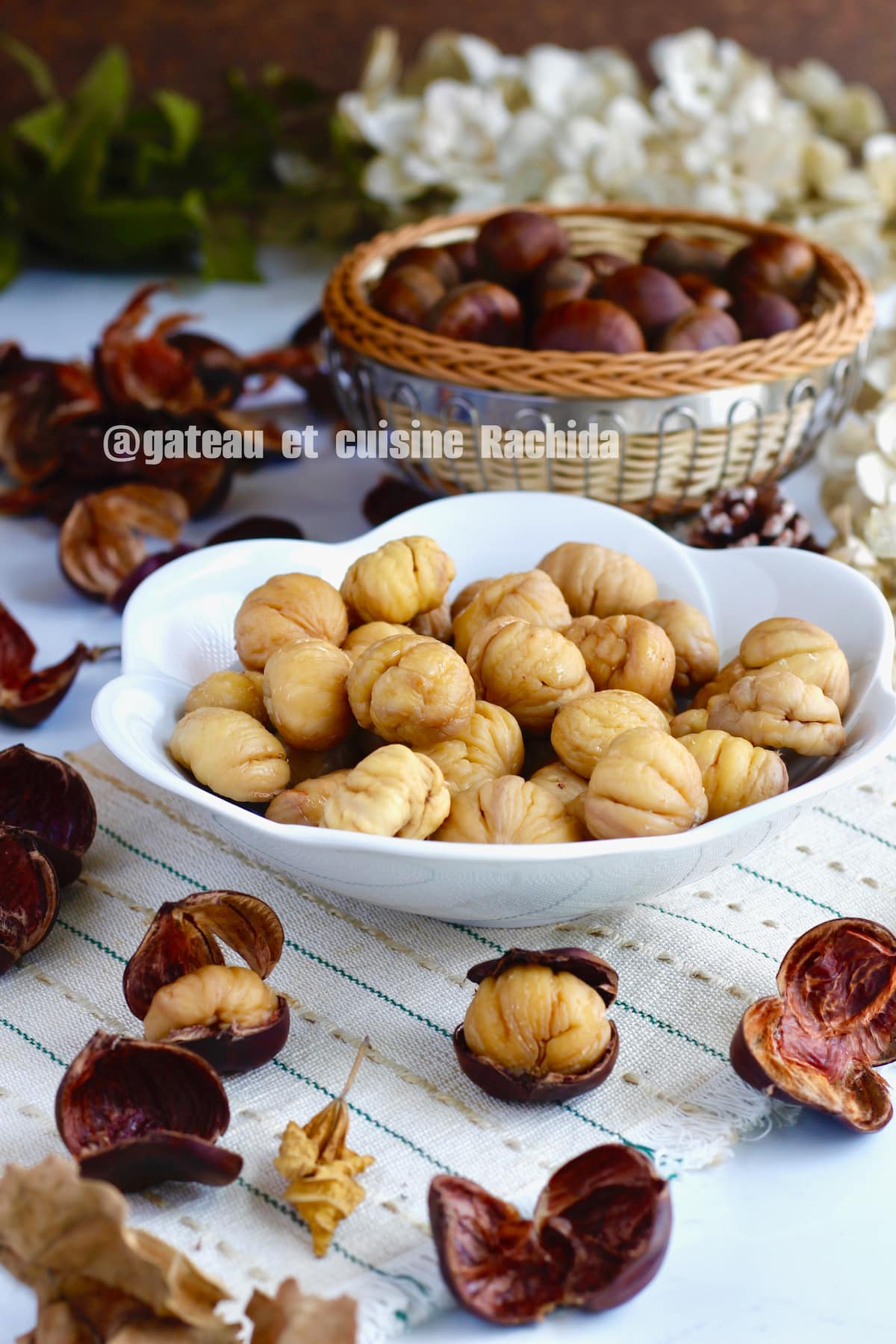
Remove the chestnuts from the pot with a slotted spoon and place them on a dish. You can serve them hot or cold.
Peel them immediately to prevent them from cooling too much.
Boiling is ideal for chestnuts you plan to use in recipes, such as purées or soups. If you prefer to eat them on their own, you can try roasting methods, like baking in the oven or pan-roasting.
Boiled Chestnuts – How to Cook and Peel Easily
INGREDIENTS
- Chestnuts (Desired quantity)
- Water (enough to cover them)
- 1/2 Salt (optional)
PREPARATION
- Important: See the step-by-step images in the article.
- Before boiling chestnuts, it’s important to prepare them properly. Start by sorting them, removing any that are wormy or moldy.
- To do this, place the chestnuts in a large bowl of water and discard any that float. The chestnuts that sink to the bottom are full and heavy, indicating they are fresh and good to eat. Those that float should be thrown away.
- You can cook chestnuts with the skin on or peel them beforehand. In either case, you need to make a small cut on each chestnut before cooking. This will make peeling easier and prevent them from bursting during cooking.
- Using a sharp knife, score the rounded side of each chestnut from one edge to the other. Be careful to cut only through the outer shell, avoiding the nut inside.
- If you plan to make candied chestnuts (marrons glacés), make a cut on the top (as shown in the photo) to avoid damaging the chestnut.
How to Peel Chestnuts Easily?
- With this method, you can peel chestnuts very easily. They practically peel themselves.
- Work with about ten chestnuts at a time, as they need to be peeled while hot.
- Place about ten chestnuts in a saucepan and bring to a boil. Cook for 2 minutes after boiling.
- Meanwhile, heat a skillet with a lid. Remove the chestnuts with a slotted spoon and place them in the skillet. Cover and wait 5 minutes. Like magic, the shells will start to open.
- Peel the chestnuts and repeat the process with the remaining ones.
- I will show you in a new post how to make candied chestnuts.
Boiling Chestnuts
- Boiling is one of the most common methods to cook chestnuts. It is simple and quick and results in tender chestnuts that are easy to peel if cooked with their shells on.
- If you want to cook them after peeling, place the chestnuts in a steamer basket (like the one in a pressure cooker) to prevent them from turning into mush.
- Place the chestnuts in a pot filled with cold water. Make sure the water completely covers them.
- Bring to a boil.
- Tip: Add a pinch of salt to the water to enhance the chestnuts’ flavor.
- Cook for about 20 to 30 minutes, or until tender. Cooking time depends on the size of the chestnuts, so check them regularly to avoid overcooking.
- Use a wooden skewer and pierce a chestnut. If it goes in easily, the chestnuts are cooked. You can also taste one to ensure it’s done and has the desired texture. It should be tender and easy to eat.
- Remove the chestnuts from the pot with a slotted spoon and place them on a dish. You can serve them hot or cold.
- Peel them immediately to prevent them from cooling too much.
- Boiling is ideal for chestnuts you plan to use in recipes, such as purées or soups. If you prefer to eat them on their own, you can try roasting methods, like baking in the oven or pan-roasting.
Thank you for visiting my baking blog and for your comments.