
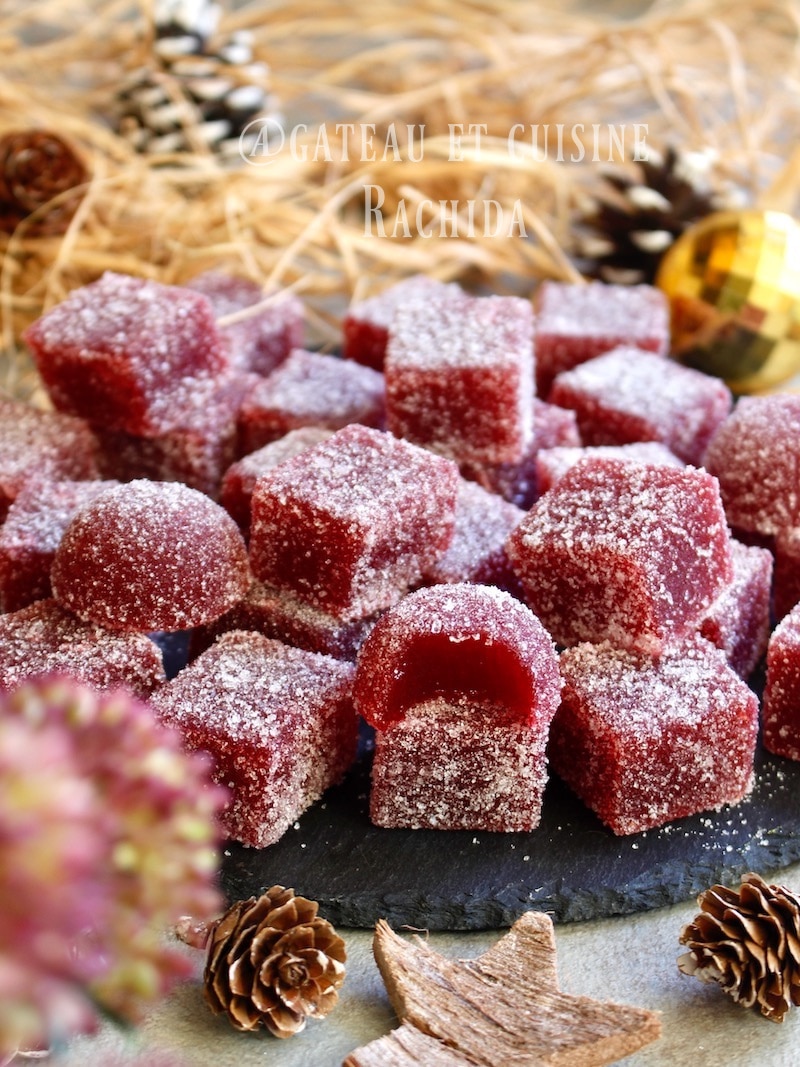
Raspberry Fruit Jellies – Gourmet Christmas Gift
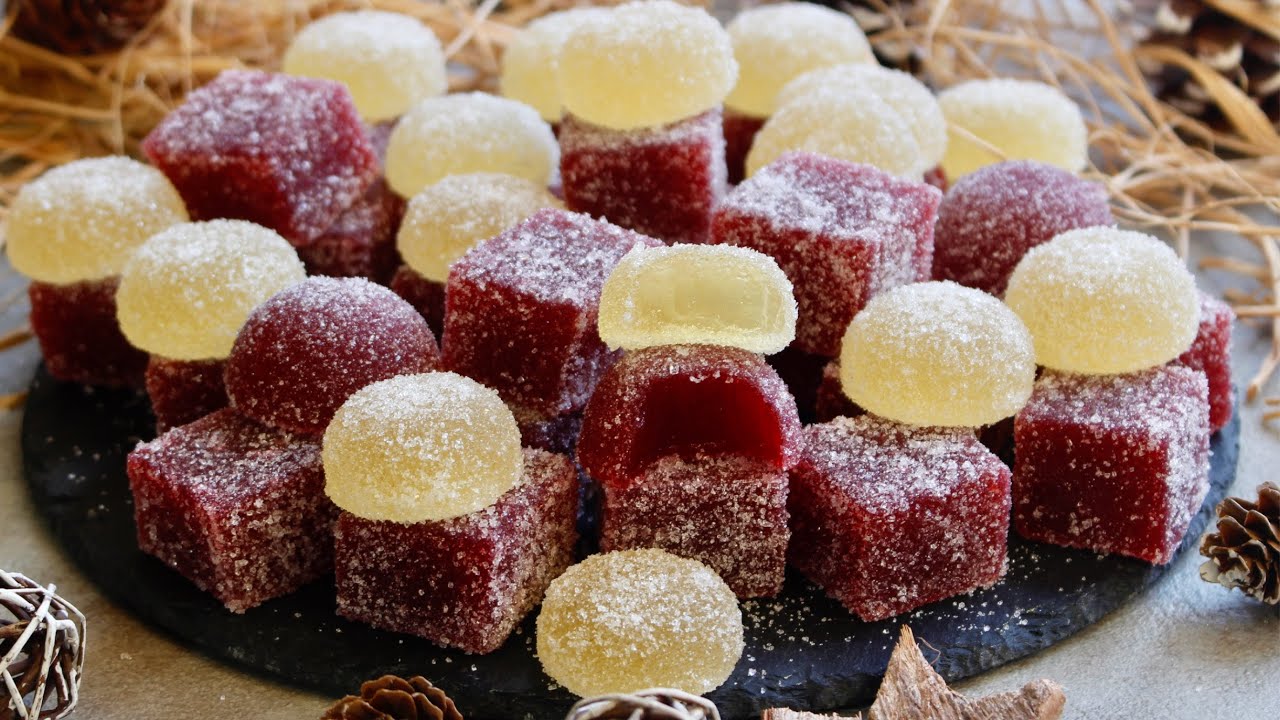
After my lemon pâte de fruit, here’s a slightly different but equally delicious version: raspberry fruit jellies. You can also make this recipe with other fruits such as mango, strawberry, or pineapple. This recipe from the French Ferrandi School is simple to make and produces a firm yet melt-in-your-mouth texture.
Raspberry pâte de fruit makes an excellent gourmet Christmas gift. You can pair them with lemon pâte de fruit to create a beautiful assortment of small treats.
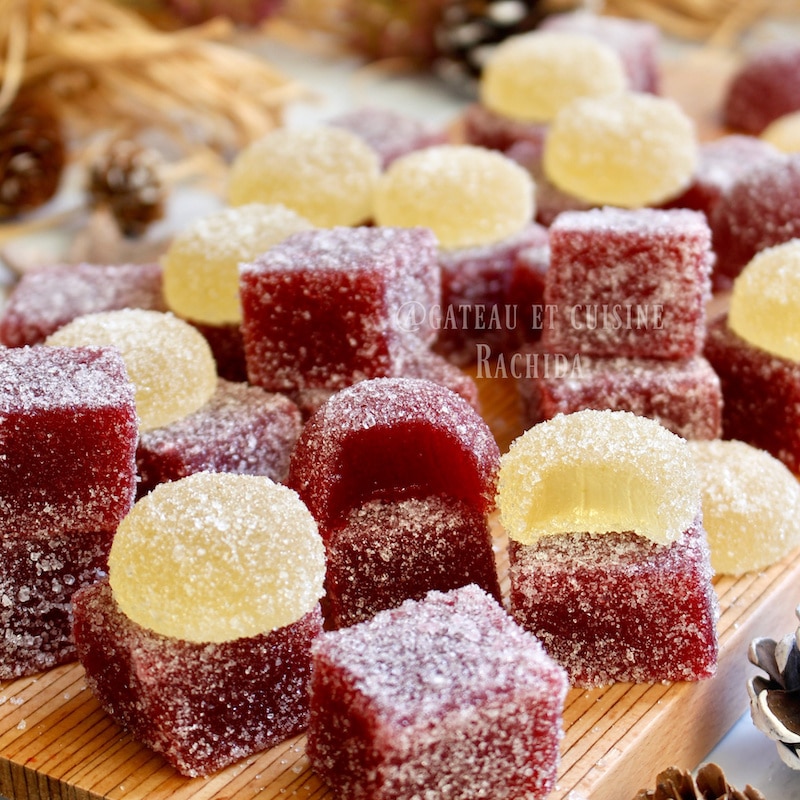
Delicious Raspberry Fruit Jellies (pâte de fruit)
Table of Contents
What Are Fruit Jellies (Pâte de Fruit)?
Pâte de fruit, or fruit jellies, are small confections that are simply irresistible. They should not be confused with Turkish delight (lokum), which is made differently and does not require pectin.
To make lokum, cornstarch is used to give it a gelatinous texture. Pâte de fruit, as the name suggests, is made from fruit purée, while lokum contains no fruit and is flavored with ingredients like orange blossom or rose.
These fruit jelly candies are made by combining fresh or pasteurized fruit purée or coulis with sugar and pectin to set. Once fully set, the pâte de fruit is cut and rolled in granulated sugar. Unlike gelatin, pectin provides a firm yet melt-in-your-mouth texture.
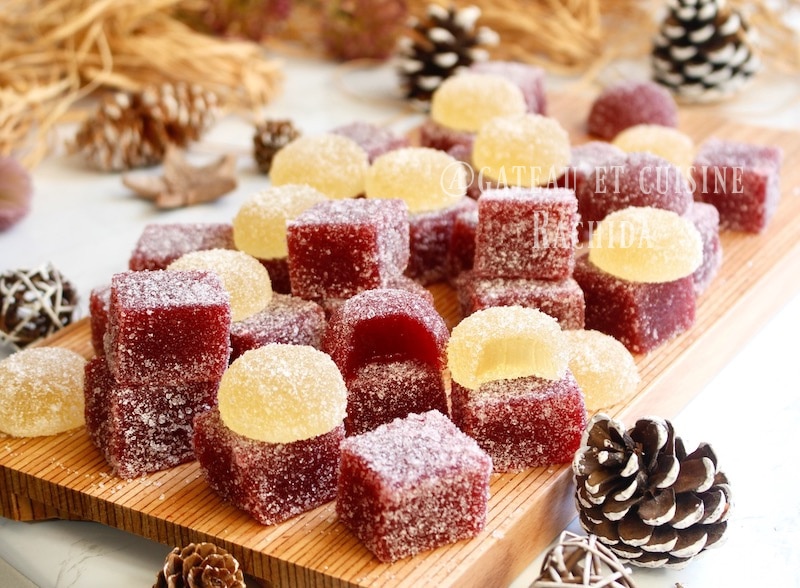
Tips for Making Homemade Fruit Jellies
The gelling of pâte de fruits depends on the concentration of sugar, acid, and pectin. A proper balance of fruit purée, sugar, and pectin, combined with a small amount of acid to enhance the pectin’s effect, ensures the purée will set correctly.
This balance is achieved by boiling the mixture for a few minutes to reduce the liquid through evaporation. Using a thermometer, monitor the temperature to know when to remove the saucepan from the heat. The ideal range is between 105°C and 108°C (221°F–226°F), depending on the recipe. To activate the pectin, add a little lemon juice immediately after removing the saucepan from the heat. Some fruits naturally high in pectin, such as quinces or apples, do not require additional acid. Cooking them for a longer time allows the naturally occurring pectin to set the fruit purée properly.
Which Pectin to Use?
You are probably familiar with NH pectin, used for making fruit confits in entremets. For fruit jellies, you need a different type of pectin: yellow pectin. This pectin is suitable for preparations requiring long cooking, unlike NH pectin, and it gives fruit jellies a firmer consistency.
Which Fruit Purée to Use?
You can buy pasteurized fruit purées or prepare them yourself, as in this recipe. Simply blend the fruits to obtain a smooth pulp, as with mango, and weigh the quantity required by the recipe.
For raspberry purée, once the fruits are blended, pass it through a sieve to remove the seeds. For this recipe, you can use purées of strawberry, raspberry, mango, pineapple, or even frozen fruit purée.
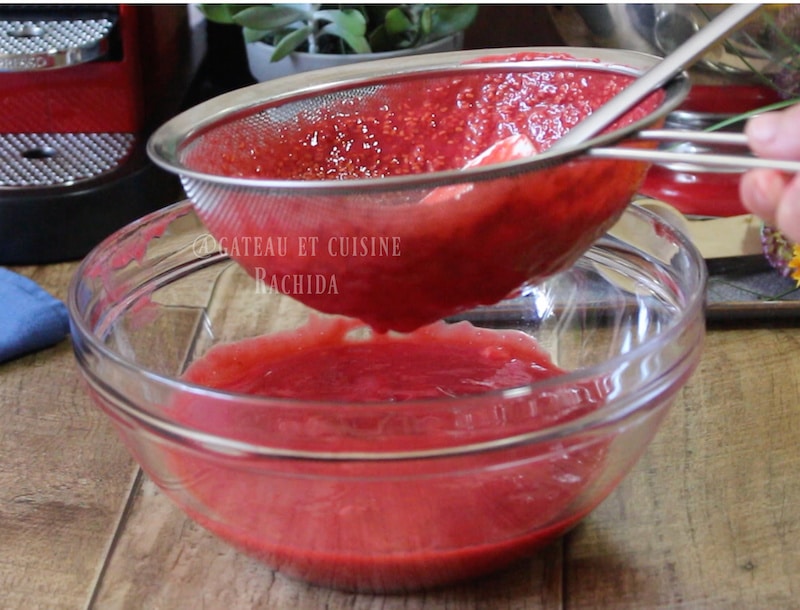
Homemade Raspberry Purée
Video Recipe
Ingredients:
Note: You can find the printable recipe card at the end of the article.
Raspberry fruit jellies can also be made with other fruit purées like mango, strawberry, pineapple, etc.
For a 16 cm to 18 cm frame depending on the desired cube thickness:
- 500 g raspberry purée (17.6 oz) (I blended 750 g raspberries and strained them to remove the seeds)
- 100 g granulated sugar (3.5 oz)
- 500 g granulated sugar (17.6 oz)
- 10 g yellow pectin (0.35 oz)
- 175 g glucose (6.2 oz)
- 4 g fresh lemon juice (2 teaspoons / 0.14 oz)
Preparation Steps:
Prepare a 16 cm frame by lining the bottom with cling film. You can also use small silicone molds.
Mix the pectin with the 100 g of sugar (3.5 oz).
Put the fruit purée and glucose in a saucepan.
Place the saucepan over medium heat.
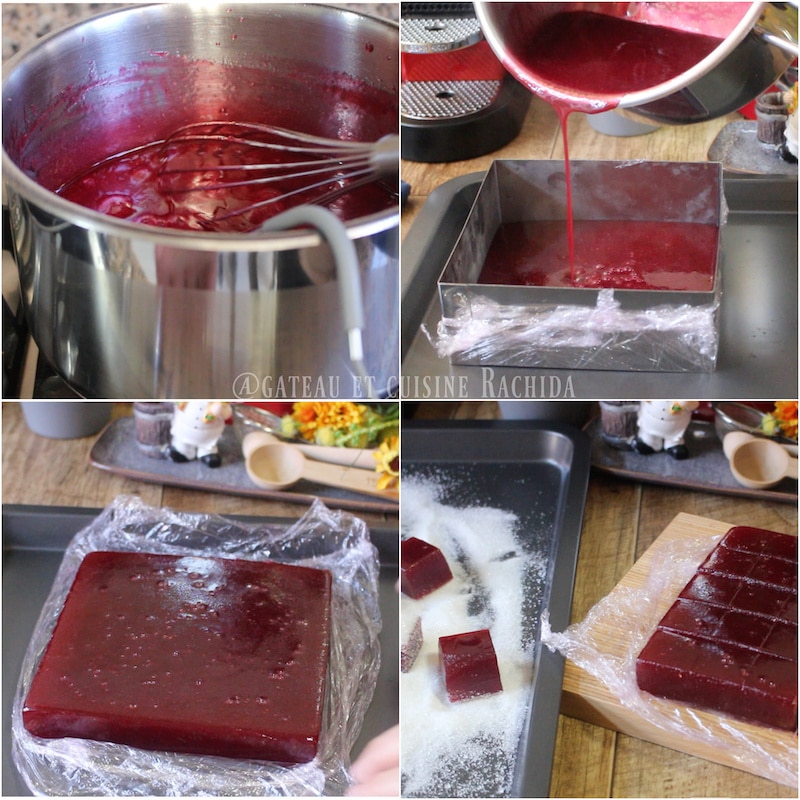
When the mixture is warm (around 40°C / 104°F if you have a thermometer), gradually add the pectin-sugar mixture while whisking.
Bring to a boil (when the mixture starts bubbling), then gradually add the 500 g of sugar (17.6 oz) to maintain the boil. Add the sugar in 3 or 4 additions while stirring.
Once all the sugar is incorporated, use a thermometer to monitor the temperature. The mixture should reach 105–106°C (221–223°F).
Remove the saucepan from the heat at 105°C (221°F), add the tablespoon of lemon juice (4 g / 2 tsp / 0.14 oz), and mix well. From this point, you must act very quickly, as gelling begins. If you use a frame, no problem. For individual molds, you need to fill each cavity quite quickly.
Fruit Jellies Preparation Process
Pour the mixture into the prepared frame on a Silpat mat or into silicone molds.
Let set until the next day, preferably, but after 2 hours, the raspberry fruit jellies are already quite firm.
Finishing Homemade Raspberry Fruit Jellies
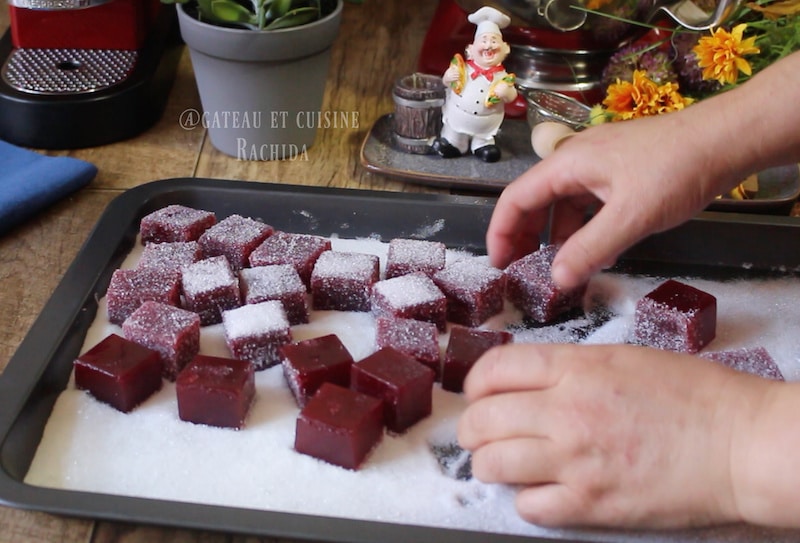
The next day, unmold the frame and cut the raspberry fruit jellies into small cubes. Roll them in granulated sugar, then place them on a serving dish or store in a container, separating each layer with parchment paper.
How to Store Fruit Jellies?
Homemade raspberry pâte de fruit can be stored at room temperature without any problem, as long as they are kept in a dry place. Even slight humidity can cause the sugar coating to melt. If this happens, place the jellies in an oven set to 30°C (86°F) for one to two hours, then re-roll them in granulated sugar.
For longer storage, allow the jellies to dry before coating them in sugar. Arrange them on a baking sheet lined with parchment paper, in a dry, well-ventilated area. Let them dry for 2 to 3 days, turning them occasionally, then roll them in granulated sugar and store them in an airtight metal tin.
Fruit jellies also freeze very well for up to one year. You can lightly dust them with cornstarch if desired, then store them in an airtight container in the freezer. The jellies do not harden completely, which allows for quick thawing. Once defrosted, re-roll them in granulated sugar before serving.
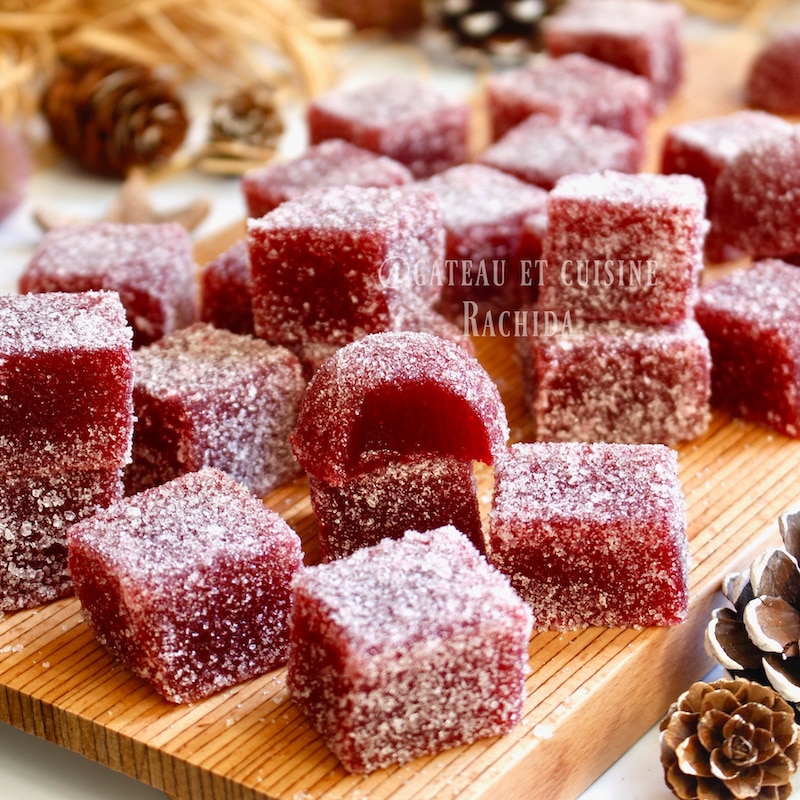 I hope this homemade raspberry fruit jellies recipe inspires you to make it and that it makes a lovely gourmet gift for Christmas.

Homemade Raspberry Fruit Jellies
INGREDIENTS
- Raspberry fruit jellies can also be made with other fruit purées like mango strawberry, pineapple, etc.
For a 16 cm to 18 cm frame depending on the desired cube thickness:
- 500 g raspberry purée (I blended 750 g / 26.5 oz raspberries and strained them to remove the seeds)
- 100 g granulated sugar
- 500 g granulated sugar
- 10 g yellow pectin
- 175 g glucose
- 4 g fresh lemon juice 2 teaspoons / 0.14 oz
PREPARATION
- Prepare a 16 cm frame by lining the bottom with cling film. You can also use small silicone molds.
- Mix the pectin with the 100 g of sugar (3.5 oz).
- Put the fruit purée and glucose in a saucepan.
- Place the saucepan over medium heat.
- When the mixture is warm (around 40°C / 104°F if you have a thermometer), gradually add the pectin-sugar mixture while whisking.
- Bring to a boil (when the mixture starts bubbling), then gradually add the 500 g of sugar (17.6 oz) to maintain the boil. Add the sugar in 3 or 4 additions while stirring.
- Once all the sugar is incorporated, use a thermometer to monitor the temperature. The mixture should reach 105–106°C (221–223°F).
- Remove the saucepan from the heat at 105°C (221°F), add the tablespoon of lemon juice (4 g / 2 tsp / 0.14 oz), and mix well. From this point, you must act very quickly, as gelling begins. If you use a frame, no problem. For individual molds, you need to fill each cavity quite quickly.
- Pour the mixture into the prepared frame on a Silpat mat or into silicone molds.
- Let set until the next day, preferably, but after 2 hours, the raspberry fruit jellies are already quite firm.
- The next day, unmold the frame and cut the raspberry fruit jellies into small cubes. Roll them in granulated sugar, then place them on a serving dish or store in a container, separating each layer with parchment paper.
Thank you for visiting my blog and for your comments.