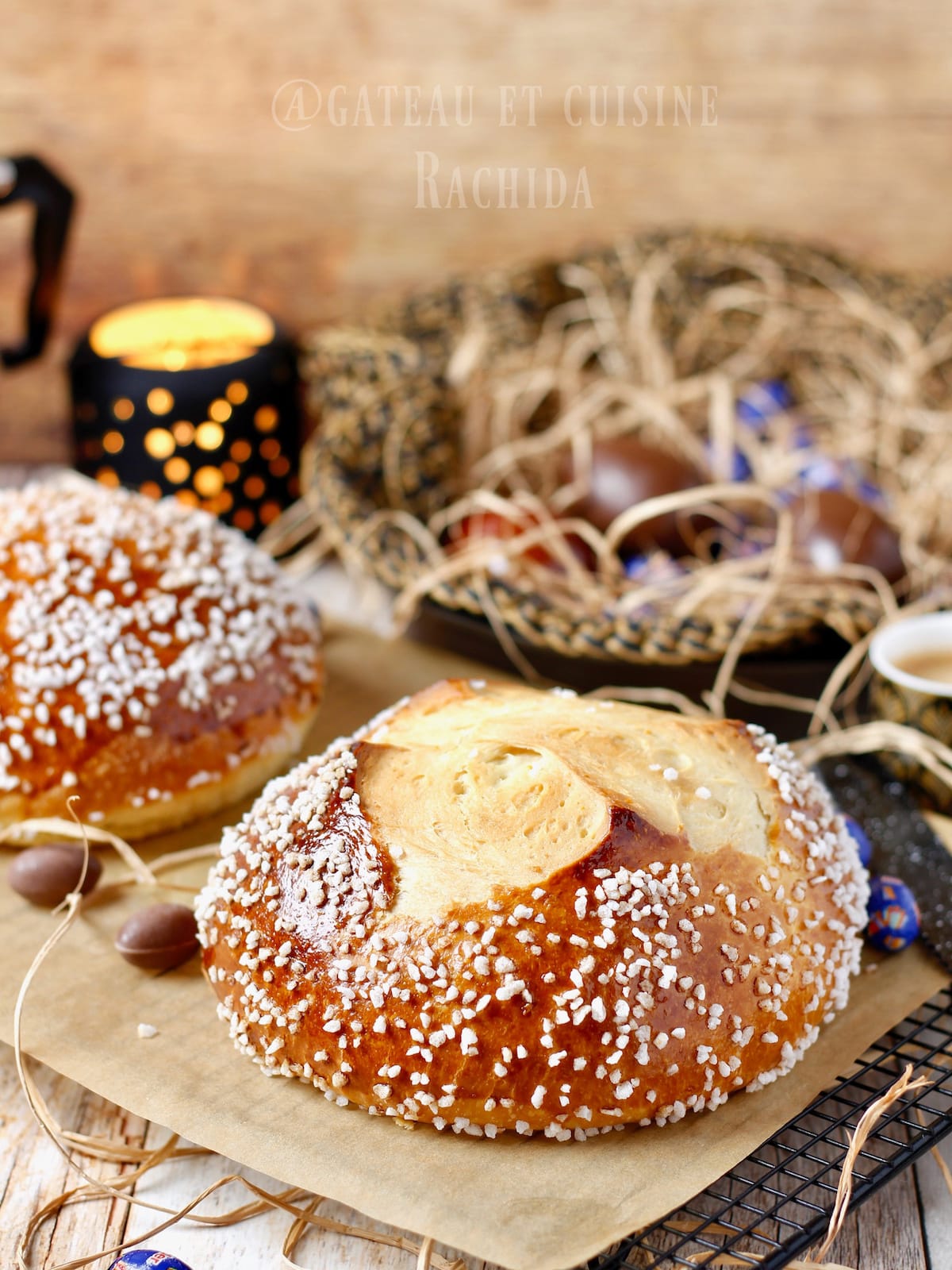
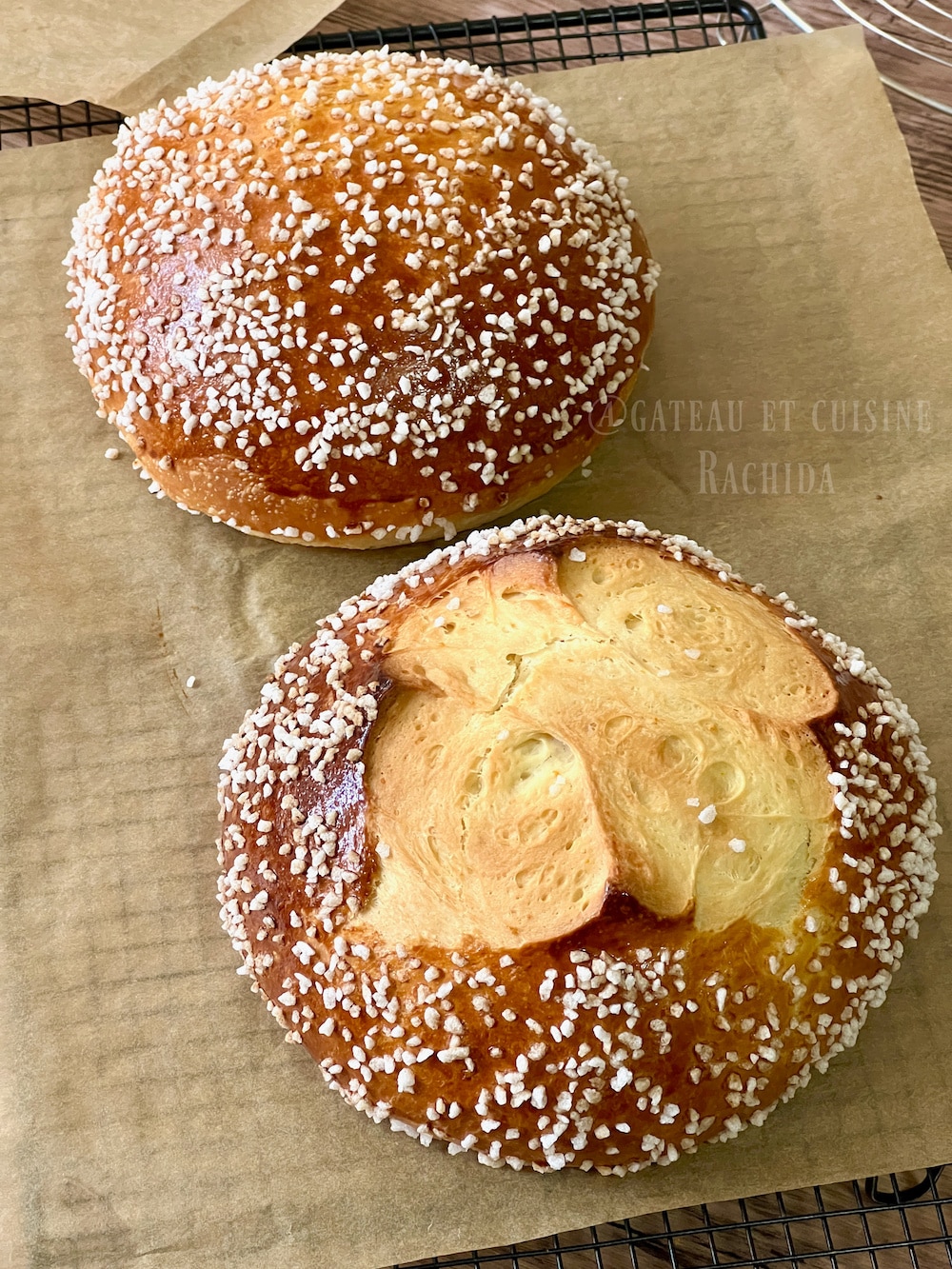
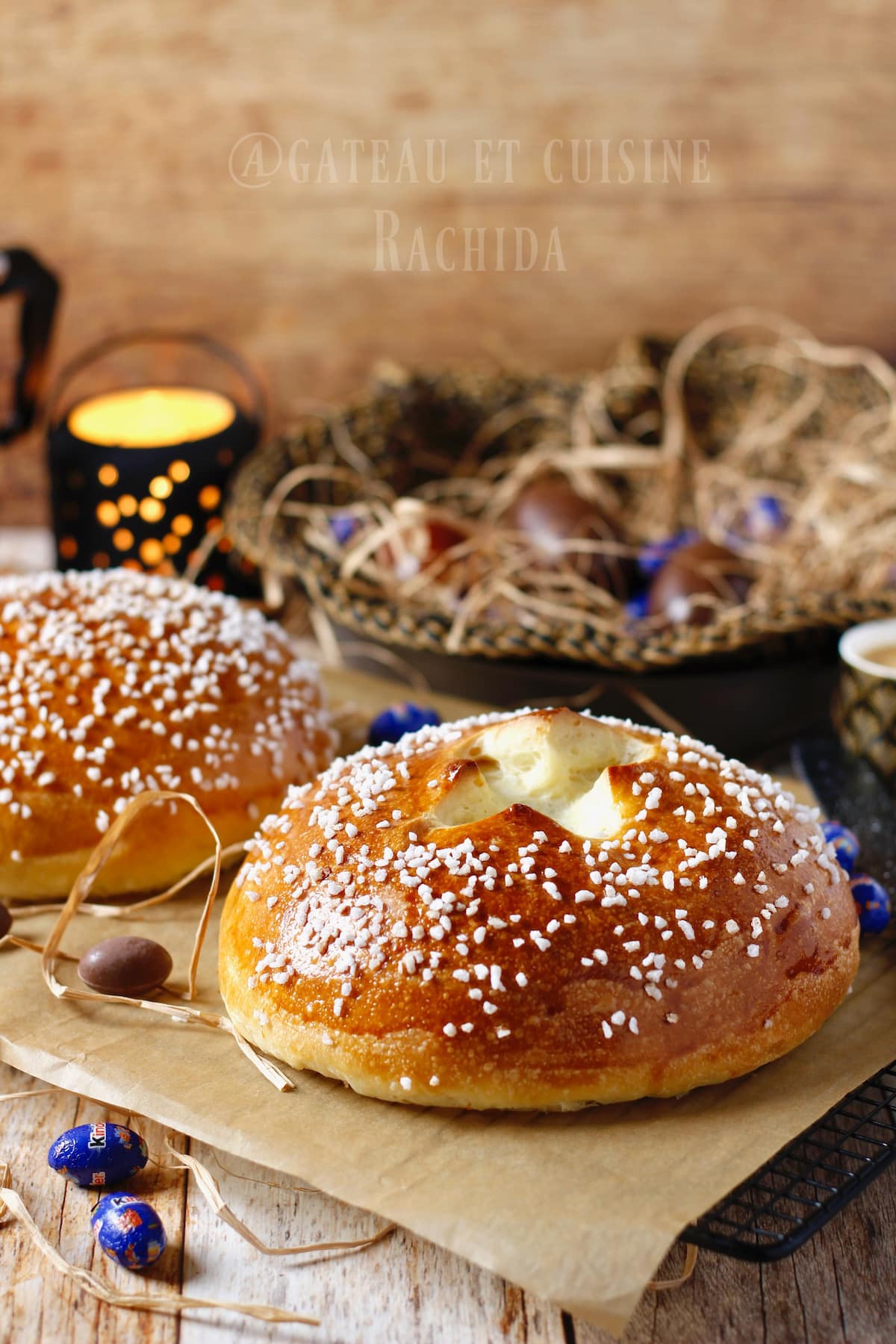
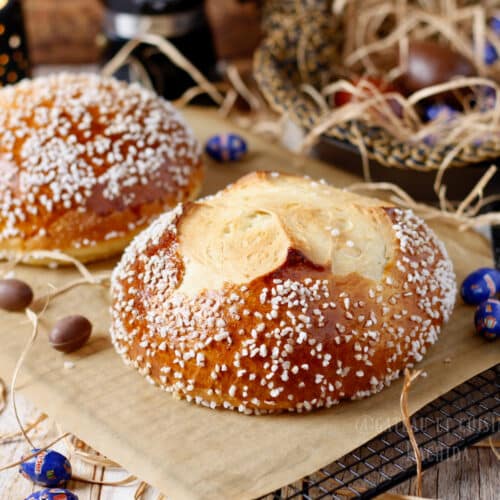
Mouna, also known as mona de Pascua, is a soft and fluffy Easter brioche bread rooted in both Algerian and Spanish culinary traditions. Delicately flavored with orange blossom, orange and lemon zest, and anise, it is traditionally shaped into a golden dome or a crown, generously topped with pearl sugar and scored with a cross, baking up golden and beautiful.
Part of a Mediterranean tradition of Easter breads, it is enjoyed in different forms across several countries, from Algeria and Spain to Italy. Some versions include colorful Easter eggs.
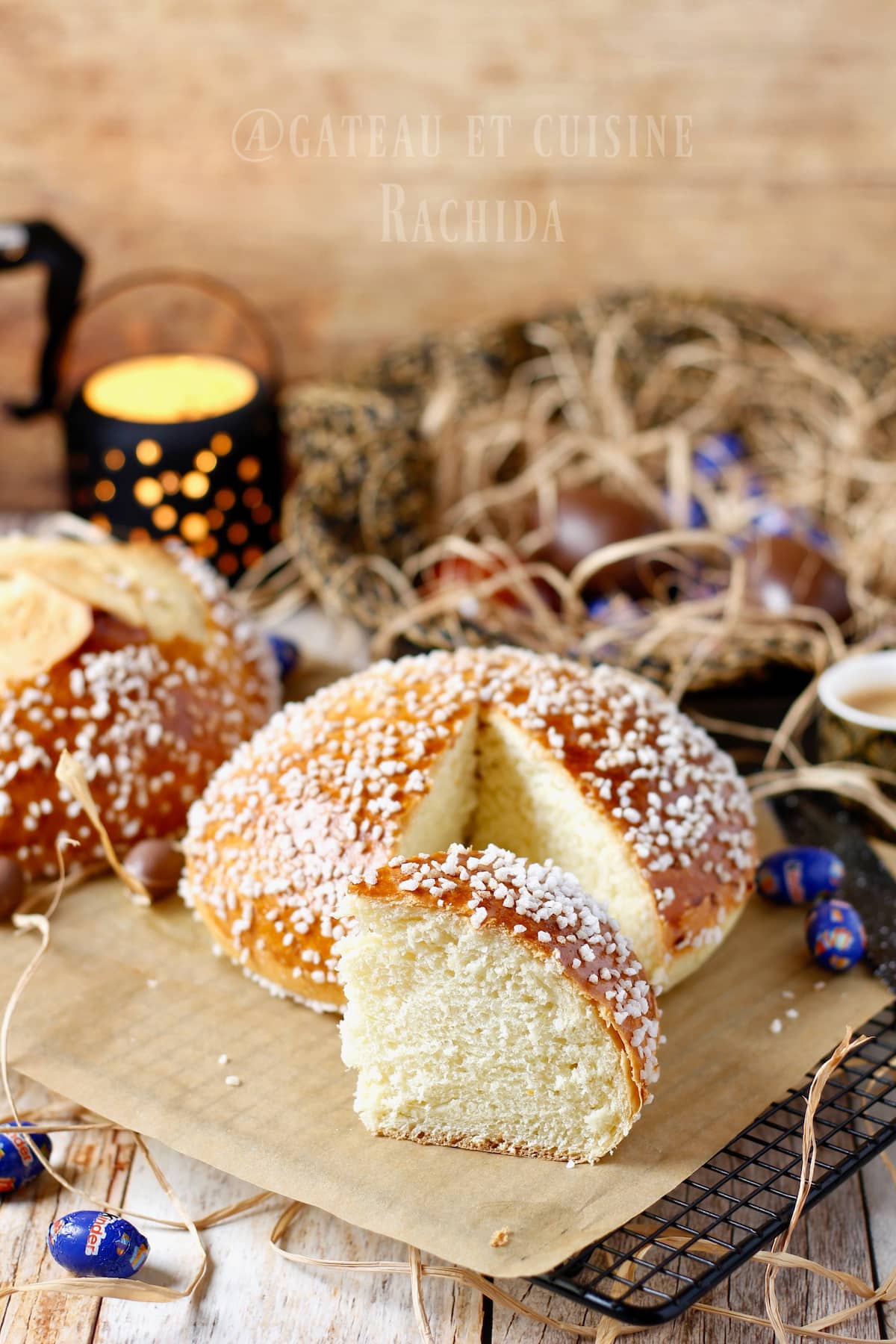
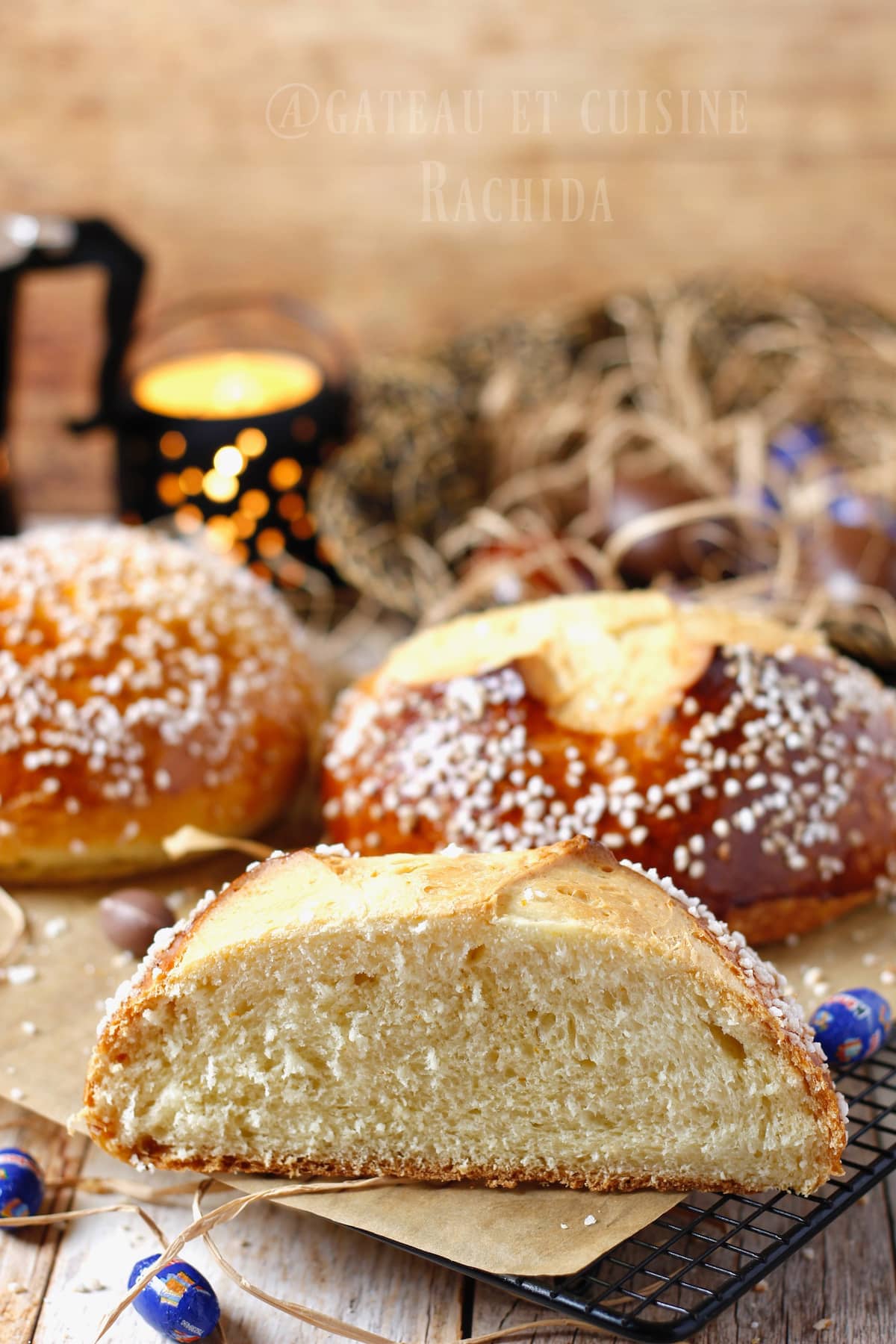
With its light and airy crumb and melt-in-your-mouth texture, it is delicious on its own or with a bit of jam. Traditionally baked to celebrate Easter and mark the end of Lent, it is known for its unforgettable flavor and aroma.
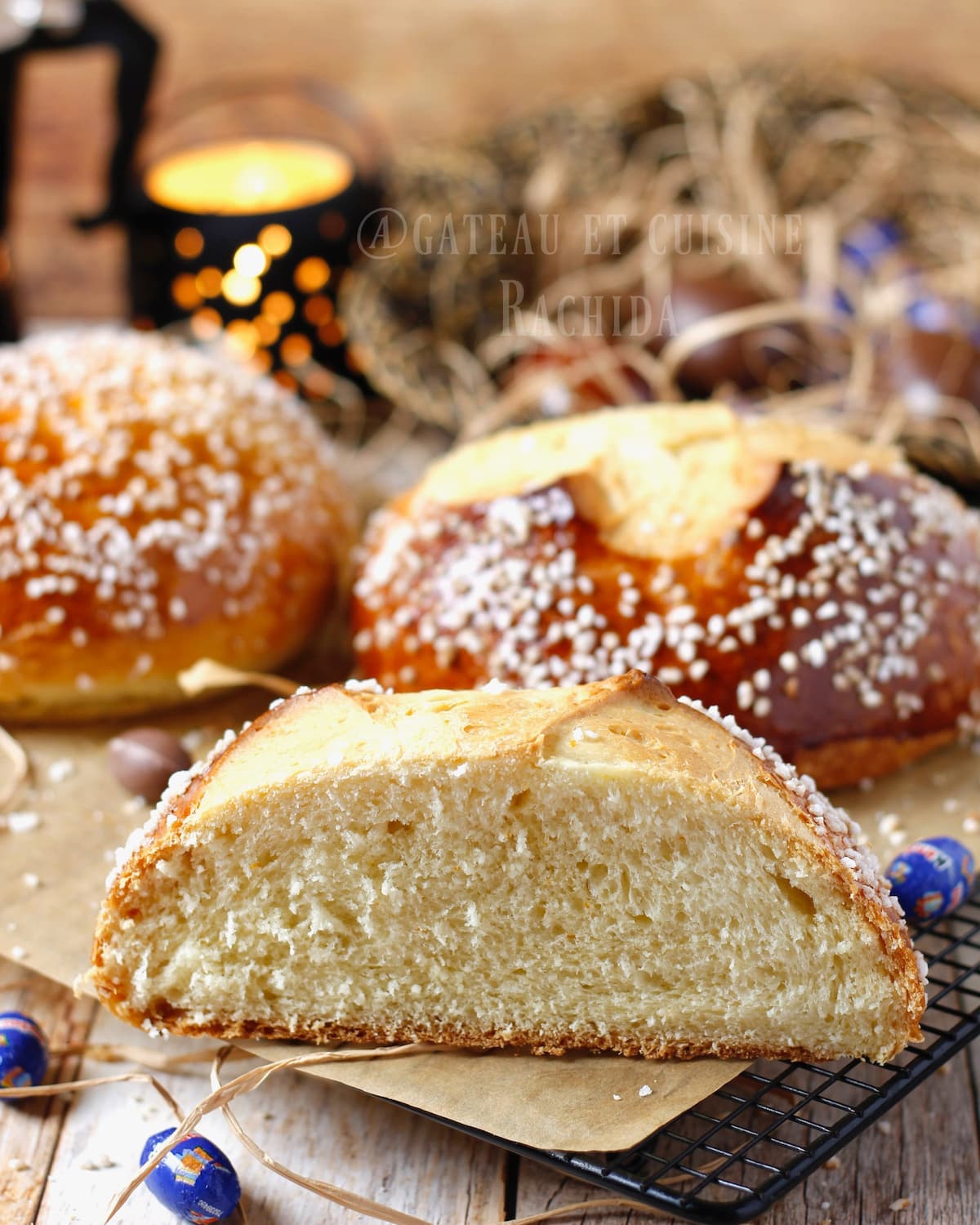
Table of Contents
What’s the Difference Between Mouna and Italian Easter Bread?
While mouna and Italian Easter bread share similarities, such as their soft texture and festive shapes, they differ in flavor and tradition. Mouna is known for its distinctive Mediterranean aroma and flavor, while Italian Easter bread is usually milder and often shaped into braids or wreaths with colorful Easter eggs baked into the dough.
These eggs symbolize rebirth, a common theme in Easter traditions.
Key Steps for a Soft and Fluffy Easter Brioche (Mouna)
Mouna is a bread that requires a bit of patience, and that’s really all it asks of you. The rise is everything: always let the dough double, even triple in size. Keep in mind that rise time varies depending on room temperature, ingredients, and the amount of yeast you use.
I highly recommend making it the day before, but you can also bake it the same day. Either way, you have two options:
- Let it rise, punch it down, shape it, let it rise again, then bake.
- Let it rise, punch it down, refrigerate the dough for 24 hours. The next day, shape it, let it rise, then bake.
That slow cold rise is where the magic happens, it deepens the flavor and gives the brioche that perfect soft, airy texture.
Add the milk gradually to control the consistency of the dough. You’re looking for a smooth, slightly sticky, elastic dough, not too firm. Get that right, and you’re guaranteed a beautifully fluffy brioche.
Ingredients for 2 Mouna Easter Brioches
Note: You’ll find the printable recipe card at the bottom of this post, along with my tips section.
For the Starter
- 100g (3.5 oz) all-purpose flour
- 70ml (2.4 oz) lukewarm water or milk (I used water) Adjust depending on your flour absorption
- 5g active dry yeast or 12g/0.4 oz fresh yeast
- 15g (0.5 oz )granulated sugar
For the Brioche Dough
- 400g (14 oz) all-purpose flour
- 110g (3.9 oz) granulated sugar (you can use slightly less)
- 1/2 teaspoon salt
- 2 eggs
- 5g active dry yeast or 12g/0.4 oz fresh yeast
- 50ml (1.7 fl oz)vegetable oil
- 50g (1.8 oz) unsalted butter, softened
- 15ml (0.5 fl oz)orange juice or orange blossom water
- Zest of 1 medium orange
- Zest of 1 lemon
- 120ml (4 fl oz)lukewarm milk (I only used 80ml/ 2.7 oz). Adjust depending on your flour absorption
- 1 tsp anise seeds (optional)
- 1 star anise (optional)
- 1/2 cinnamon stick (optional)
Egg Wash
- 1 egg yolk
- 1 tsp milk
- pearl sugar
How to Make the Perfect Easter Bread
Make the Starter
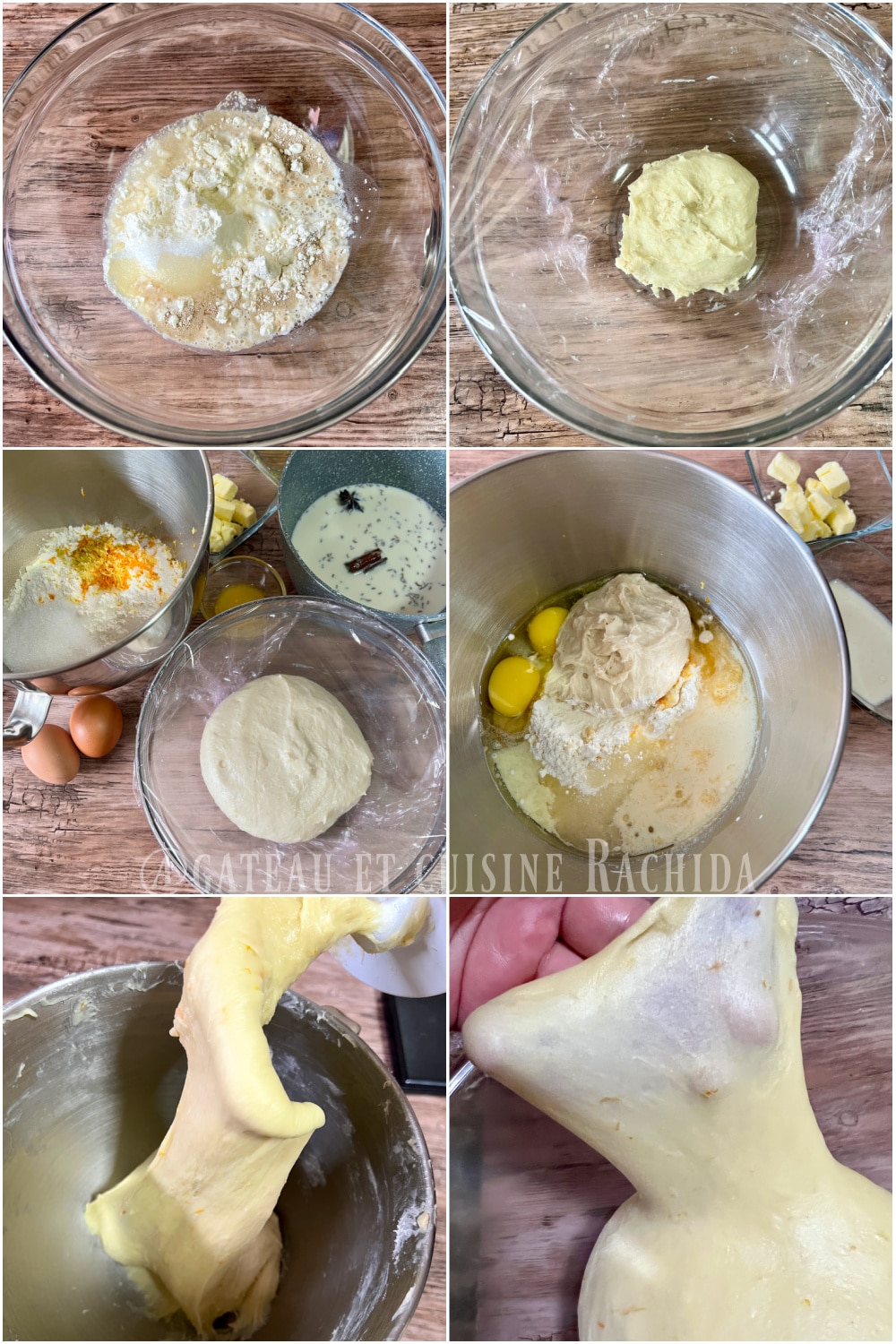
In a bowl, combine the flour, sugar, yeast, and lukewarm water. Mix until combined, then knead briefly. The dough should be soft and slightly sticky. If needed, add a little more water or milk. Cover the bowl with plastic wrap and let it rise for about 30 minutes, or until doubled in size.
Infuse the Milk
Warm the milk with the anise seeds, star anise, and cinnamon stick. Let it steep for about 15 minutes, then strain. Allow it to cool completely. If your kitchen is cold, gently warm it before using, but make sure it’s not hot, as heat can kill the yeast.
Make the Dough
In the bowl of a stand mixer, add the flour, salt, sugar, orange and lemon zest, orange juice, oil, eggs, yeast, starter, and half of the milk.
Mix on low speed for about 10 minutes, gradually adding the remaining milk until you get a soft, slightly sticky dough. Increase to medium speed and continue mixing for another 10 minutes. Scrape down the sides of the bowl once or twice during mixing. During the last 4 minutes, add the softened butter and continue mixing until fully incorporated and the dough pulls away from the sides of the bowl.
Shape the dough into a ball and place it in a lightly oiled bowl. The dough won’t be completely smooth at this stage. Cover with plastic wrap and let it rest for about 20 minutes.
Then shape it into a ball again, you’ll notice the gluten has relaxed. The dough will be smooth and more elastic.
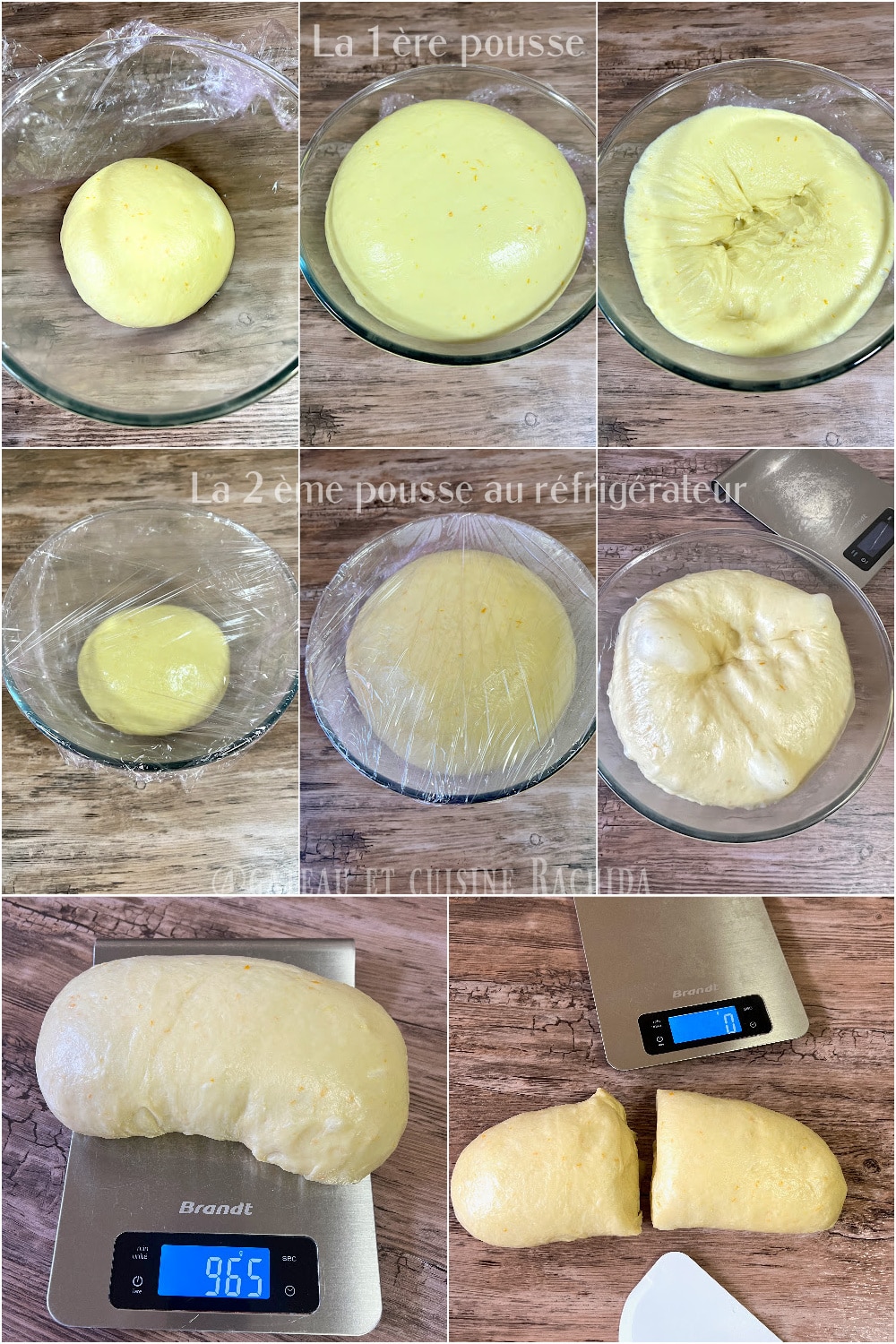
Cover the bowl with plastic wrap and a clean kitchen towel. Let the dough rise at room temperature, away from drafts, until it doubles or even triples in size. This can take about 3 hours or more, depending on the room temperature
Punch down the dough to release the air and shape it into a ball. Lightly oil the surface, then cover with plastic wrap and refrigerate overnight.
The next day, punch down the dough again and shape it into a log. Weigh it and divide it into two equal portions.
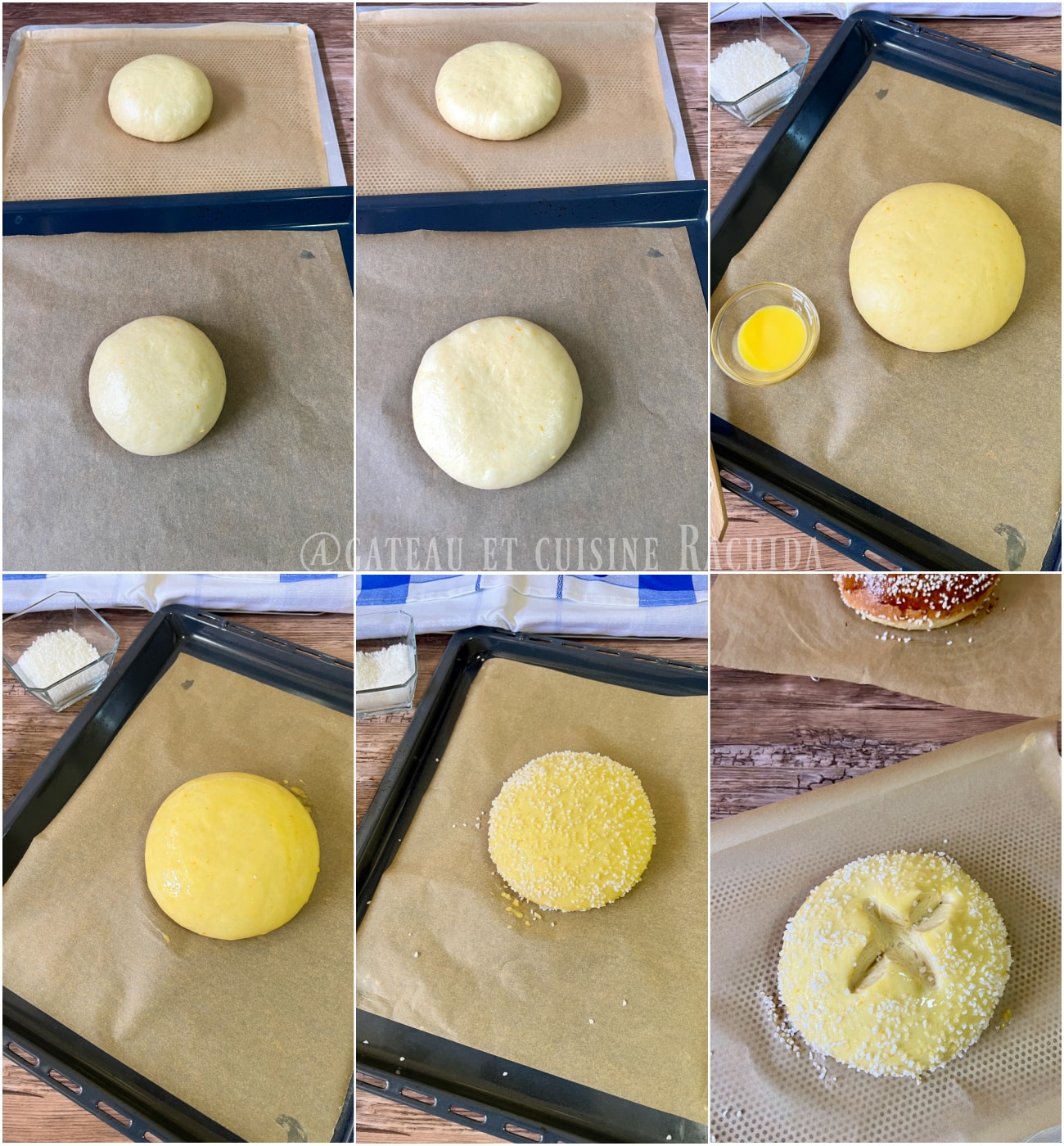
Shape each portion into a smooth ball and place them on a baking sheet lined with parchment paper. If you have a larger oven, you can place both on the same baking sheet. Let them rest for a few minutes, then gently flatten them to about 5.5 inches (14 cm) in diameter. Cover with a clean kitchen towel and let them rise until doubled in size, about 2½ hours, depending on the room temperature.
Preheat the oven to 325°F (165°C).
Whisk together 1 egg yolk and 1 teaspoon of milk, then strain through a fine sieve. Brush the first mouna with the egg wash and sprinkle with pearl sugar. Bake for about 30 minutes, until golden brown. Transfer to a wire rack as soon as it comes out of the oven
Brush the second mouna with the egg wash, then use scissors to score a cross on top. Sprinkle with pearl sugar, then bake.
Let the mouna brioches cool completely on a wire rack before serving. Enjoy them plain or with a bit of jam.
Tips for a perfect Easter mouna
Kneading: As with any brioche, proper kneading is key to success. Knead the dough in a stand mixer for 15 to 20 minutes, until it develops a strong gluten structure. Add the butter only toward the end of kneading so it doesn’t interfere with gluten development. Well-kneaded dough will give you a soft, light, and airy crumb.
Shaping: Mouna is traditionally shaped into a round dome. In Spain, the mona de Pascua is often formed into a ring, with eggs pressed into the dough before baking. You can shape it into a ring or divide the dough into smaller balls and place them in a pan, similar to a pull-apart brioche. Use scissors to score a cross on top, the deeper the cut, the more it will open as it bakes.
Baking: This is where mistakes happen most often. At 350°F (180°C), the brioche tends to brown too quickly on the outside while the inside remains underbaked. The crust forms a barrier that prevents heat from properly reaching the center, similar to donuts fried in oil that’s too hot.
For best results, bake at 325°F (165°C) for about 30 minutes for a large brioche. The gentler heat allows it to bake evenly and cook through perfectly.
How to store Easter Brioche (Mouna)
Like most brioches, mouna is best enjoyed the same day. However, if you have leftovers, wrap it in aluminum foil and store it in an airtight container or a freezer bag.
To bring back its softness, warm the brioche for a few minutes in a preheated oven at 300°F (150°C), then turn the oven off and let it sit in the residual heat.
You can also freeze mouna, whole or sliced, for up to 1 month. Let it thaw at room temperature, then warm it slightly in the oven before serving.
Other Easter desserts
- Triple chocolate mousse cake
- Chocolate yogurt cake
- French chocolate fondant
- Chocolate lava cake
- Fondant Baulois
Fluffy Easter Brioche (Mouna) with Orange and Anise
INGRÉDIENTS
For the Starter
- 100 g all-purpose flour
- 70 ml lukewarm water or milk I used water. Adjust depending on your flour absorption
- 5 g active dry yeast or 12g/0.4 oz fresh yeast
- 15 g granulated sugar
For the Brioche Dough
- 400 g all-purpose flour
- 110 g granulated sugar (you can use slightly less)
- 1/2 teaspoon salt
- 2 eggs
- 5 g active dry yeast or 12g fresh yeast or 12g/ 0.4 oz fresh yeast
- 50 ml vegetable oil
- 50 g unsalted butter, softened
- 15 ml orange juice or orange blossom water
- Zest of 1 medium orange
- Zest of 1 lemon
- 120 ml lukewarm milk I only used 80ml/ 2.7 floz. Adjust depending on your flour absorption
- 1 tsp anise seeds optional
- 1 star anise optional
- 1/2 cinnamon stick optional
Egg Wash
- 1 egg yolk
- 1 tsp milk
- pearl sugar
PRÉPARATION
Make the Starter
- In a bowl, combine the flour, sugar, yeast, and lukewarm water. Mix until combined, then knead briefly. The dough should be soft and slightly sticky. If needed, add a little more water or milk.
- Cover the bowl with plastic wrap and let it rise for about 30 minutes, or until doubled in size.
Infuse the Milk
- Warm the milk with the anise seeds, star anise, and cinnamon stick. Let it steep for about 15 minutes, then strain.
- Allow it to cool completely. If your kitchen is cold, gently warm it before using, but make sure it’s not hot, as heat can kill the yeast.
Make the Brioche Dough
- In the bowl of a stand mixer, add the flour, salt, sugar, orange and lemon zest, orange juice, oil, eggs, yeast, starter, and half of the milk.
- Mix on low speed for about 10 minutes, gradually adding the remaining milk until you get a soft, slightly sticky dough.
- Increase to medium speed and continue mixing for another 10 minutes. Scrape down the sides of the bowl once or twice during mixing.
- During the last 4 minutes, add the softened butter and continue mixing until fully incorporated and the dough pulls away from the sides of the bowl.
- Shape the dough into a ball and place it in a lightly oiled bowl. The dough won’t be completely smooth at this stage.
- Cover with plastic wrap and let it rest for about 20 minutes. Then shape it into a ball again, you’ll notice the gluten has relaxed. The dough will be smooth and more elastic.
- Cover the bowl with plastic wrap and a clean kitchen towel.
- Let the dough rise at room temperature, away from drafts, until it doubles or even triples in size. This can take about 3 hours or more, depending on the room temperature
- Punch down the dough to release the air and shape it into a ball. Lightly oil the surface, then cover with plastic wrap and refrigerate overnight.
- The next day, punch down the dough again and shape it into a log. Weigh it and divide it into two equal portions.
- Shape each portion into a smooth ball and place them on a baking sheet lined with parchment paper. If you have a larger oven, you can place both on the same baking sheet.
- Let them rest for a few minutes, then gently flatten them to about 5.5 inches (14 cm) in diameter.
- Cover with a clean kitchen towel and let them rise until doubled in size, about 2½ hours, depending on the room temperature.
- Preheat the oven to 325°F (165°C).
- Whisk together 1 egg yolk and 1 teaspoon of milk, then strain through a fine sieve.
- Brush the first mouna with the egg wash and sprinkle with pearl sugar.
- Bake for about 30 minutes, until golden brown. Transfer to a wire rack as soon as it comes out of the oven
- Brush the second mouna with the egg wash, then use scissors to score a cross on top. Sprinkle with pearl sugar, then bake.
- Let the mouna brioches cool completely on a wire rack before serving.
- Enjoy them plain or with a bit of jam.
Thank you for visiting my blog and for your comments