When the holiday season begins and you are surrounded by lovers of fruit jellies and citrus flavors, it is hard to resist making homemade orange pâte de fruits. This recipe uses simple ingredients like freshly squeezed orange juice, sugar and pectin to create a texture that is both soft and perfectly set.
An intense orange flavor with a light tang brings a bright, refreshing taste to this homemade treat. It is an ideal sweet for confectionery assortments and for homemade edible gifts during the holiday season.
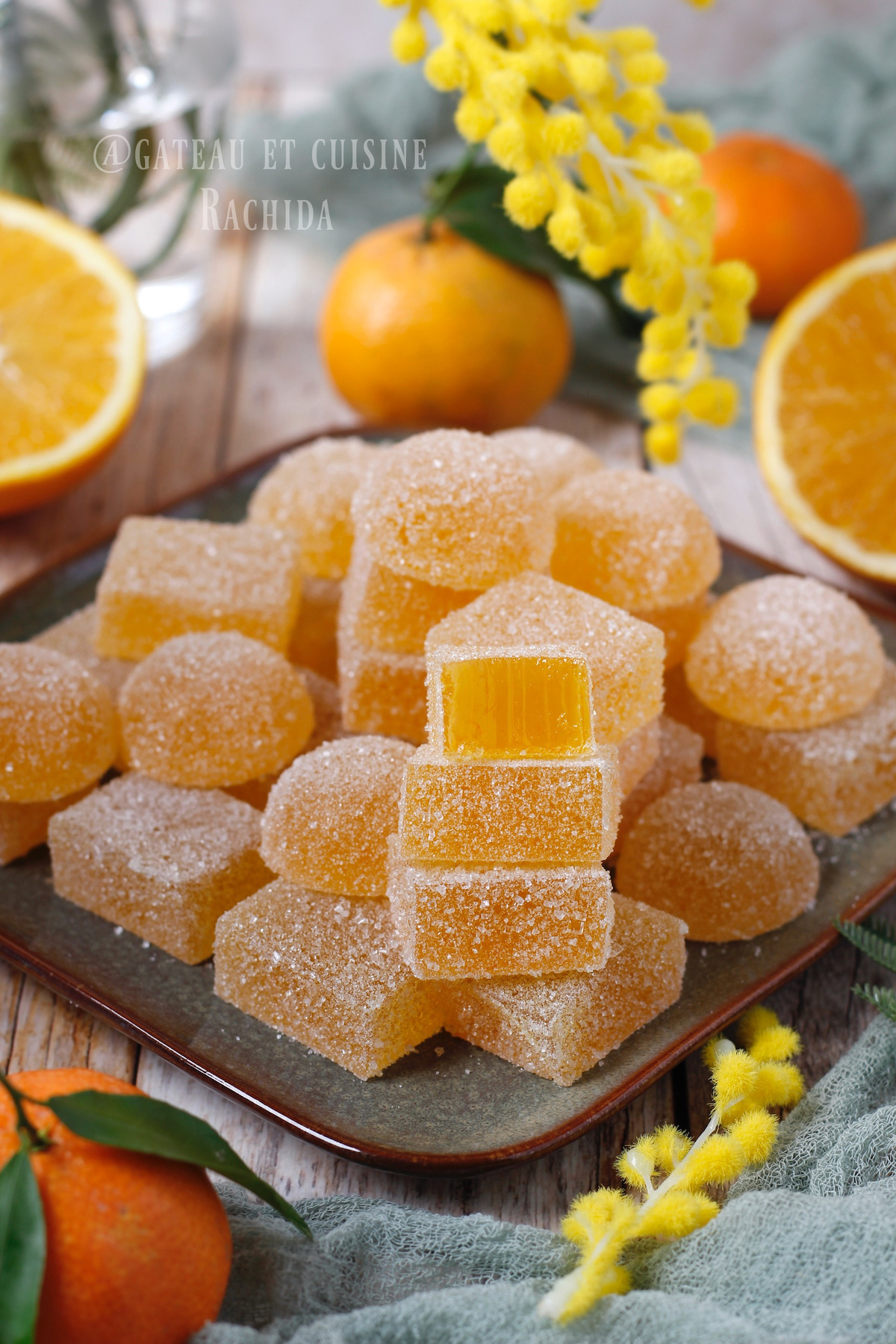
Table of Contents
Orange Pâte de Fruits Recipe: A Concentrate of Vitamin C
Making homemade treats is truly part of the magic of the holiday season. Small handmade confections always have a special charm, bringing warmth and comfort. Orange pâte de fruits is one of those sweets, with its citrus aroma that evokes cozy moments and the joy of sharing something homemade with family.
With just a few simple ingredients, you get a tender and refreshing pâte de fruits enjoyed by both kids and adults. It is also a great way to offer a different flavor alongside lemon pâte de fruits or raspberry pâte de fruits, which are both very popular. Orange adds a gentle sweetness with a light tang that really makes the difference.
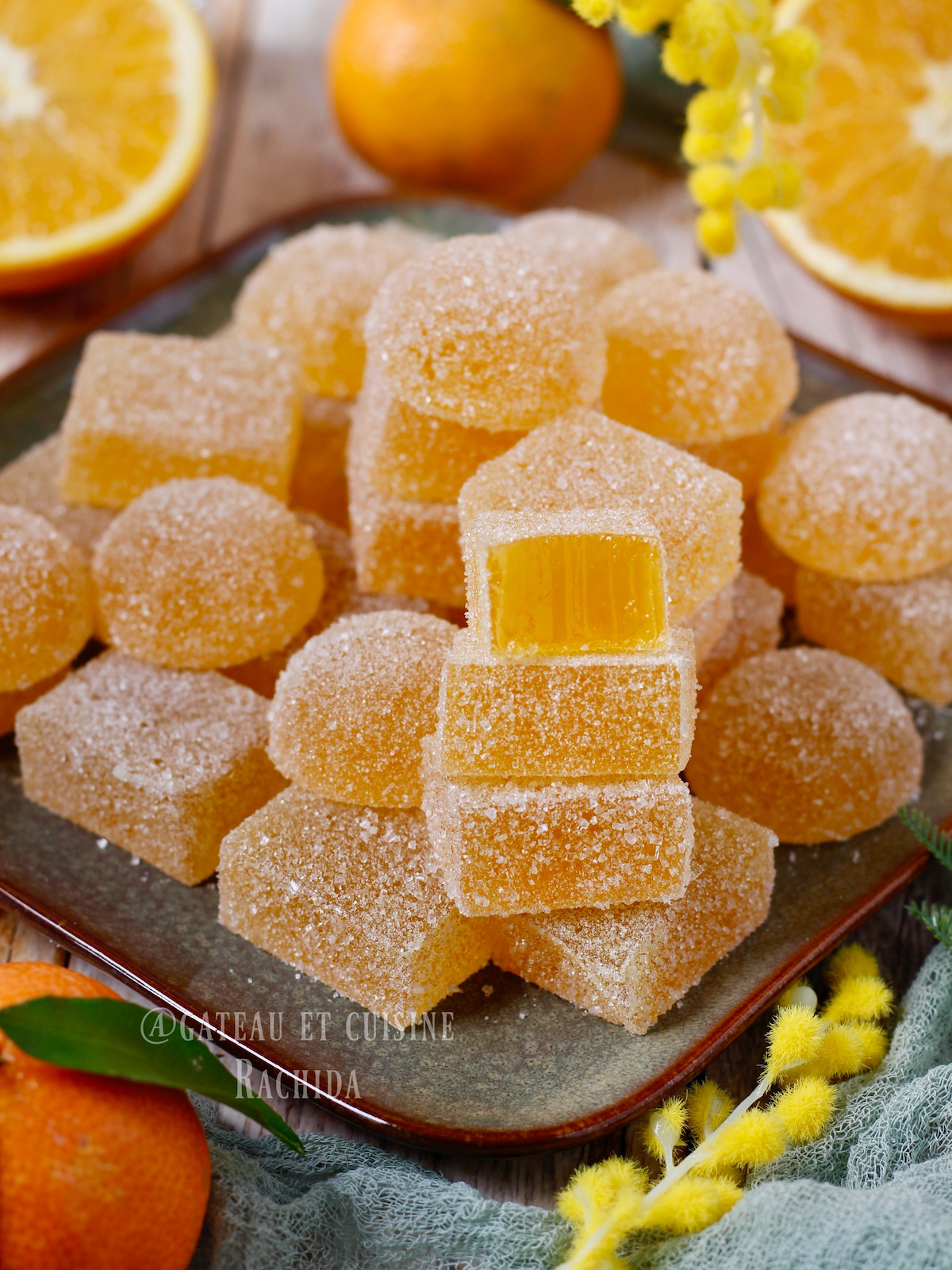
This pâte de fruits holds its shape beautifully and has a texture that melts in your mouth while remaining pleasantly soft.
Another bonus is how quick it is to prepare and how well it keeps. It is perfect for getting ahead and filling boxes with small homemade treats to offer or to place on the table during festive gatherings.
Tips for Making Perfect Orange Pâte de Fruits
Choosing the right gelling agent: As explained in my other recipes, a good pâte de fruits is made with pectin, not gelatin or agar agar. These two gelling agents create a firm, jelly like texture that is not suitable for traditional fruit jellies. Pectin, on the other hand, allows the pâte de fruits to set properly while remaining soft and melt in your mouth, exactly as you would expect from a homemade confection.
Use yellow pectin, not NH pectin.
Cooking: This is the most important step to avoid pâte de fruits that is too soft or, on the other hand, too firm. Using a thermometer is essential to ensure the preparation reaches the right temperature, as even a couple of degrees difference can make a big impact. The pâte de fruits should reach the ideal consistency to hold its shape. A cooking time that is too short will leave it too soft, while a cooking time that is too long will make it too firm.
Don’t forget the lemon juice: Citric acid is normally added at the end of cooking because it helps the pectin set properly. When citric acid is not available, it can be replaced with lemon juice, which works in exactly the same way. It should be added just before removing the saucepan from the heat. Personally, I remove the saucepan from the heat and then add it. From that point on, you need to work quickly, as the setting process begins immediately.
Using glucose syrup: Glucose syrup is essential when making pâte de fruits. Professional confectioners rely on it because it allows for long storage, sometimes up to a year, and helps keep the pâte de fruits soft without the sugar recrystallizing. However, for quick consumption, it can be omitted in some recipes. That is exactly what I did in my mango passion fruit pâte de fruits.
Do not use the same recipe with all fruits: Each fruit has a different composition. Water content, natural pectin levels, and acidity vary from one fruit to another. This means that each fruit requires a different cooking time to reach the right consistency, the ideal density needed for proper setting. Some pâte de fruits cook to 104°C, while others need 106°C or 107°C. Fruits that are more liquid and lower in natural pectin require longer cooking and may need to reach 108°C or even up to 110°C.
For example, quince pâte de fruits does not require any added gelling agent because quince naturally contains a high amount of pectin. This is why it is important to follow a recipe adapted to each fruit in order to achieve the best possible results.
Ingredients:
Note: You can find the printable recipe at the end of the article.
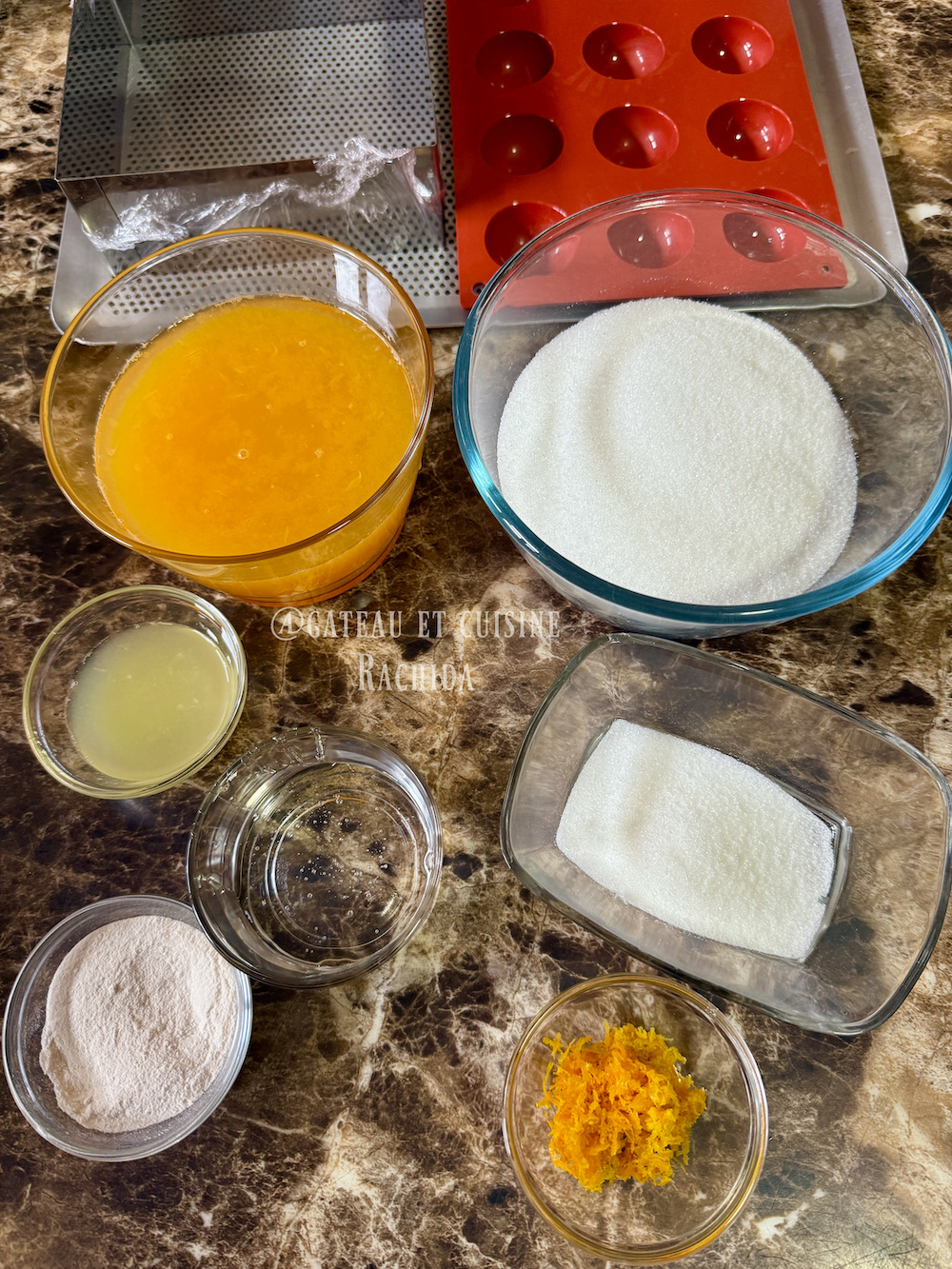
- 500 ml orange juice or a mixture of orange juice and clementine or tangerine juice (16.9 fl oz)
- 10 g finely grated orange zest (0.35 oz)
- 500 g granulated sugar (1.1 lb)
- 50 g granulated sugar, to mix with the pectin (1.8 oz)
- 100 g glucose syrup (3.5 oz)
- 25 g yellow pectin (0.9 oz)
- 35 g lemon juice (1.2 fl oz)
- Sugar for coating
How to Make Orange Pâte de Fruits
1. Prepare the frame in which the pâte de fruits will be poured. I used a 16 cm frame (6.3 inches) and a silicone mold for the remaining mixture. You can also use an 18 cm frame (7 inches). Line the bottom of the frame with plastic wrap, stretch it well and secure it to the outside edges. Place the frame on a rigid baking sheet.
2. Mix the pectin with 50 g (1.8 oz) of the sugar to prevent lumps when adding it to the mixture.
3. In a large, high sided saucepan, heat the orange juice, glucose syrup and orange zest over medium heat.
4. When the mixture reaches 50°C (122°F), add the pectin in a steady stream while stirring constantly to prevent lumps.
5. Increase the heat to high and wait for the mixture to return to a boil. Then add the sugar (500g / 1.1 lb)little by little so the mixture does not lose its boil, while stirring.
6. Place the thermometer probe in the saucepan. When the mixture reaches 108°C (226°F), remove the saucepan from the heat and immediately add the lemon juice. Stir, then pour quickly, as the setting process begins at this stage.
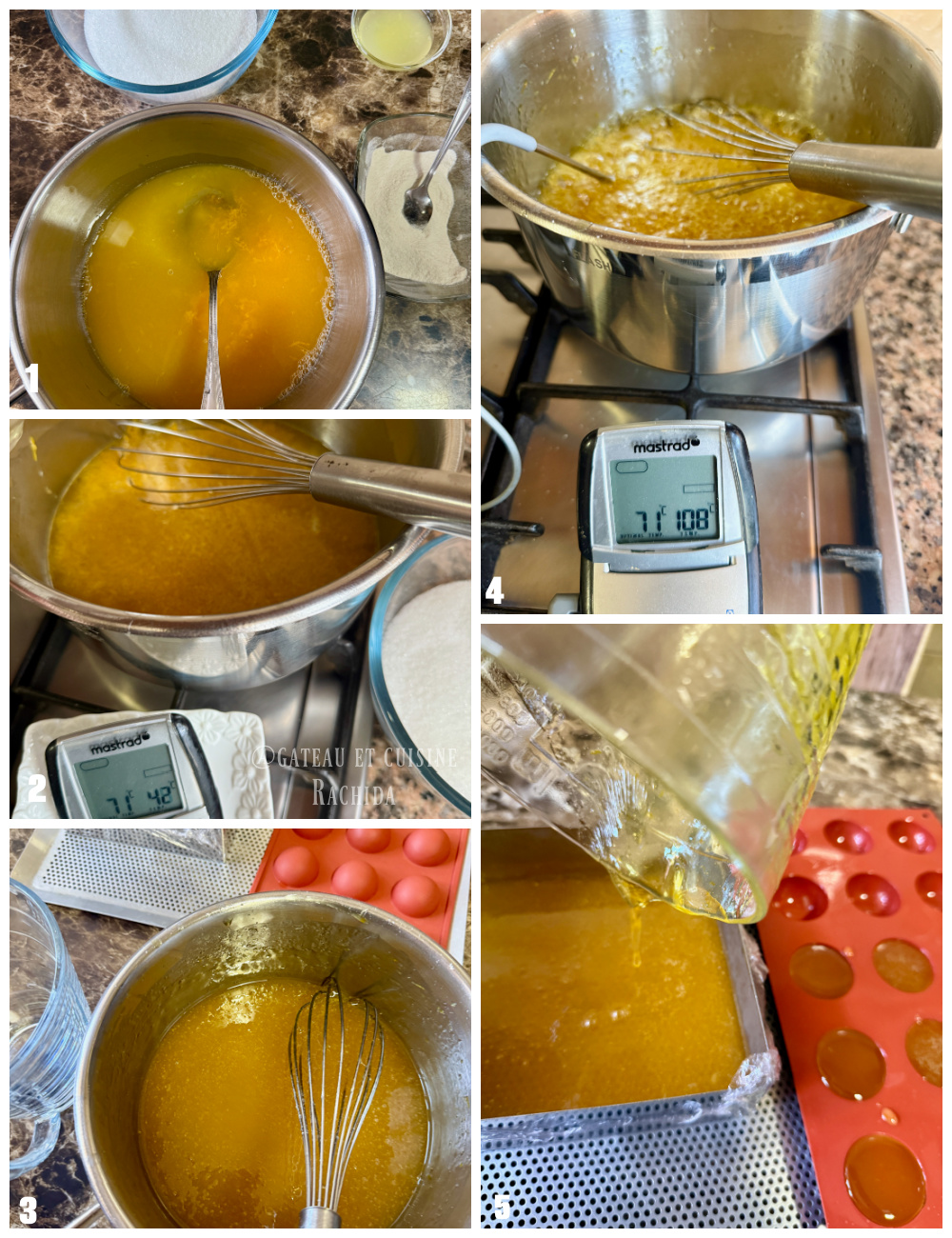
7. Pour the hot mixture into a measuring cup if you want to fill silicone molds. Pour into the frame to a thickness of about 2 cm (3/4 inch thick), then pour the remaining mixture into the cavities of the silicone mold.
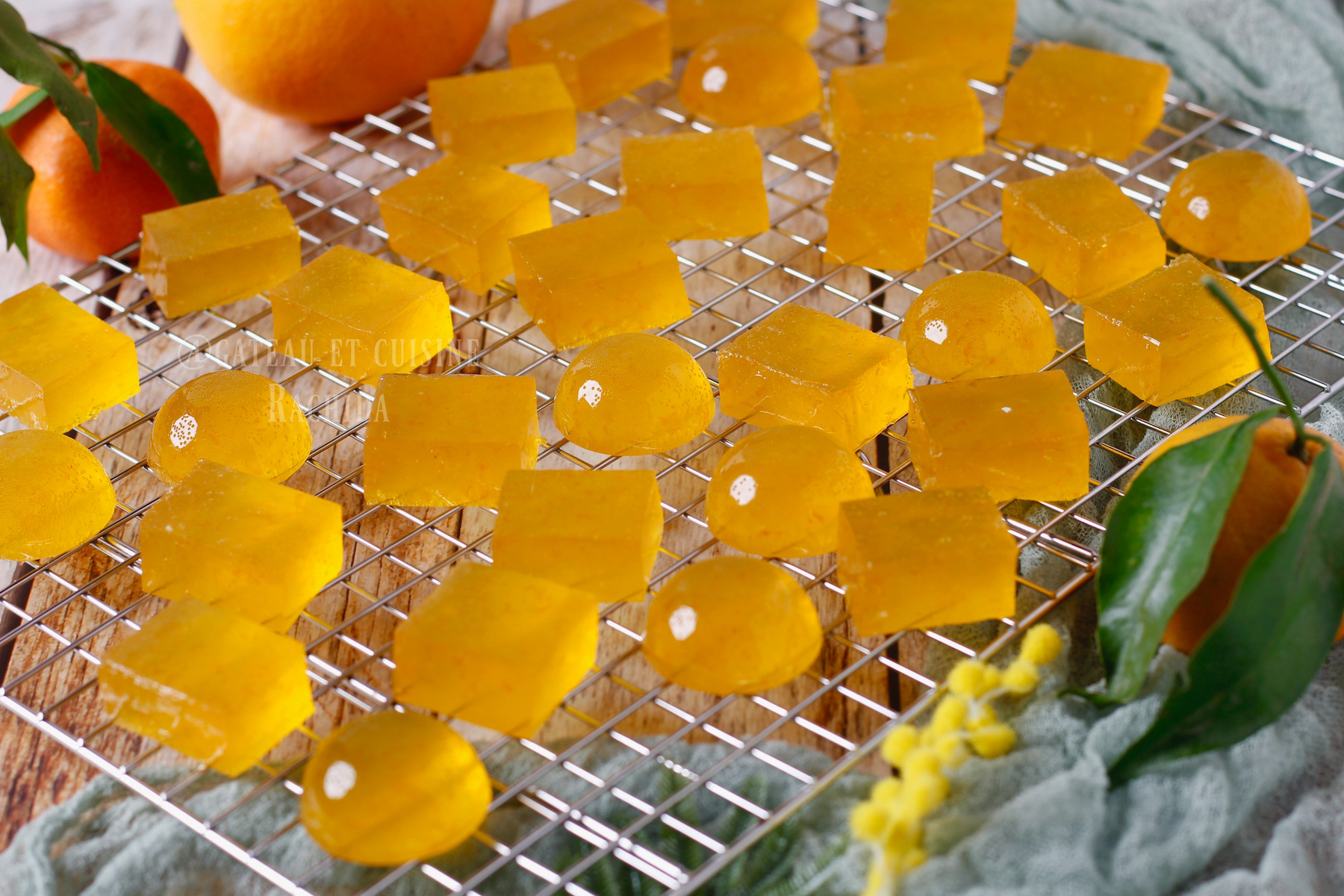
8. Let the pâte de fruits set for 12 hours before unmolding, even if it already seems set after 2 to 3 hours.
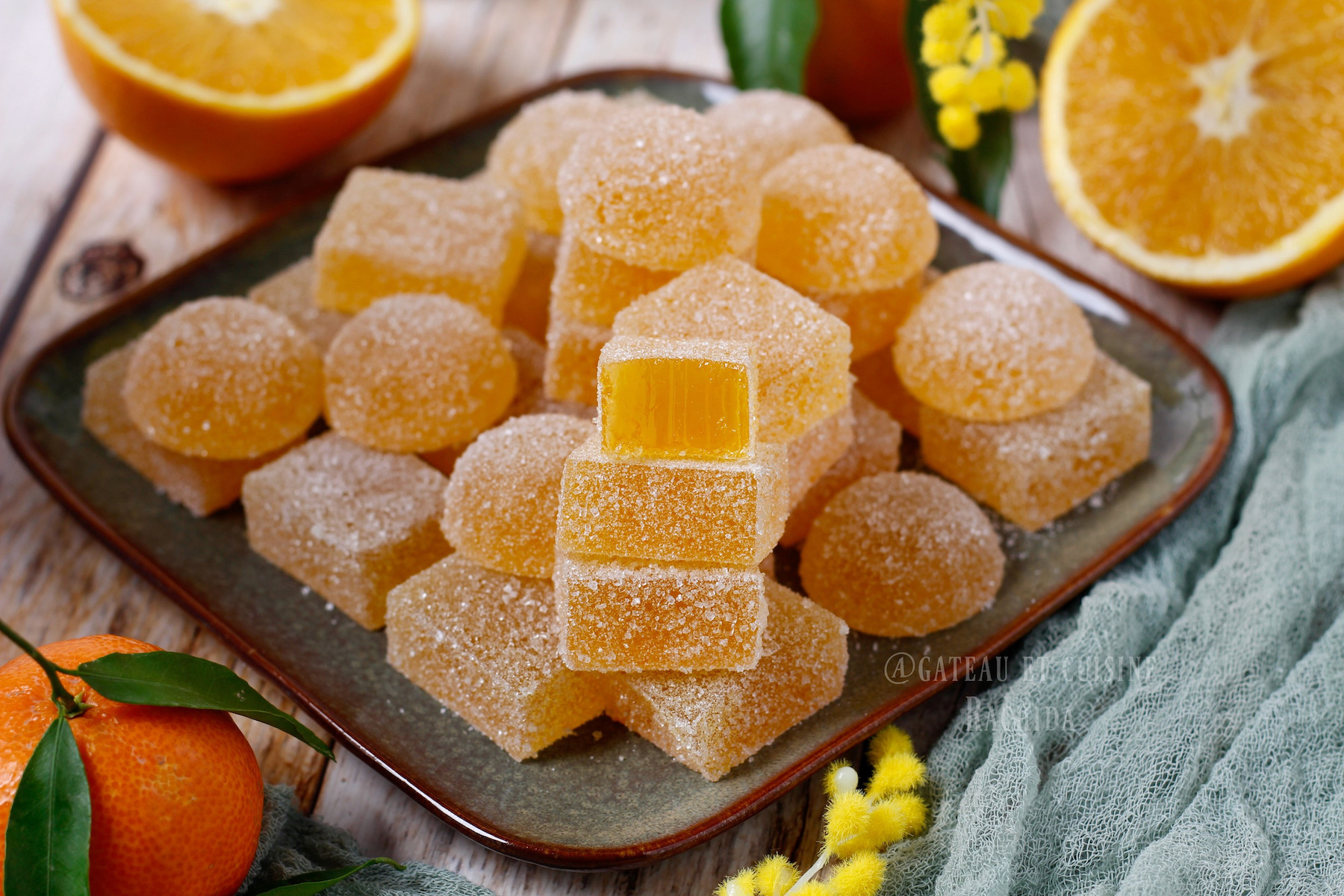
9. Cut into small squares, then roll each piece in granulated sugar.
10. Let them dry for a few hours, turning the pieces from time to time before storing them. Separate each layer with a sheet of parchment paper.
Storing Orange Pâte de Fruits
Pâte de fruits keeps very well when protected from moisture. Once rolled in sugar and fully dried, place the pieces in an airtight container. Separate each layer with parchment paper to prevent them from sticking together. Stored at room temperature in a dry place, pâte de fruits will keep for several months without any problem.
Pâte de fruits can also be frozen, as long as it is not coated in sugar before freezing. After thawing, let it dry at room temperature for a few hours so the surface becomes dry again. You can then roll it in sugar as usual.
Orange Pâte de Fruit (Jelly Candies)
INGREDIENTS
- 500 ml orange juice or a blend of orange juice and clementine or tangerine juice
- 10 g finely grated orange zest
- 500 g granulated sugar
- 50 g granulated sugar to mix with the pectin
- 100 g glucose syrup
- 25 g yellow pectin
- 35 g lemon juice
- sugar for coating
PREPARATION
- Prepare the frame in which the pâte de fruits will be poured. I used a 16 cm frame (6.3 inches) and a silicone mold for the remaining mixture. You can also use an 18 cm frame (7 inches). Line the bottom of the frame with plastic wrap, stretch it well and secure it to the outside edges. Place the frame on a rigid baking sheet.
- Mix the pectin with 50 g (1.8 oz) of the sugar to prevent lumps when adding it to the mixture.
- In a large, high sided saucepan, heat the orange juice, glucose syrup and orange zest over medium heat.
- When the mixture reaches 50°C (122°F), add the pectin in a steady stream while stirring constantly to prevent lumps.
- Increase the heat to high and wait for the mixture to return to a boil. Then add the sugar (500g / 1.1 lb)little by little so the mixture does not lose its boil, while stirring.
- Place the thermometer probe in the saucepan. When the mixture reaches 108°C (226°F), remove the saucepan from the heat and immediately add the lemon juice. Stir, then pour quickly, as the setting process begins at this stage.
- Pour the hot mixture into a measuring cup if you want to fill silicone molds. Pour into the frame to a thickness of about 2 cm (3/4 inch thick), then pour the remaining mixture into the cavities of the silicone mold.
- Let the pâte de fruits set for 12 hours before unmolding, even if it already seems set after 2 to 3 hours.
- Cut into small squares, then roll each piece in granulated sugar.
- Let them dry for a few hours, turning the pieces from time to time before storing them. Separate each layer with a sheet of parchment paper.
Thank you for your visit and your comments.