The white mirror glaze is perfect for coating mousse cakes (french entremets) and yule logs, giving them an ultra glossy finish. It is made with white chocolate, glucose, and sweetened condensed milk or cream. Vanilla bean seeds are sometimes added for a more refined look. It will instantly elevate your mousse cakes with a beautiful mirror effect in a pure white finish.
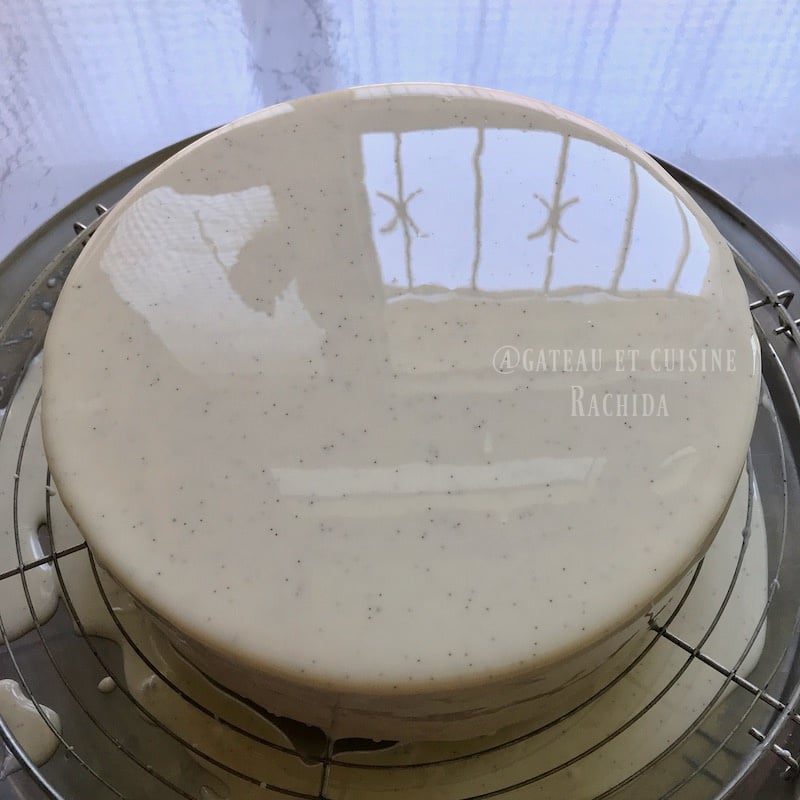
Easy White Mirror Glaze
I love mirror glaze because it gives desserts a beautiful, professional finish. It is a must have in pastry making. I have several recipes that will be very useful if you enjoy baking. You will find in particular the ultra glossy chocolate mirror glaze, which can be made with white chocolate, dark chocolate, or milk chocolate, for a guaranteed mirror shine.
I then shared a version made without glucose or sweetened condensed milk, which is just as good. I will add the links to those recipes below.
Many of you asked how to make a white mirror glaze, so I decided to write this article to answer that question clearly.
This glaze is the same as the chocolate mirror glaze mentioned above. The only difference is that it is a white chocolate mirror glaze. I sometimes add vanilla bean seeds, but this is completely optional.
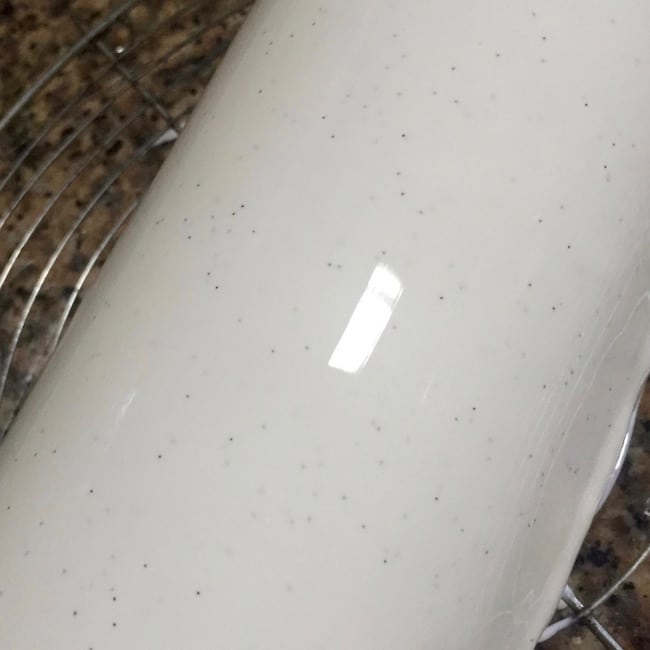
white chocolate glaze
Table of Contents
How to make a flawless white mirror glaze?
To achieve a perfect white and fully opaque mirror glaze, it is often recommended to add a small amount of titanium dioxide. However, for several years now, this ingredient, also known as the food additive E171, has raised health concerns and has been widely debated. I do not know at what dosage it becomes harmful. When I first made this glaze, it was some time ago and this issue was not yet discussed.
I tried to find a white food coloring, but those I came across, despite being labeled as natural, actually contained E171.
You can simply choose to leave it out while waiting for clearer information. The glaze will still be shiny, but slightly less white. The final color will also depend on the white chocolate you use.
I recommend using Ivoire or Opalys white chocolate from Valrhona, or Zéphyr white chocolate from Cacao Barry.
This white mirror glaze should be poured over mousse cakes made with light colored mousses, such as this vanilla mousse yule log, to achieve a clean and even coverage.
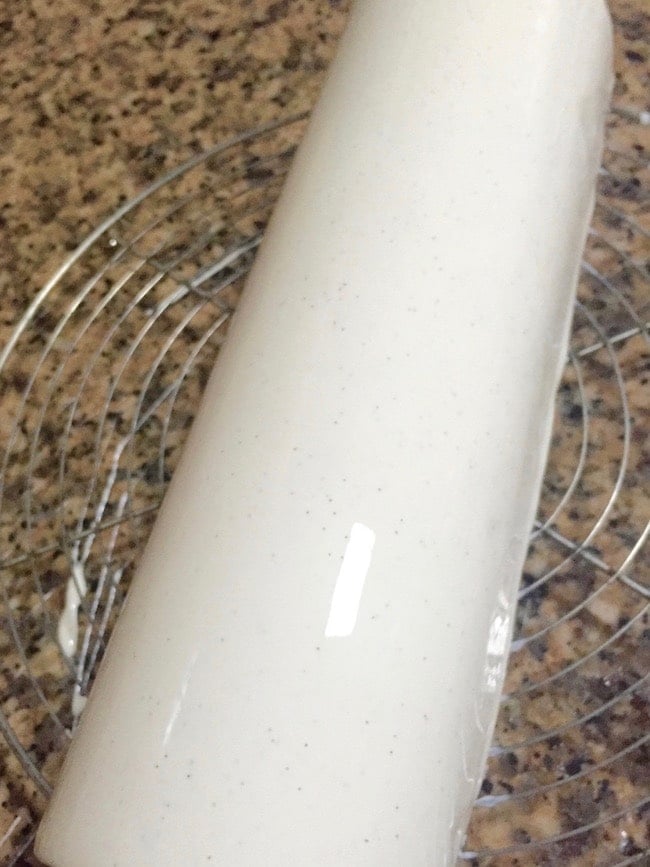
Ingredients:
Note: You can find the printable recipe at the end of the article.
Preferably prepare the day before glazing the mousse cake.
This quantity is enough for a 20 to 22 cm mold (8 to 9 inch). For a 30 cm yule log (12 inch), multiply the recipe by 1.5.
-
- 75 g water (2.6 oz)
- 150 g granulated sugar (5.3 oz)
- 150 g glucose syrup (5.3 oz)
- 150 g white chocolate (5.3 oz), Ivoire white chocolate from Valrhona, which is very white
- 100 g sweetened condensed milk (3.5 oz) or, preferably, heavy cream with 30% fat (3.5 oz) to enhance the white color
- 10 g powdered gelatin 200 bloom (0.35 oz) or 5 gelatin sheets of 2 g each. I sometimes use 150 bloom gelatin sheets weighing 3.4 g, also known as bronze, and the result works very well.
Edit 2024: I now use only 9 g of gelatin (0.32 oz) or 4 1/2 gelatin sheets, and the result is perfect. - 60 g water (2 oz) if using powdered gelatin, for blooming
- White food coloring, as needed, until the desired color is reached. Personally, I no longer use it for the reasons explained above.
- 1 plump vanilla bean or 1 1/2 vanilla beans, using only the seeds (optional)
Note: You can replace the sweetened condensed milk used in some of my glaze recipes with heavy cream at 30% fat. The result is the same. For this white mirror glaze, I recommend using cream to enhance the white color.
I recommend using a kitchen scale for this type of recipe, and if possible, also having a precision scale for small quantities.
Preparation steps:
1. Bloom the gelatin sheets in a large bowl of cold water for 10 to 15 minutes. If using powdered gelatin, bloom it with 60 g (2 oz) water, about six times its weight, then refrigerate for at least 20 minutes.
2. Place the glucose syrup, sugar, vanilla bean seeds, and water in a saucepan. Bring to a boil and cook until the temperature reaches 103 °C (217 °F). Stir occasionally without splashing the sides of the pan. If splashes occur, clean the sides with a damp pastry brush.
3. Pour the hot syrup through a fine mesh strainer over the sweetened condensed milk or the heavy cream, then add the bloomed gelatin, well squeezed if using sheets.
4. Gently mix with a spatula, then pour the mixture over the white chocolate and the food coloring into a tall, narrow container, such as a measuring jug or a container suitable for an immersion blender. Let it sit for one minute, then mix again with the spatula.
5. Using an immersion blender, mix carefully. This step should be done gently to avoid creating air bubbles.
6. Blend while holding the container slightly tilted and the blender at an angle, making sure the blade stays fully submerged at all times. Do not lift it out until the mixture is completely smooth.
7. Pour the glaze through a fine mesh strainer into an airtight container, then cover it directly on the surface with plastic wrap. Refrigerate.
8. The next day, gently reheat the glaze in a saucepan over a water bath or in the microwave until it reaches 38 to 40 °C (100 to 104 °F).

9. Remove the glaze from the water bath from time to time, stir, then return it to the water bath or the microwave. Repeat several times to avoid exceeding the desired temperature and to fully melt the glaze.
10. Pour the glaze into a tall, narrow container. Using an immersion blender, mix carefully for 3 to 4 minutes to eliminate all air bubbles.
11. Let the temperature drop to 33 to 34 °C (91 to 93 °F), depending on the desired fluidity, then glaze the frozen mousse cake straight from the freezer.
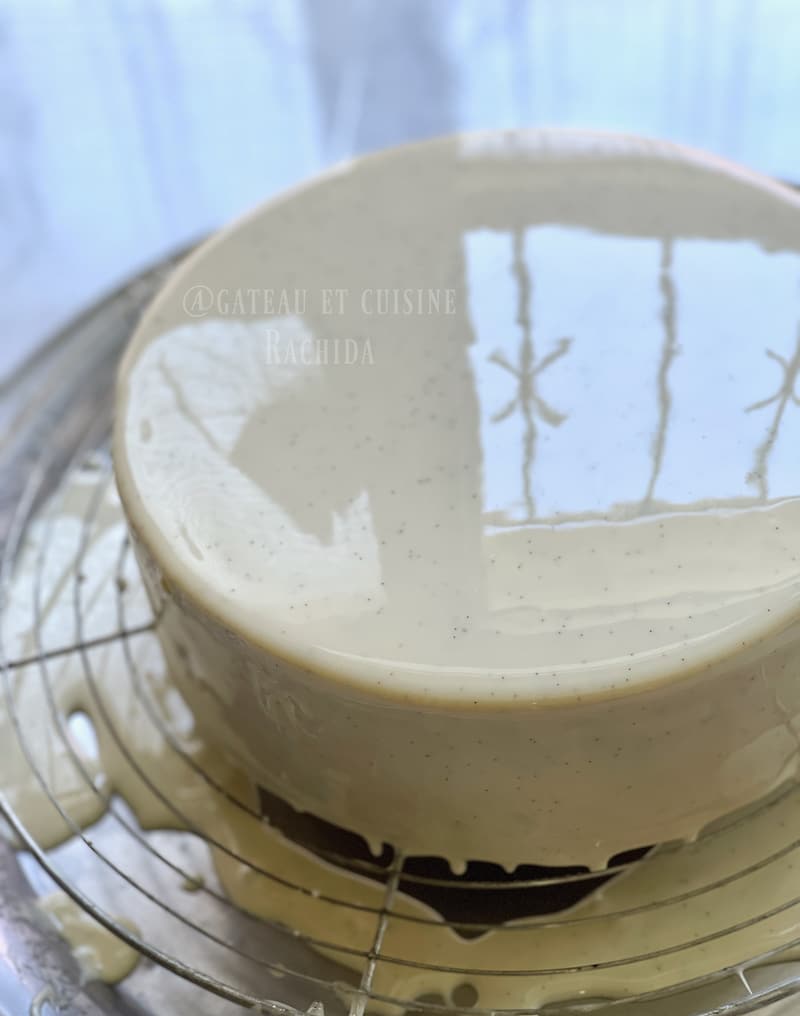
Other glaze recipes you might like:
Chocolate and cocoa glaze recipe
Glaze without glucose or condensed milk

White Chocolate Mirror Glaze
INGRÉDIENTS
- Preferably prepare the day before glazing the mousse cake.
- This quantity is enough for a 20 to 22 cm mold 8 to 9 inch. For a 30 cm yule log (12 inch), multiply the recipe by 1.5.
- 75 g water
- 150 g granulated sugar
- 150 g glucose syrup
- 150 g white chocolate Ivoire white chocolate from Valrhona, which is very white
- 100 g sweetened condensed milk or, preferably, heavy cream with 30% fat (3.5 oz) to enhance the white color
- 10 g powdered gelatin 200 bloom or 5 gelatin sheets of 2 g each. I sometimes use 150 bloom gelatin sheets weighing 3.4 g, also known as bronze, and the result works very well.
- Edit 2024: I now use only 9 g of gelatin (0.32 oz) or 4 1/2 gelatin sheets, and the result is perfect.
- 60 g water if using powdered gelatin, for blooming
- White food coloring as needed, until the desired color is reached. Personally, I no longer use it for the reasons explained above.
- 1 plump vanilla bean or 1 1/2 vanilla beans using only the seeds (optional)
PRÉPARATION
- Bloom the gelatin sheets in a large bowl of cold water for 10 to 15 minutes. If using powdered gelatin, bloom it with 60 g (2 oz) water, about six times its weight, then refrigerate for at least 20 minutes.
- Place the glucose syrup, sugar, vanilla bean seeds, and water in a saucepan. Bring to a boil and cook until the temperature reaches 103 °C (217 °F). Stir occasionally without splashing the sides of the pan. If splashes occur, clean the sides with a damp pastry brush.
- Pour the hot syrup through a fine mesh strainer over the sweetened condensed milk or the heavy cream, then add the bloomed gelatin, well squeezed if using sheets.
- Gently mix with a spatula, then pour the mixture over the white chocolate and the food coloring into a tall, narrow container, such as a measuring jug or a container suitable for an immersion blender. Let it sit for one minute, then mix again with the spatula.
- Using an immersion blender, mix carefully. This step should be done gently to avoid creating air bubbles.
- Blend while holding the container slightly tilted and the blender at an angle, making sure the blade stays fully submerged at all times. Do not lift it out until the mixture is completely smooth.
- Pour the glaze through a fine mesh strainer into an airtight container, then cover it directly on the surface with plastic wrap. Refrigerate.
- The next day, gently reheat the glaze in a saucepan over a water bath or in the microwave until it reaches 38 to 40 °C (100 to 104 °F).
- Remove the glaze from the water bath from time to time, stir, then return it to the water bath or the microwave. Repeat several times to avoid exceeding the desired temperature and to fully melt the glaze.
- Pour the glaze into a tall, narrow container. Using an immersion blender, mix carefully for 3 to 4 minutes to eliminate all air bubbles.
- Let the temperature drop to 33 to 34 °C (91 to 93 °F), depending on the desired fluidity, then glaze the frozen mousse cake straight from the freezer.
Thank you for your visit and your comments!