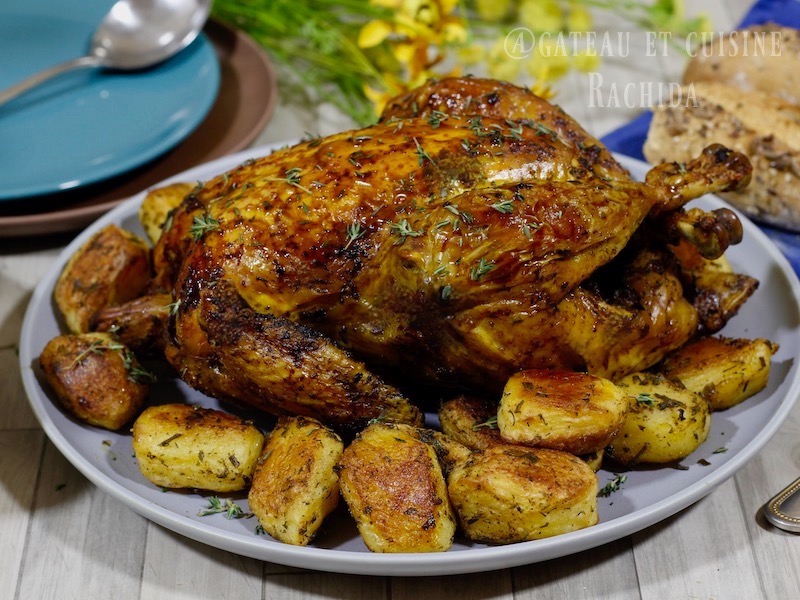
This roasted free-range capon recipe is rich, flavorful, and just as impressive as a classic oven-roasted turkey.
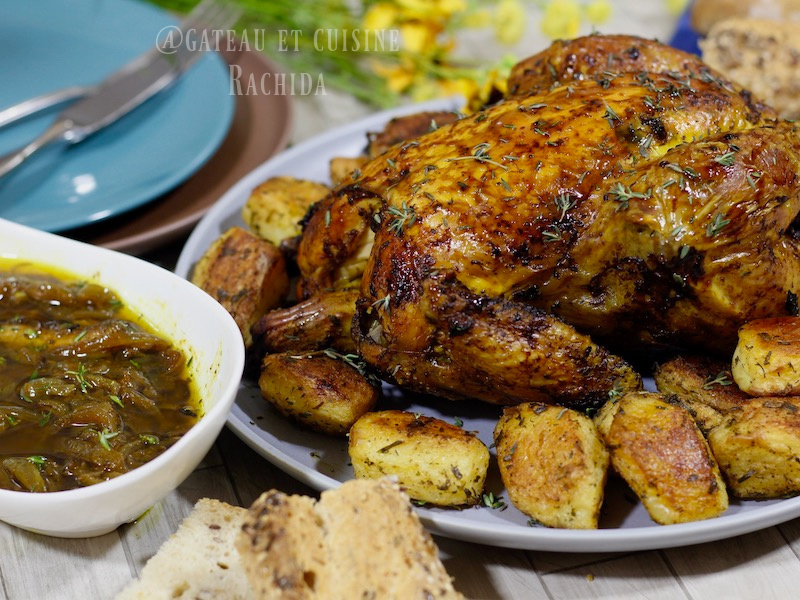
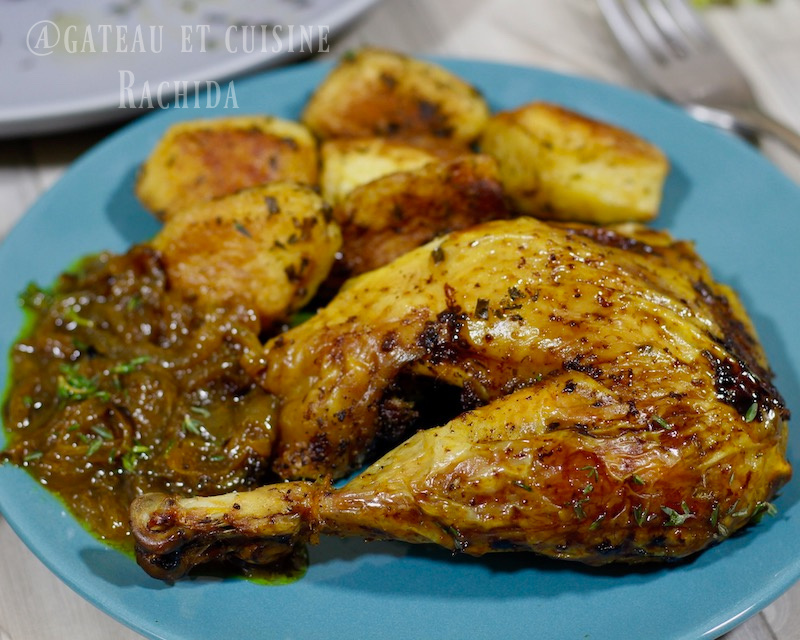
Served with baby potatoes and a slow-cooked onion sauce, this tender and juicy bird always makes a beautiful impression on the holiday table. It is the perfect centerpiece for a festive Christmas Eve dinner.
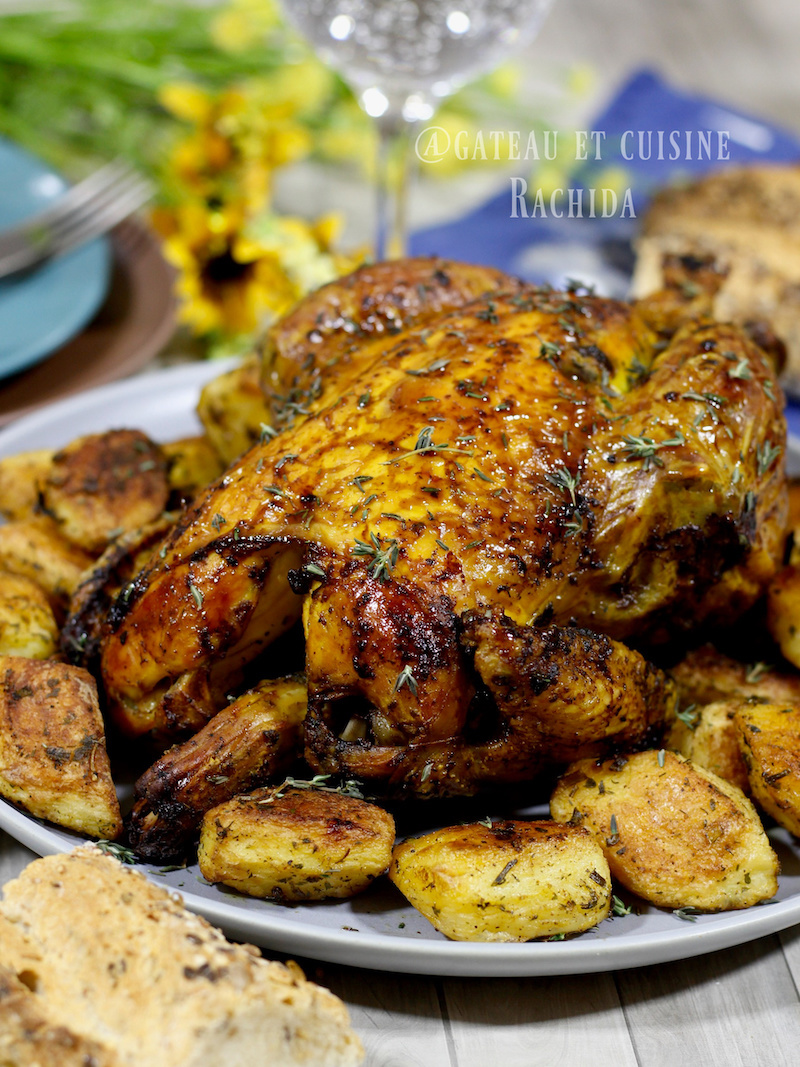
Table of Contents
Roasted Free-Range Capon for Christmas
Poultry is the most popular meat in our home, and we enjoy it regularly prepared in many different ways. Moroccan-style chicken is a dish I make very often. It is a true classic, well known and frequently served for special occasions and celebrations.
For holiday meals or Christmas dinners, especially when we are hosting French friends, I like to prepare a large bird. It may be an oven-roasted turkey, a lacquered duck, or a beautiful free-range capon. For this recipe, I chose to prepare a roasted free-range capon, a tender and flavorful dish with beautifully crisp skin that is perfect for a festive holiday meal.
As a side dish, we especially love baby potatoes, seasoned with Herbes de Provence or simply roasted with garlic.
How to choose and prepare a Christmas capon
Choosing a high quality capon is essential. Look for a free range or pasture raised capon, ideally air chilled and fed a natural, grain based diet. These criteria ensure tender, flavorful meat and a better overall texture once roasted.
Buy a capon labeled ready to cook, meaning it has already been plucked and cleaned. This will make preparation much easier. Try to clean the bird the day before or a few hours before cooking.
Clean the capon by rubbing it inside and out with half a lemon and a little coarse salt. Remove any remaining feathers, or carefully singe them over the flame of your stovetop. Reach into the cavity to remove any remaining innards, then rinse and pat the bird dry.

Should You Stuff a Capon?
That is a good question. It really comes down to personal taste, but I prefer not to stuff it. The meat is so naturally flavorful that it would be a shame to let the stuffing overpower it. If you do choose to stuff your capon, there is no need to serve it with vegetables or other sides. Simply present it on a bed of salad and that is all you need.
For the stuffing, you can make a classic mixture using ground meat, white sandwich bread, and poultry liver. You can also go for a sweet and savory option. Dice apples or pears and marinate them with a little balsamic vinegar, butter, and cinnamon. You may add a handful of raisins or finely chopped dried apricots. Finally, brush the capon with a little soy sauce and honey for a glossy, flavorful finish.
How to Get a Perfect Golden Brown Christmas Capon
The best option is to use softened butter mixed with spices. For a 3 kg (7 lb) capon, use about 2 generous tablespoons of butter and work it together with your spices. Gently loosen the skin over the breast and spread the butter directly underneath. This helps keep the meat moist while giving the skin a beautiful, even color.
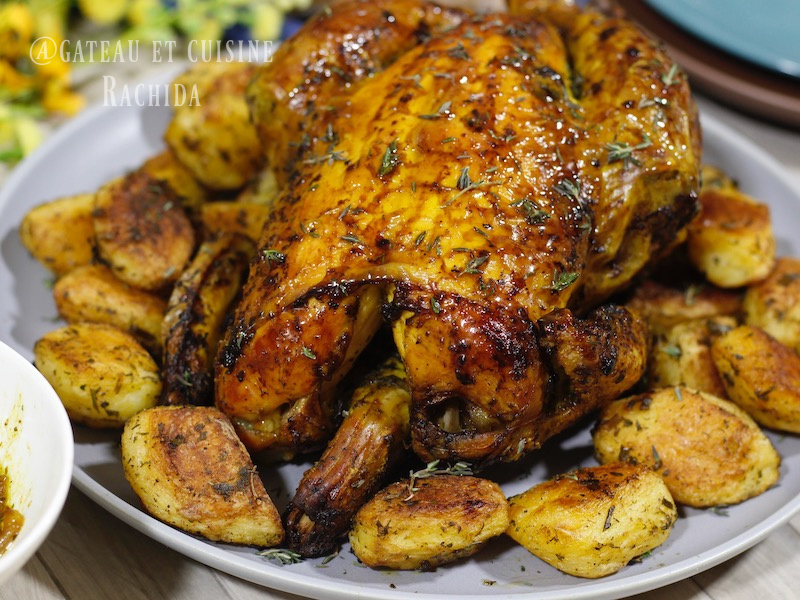
If you want even more flavor, add Herbes de Provence, minced garlic, and a spoonful of mustard to the butter. Be careful not to let the herbs burn during roasting. Toward the end of cooking, loosely cover the capon with a sheet of parchment paper. Remove it during the last 10 minutes so the skin can brown perfectly and develop a deep, appetizing color.
Cooking the Capon
The capon can be cooked entirely in the oven, or you can start by gently cooking it in a large pot with an onion, garlic, and a few spices, then finish roasting it in the oven. I often use this method, and it gives excellent results. It is the same approach I use for my Moroccan style chicken.
Simply simmer the bird in the pot for about 45 minutes, then transfer it to the oven to finish cooking at 300°F (150°C). This technique helps keep the meat tender, juicy, and full of flavor while still allowing the skin to brown beautifully in the oven.
For oven roasting, plan on about 1 hour per 1 kg (2.2 lb ) of poultry at a low temperature. I prefer slow roasting to avoid browning the outside too quickly while the inside is still undercooked. With gentle, low temperature cooking, the meat cooks evenly and stays tender and juicy.
Toward the end of cooking, you can increase the oven temperature to help the capon brown beautifully and develop a crisp, golden skin.
Tip: Just before serving, brush the capon lightly with a little soy sauce or oyster sauce. The flavor remains subtle, but it gives the skin a gorgeous color and an appetizing shine.
Ingredients
Note: You will find the printable recipe card at the end of the article.
- One free range capon, ready to cook, about 3 kg (7 lb)
- 1 large onion
- 1 teaspoon dried mixed herbs (optional, such as fines herbes, Ducros style)
- 1/2 teaspoon dried dill (optional)
- 1 teaspoon ground ginger
- 1/2 teaspoon ground black pepper
- 1/2 teaspoon paprika
- 1 tablespoon mustard
- 3 garlic cloves (1 minced, 2 whole)
- 2 sprigs fresh thyme and or rosemary
- 1 teaspoon salt
- 2 tablespoons butter
- 1 tablespoon olive oil
What to Serve with Capon
- 500 g baby potatoes or a mixed selection of vegetables (about 1.1 lb) such as broccoli, green beans, and carrots
- Herbes de Provence
- Garlic powder
- 1 sprig fresh thyme
- 1 tablespoon olive oil
Preparation Steps:
1. Mix the spices with the minced garlic clove, mustard, dried herbs (not whole sprigs), butter, and olive oil.
2. Rub the capon all over with the mixture. Gently loosen the skin over the breast and spread the spiced butter underneath.
3. Place the thyme and rosemary sprigs, along with the two whole garlic cloves, inside the cavity.
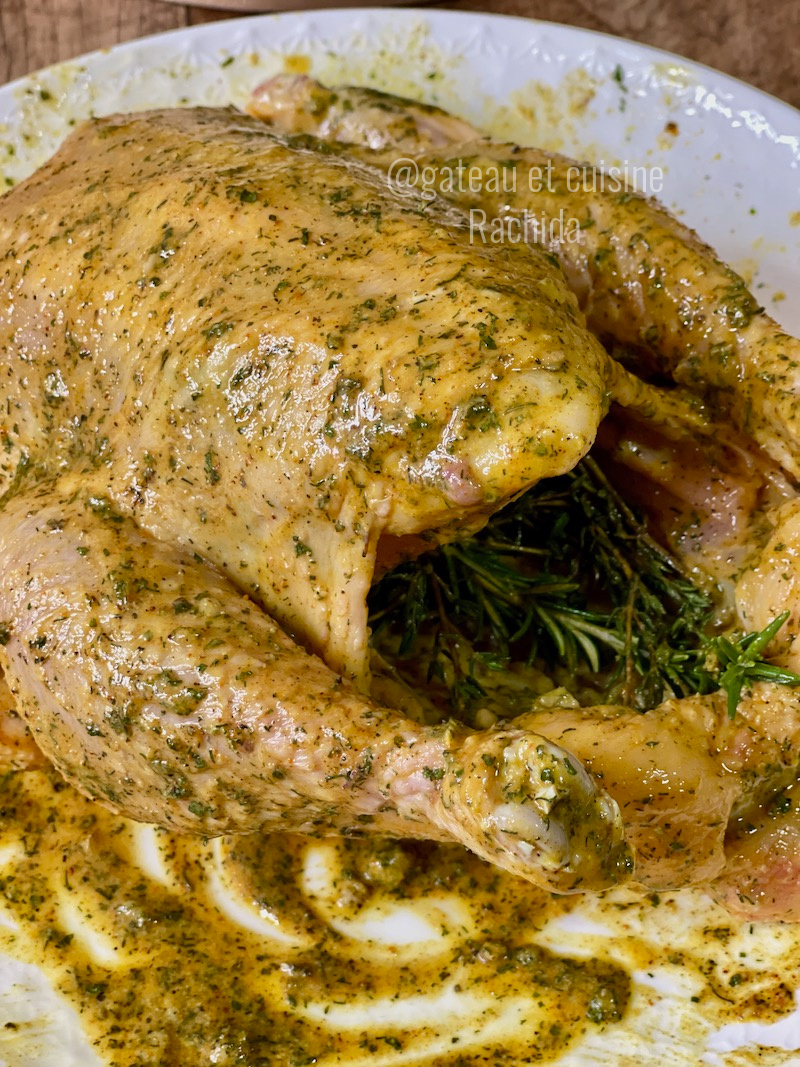
4. Cross the legs of the capon and tie them with kitchen twine. This helps the bird keep its shape while roasting. You can slip the legs through the opening near the tail, then cross and tie them securely.
5. Place the sliced onion in a deep roasting dish or casserole dish and set the capon on top. You may skip the onion if you prefer.
6. Roast at 300°F (150°C), allowing 45 minutes to 1 hour per 1kg (2.2 lb) of poultry. For a 3 kg (7 lb) capon, plan on about 3 hours of cooking time.
Chef’s tip: Toward the end of cooking, lightly sprinkle a small pinch of salt over the entire bird. This helps achieve a beautifully golden skin. Use a light hand, just a pinch is enough.
If you roasted the capon on a bed of sliced onions, lift it near the end of cooking and place it directly on an oven rack for the final minutes. This allows excess juices to drip away and helps the underside brown and crisp nicely.
Check for doneness
The easiest way to check if the capon is cooked is to insert a skewer into the meat where the thigh meets the breast. The juices should run clear, with no trace of pink or blood.
For a more precise method, and the one used by professionals, you can use a meat thermometer. Insert the probe into the thickest part of the capon and check that the internal temperature reads 165–180°F (75–82°C) for perfectly cooked, juicy meat.
Prepare the Side Dish
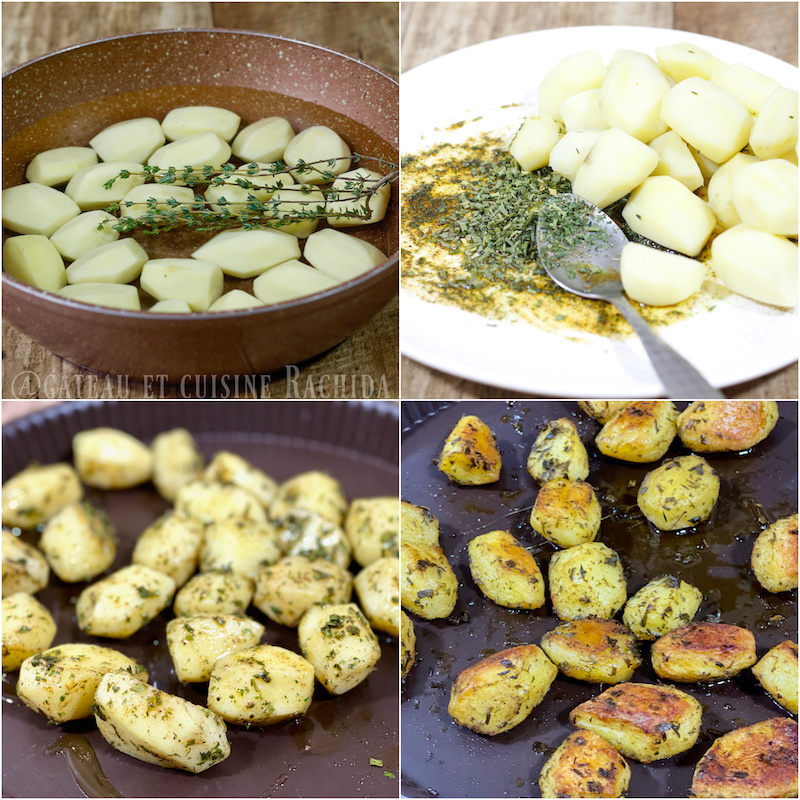
1. Peel and wash the baby potatoes. Place them in a large pot and cover with water. Add 1/2 teaspoon salt and a large sprig of fresh thyme. Cook for about 20 minutes, until just tender.
2. Drain the potatoes in a colander.
3. Mix the Herbes de Provence with the olive oil and garlic powder. Toss the baby potatoes in this mixture until well coated. Arrange them on a lightly oiled baking dish and place in the oven 20 minutes before the capon is done. Roast until the potatoes are golden brown.
4. If you prefer to use green beans, broccoli, or carrots, cut them into julienne strips and steam them, if possible. Then proceed in the same way as for the baby potatoes.
How to serve the capon
1. Once the capon is cooked, loosely cover it with a sheet of aluminum foil and let it rest for about 10 minutes before serving. This allows the meat to relax, making it more tender and helping it retain its juices and flavor.
2. Transfer the capon to a serving platter and remove the kitchen twine from the legs. Arrange the baby potatoes around the bird.
3. Mix 1 tablespoon oyster sauce with 1 tablespoon broth. Using a pastry brush, lightly brush the capon with this mixture. Sprinkle with a few fresh thyme leaves.
4. Spoon the slow cooked onions into a small sauce boat and serve alongside.
5. Serve the capon immediately and enjoy.
I hope this oven-roasted Christmas capon will inspire you to make it for Christmas, New Year’s Eve or any other occasion.

Oven-Roasted Capon with Baby Potatoes
INGRÉDIENTS
- One free range capon ready to cook, about 3 kg (7 lb)
- 1 large onion
- 1 teaspoon dried mixed herbs optional, such as fines herbes, Ducros style
- 1/2 teaspoon dried dill optional
- 1 teaspoon ground ginger
- 1/2 teaspoon ground black pepper
- 1/2 teaspoon paprika
- 1 tablespoon mustard
- 3 garlic cloves 1 minced, 2 whole
- 2 sprigs fresh thyme and or rosemary
- 1 teaspoon salt
- 2 tablespoons unsalted butter
- 1 tablespoon olive oil
To Serve with the Capon
- 500 g baby potatoes or a mixed selection of vegetables such as broccoli, green beans, and carrots
- Herbes de Provence
- Garlic powder
- 1 sprig fresh thyme
- 1 tablespoon olive oil
PRÉPARATION
- Mix the spices with the minced garlic clove, mustard, dried herbs (not whole sprigs), butter, and olive oil.
- Rub the capon all over with the mixture. Gently loosen the skin over the breast and spread the spiced butter underneath.
- Place the thyme and rosemary sprigs, along with the two whole garlic cloves, inside the cavity.
- Cross the legs of the capon and tie them with kitchen twine. This helps the bird keep its shape while roasting. You can slip the legs through the opening near the tail, then cross and tie them securely.
- Place the sliced onion in a deep roasting dish or casserole dish and set the capon on top. You may skip the onion if you prefer.
- Roast at 300°F (150°C), allowing 45 minutes to 1 hour per 1kg (2.2 lb) of poultry. For a 3 kg (7 lb) capon, plan on about 3 hours of cooking time.
- Chef’s tip: Toward the end of cooking, lightly sprinkle a small pinch of salt over the entire bird. This helps achieve a beautifully golden skin. Use a light hand, just a pinch is enough.
- If you roasted the capon on a bed of sliced onions, lift it near the end of cooking and place it directly on an oven rack for the final minutes. This allows excess juices to drip away and helps the underside brown and crisp nicely.
Check for doneness
- The easiest way to check if the capon is cooked is to insert a skewer into the meat where the thigh meets the breast. The juices should run clear, with no trace of pink or blood.
- For a more precise method, and the one used by professionals, you can use a meat thermometer. Insert the probe into the thickest part of the capon and check that the internal temperature reads 165–180°F (75–82°C) for perfectly cooked, juicy meat.
Prepare the Side Dish
- Peel and wash the baby potatoes. Place them in a large pot and cover with water. Add 1/2 teaspoon salt and a large sprig of fresh thyme. Cook for about 20 minutes, until just tender.
- Drain the potatoes in a colander.
- Mix the Herbes de Provence with the olive oil and garlic powder. Toss the baby potatoes in this mixture until well coated. Arrange them on a lightly oiled baking dish and place in the oven 20 minutes before the capon is done. Roast until the potatoes are golden brown.
- If you prefer to use green beans, broccoli, or carrots, cut them into julienne strips and steam them, if possible. Then proceed in the same way as for the baby potatoes.
How to serve the capon
- Once the capon is cooked, loosely cover it with a sheet of aluminum foil and let it rest for about 10 minutes before serving. This allows the meat to relax, making it more tender and helping it retain its juices and flavor.
- Transfer the capon to a serving platter and remove the kitchen twine from the legs. Arrange the baby potatoes around the bird.
- Mix 1 tablespoon oyster sauce with 1 tablespoon broth. Using a pastry brush, lightly brush the capon with this mixture. Sprinkle with a few fresh thyme leaves.
- Spoon the slow cooked onions into a small sauce boat and serve alongside.
- Serve the capon immediately and enjoy.
- I hope this oven-roasted Christmas capon will inspire you to make it for Christmas, New Year’s Eve or any other occasion.
Thank you for visiting my blog and for your comments.