German cheesecake (Käsekuchen) is a classic dessert from Germany, also popular in the Alsace region of France, where it’s known as Käsküeche.
It’s loved for its light and airy texture, similar to Japanese cheesecake, and is traditionally made with quark, giving it a creamy, mousse-like filling and a crisp crust.
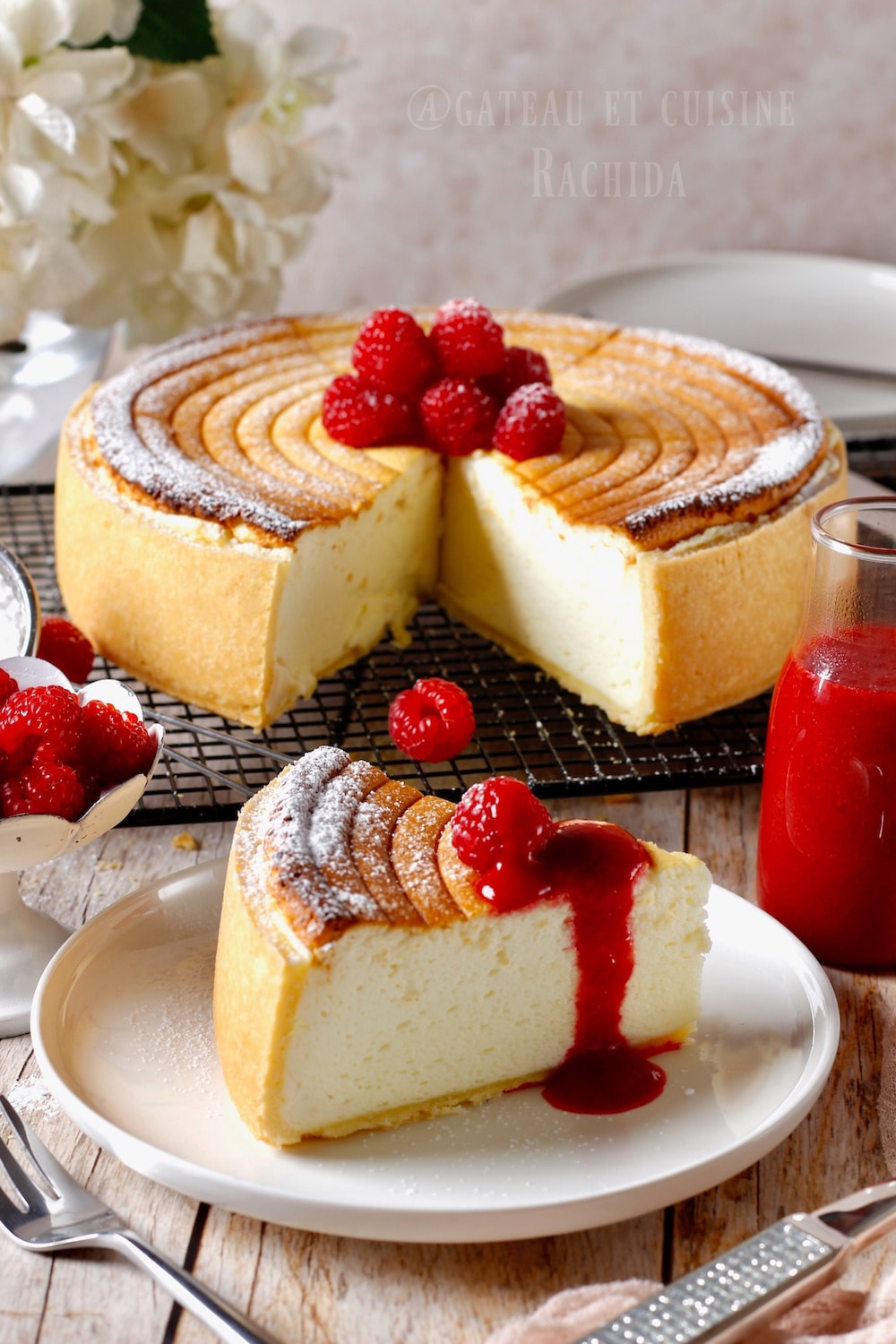
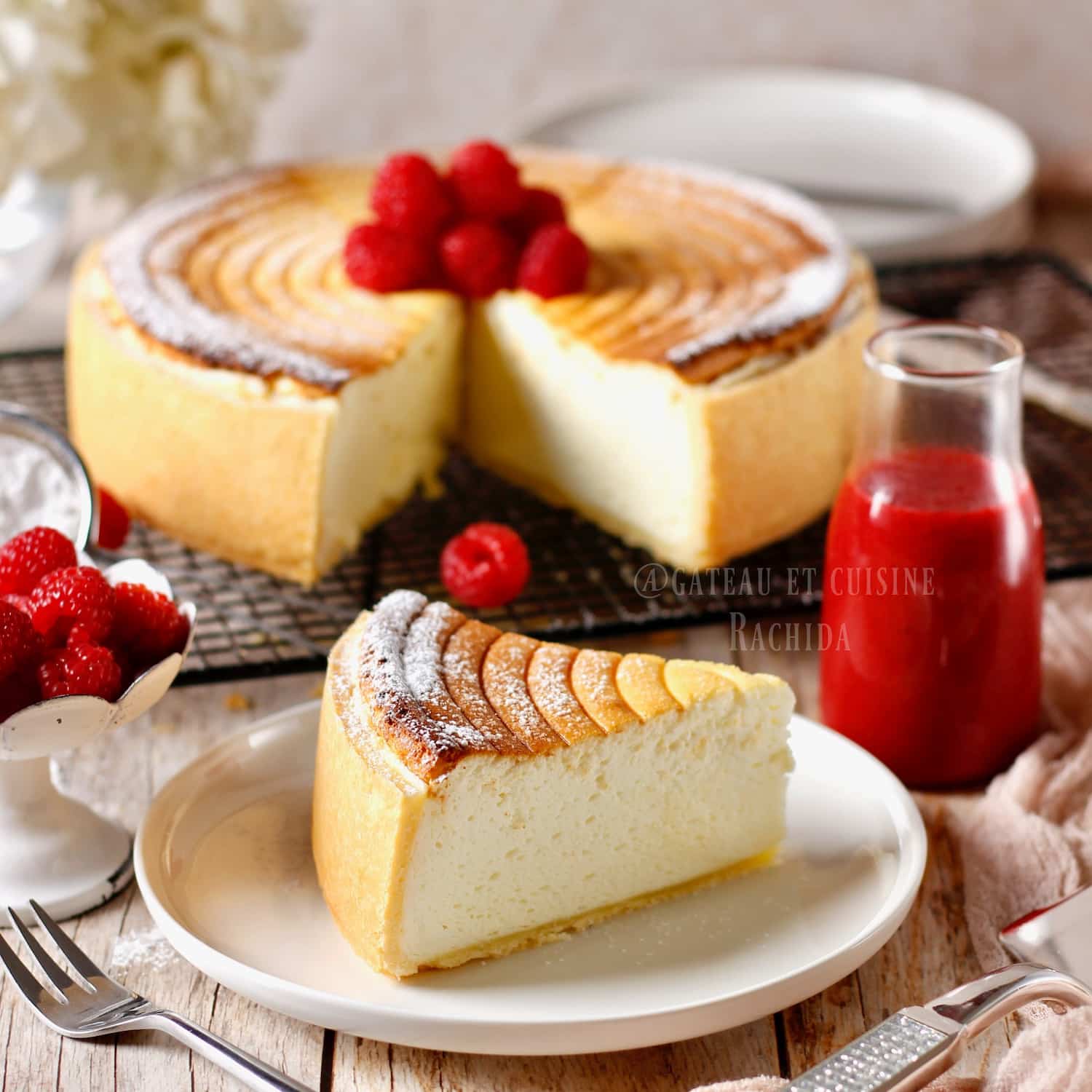
Light, airy, and delicate, this German cheesecake (Käsekuchen) has a soft, creamy filling that melts in your mouth. It’s a simple homemade dessert made with everyday ingredients, yet elegant enough for any occasion. As it bakes, it gently rises like a soufflé, creating its light texture.
Just as satisfying as classic cheesecake, it stands out with a lighter, more airy texture that makes each bite feel soft and delicate without being heavy.
Its light and airy texture comes from the combination of whipped egg whites and quark, a traditional German fresh cheese, while still keeping a smooth and creamy consistency. It can be enjoyed plain, lightly dusted with powdered sugar, or served as a comforting dessert to share with family and friends.
You can also customize it by adding raisins or by spreading a layer of lemon curd or fruit compote over the crust before adding the filling. It’s even better served with a berry sauce.
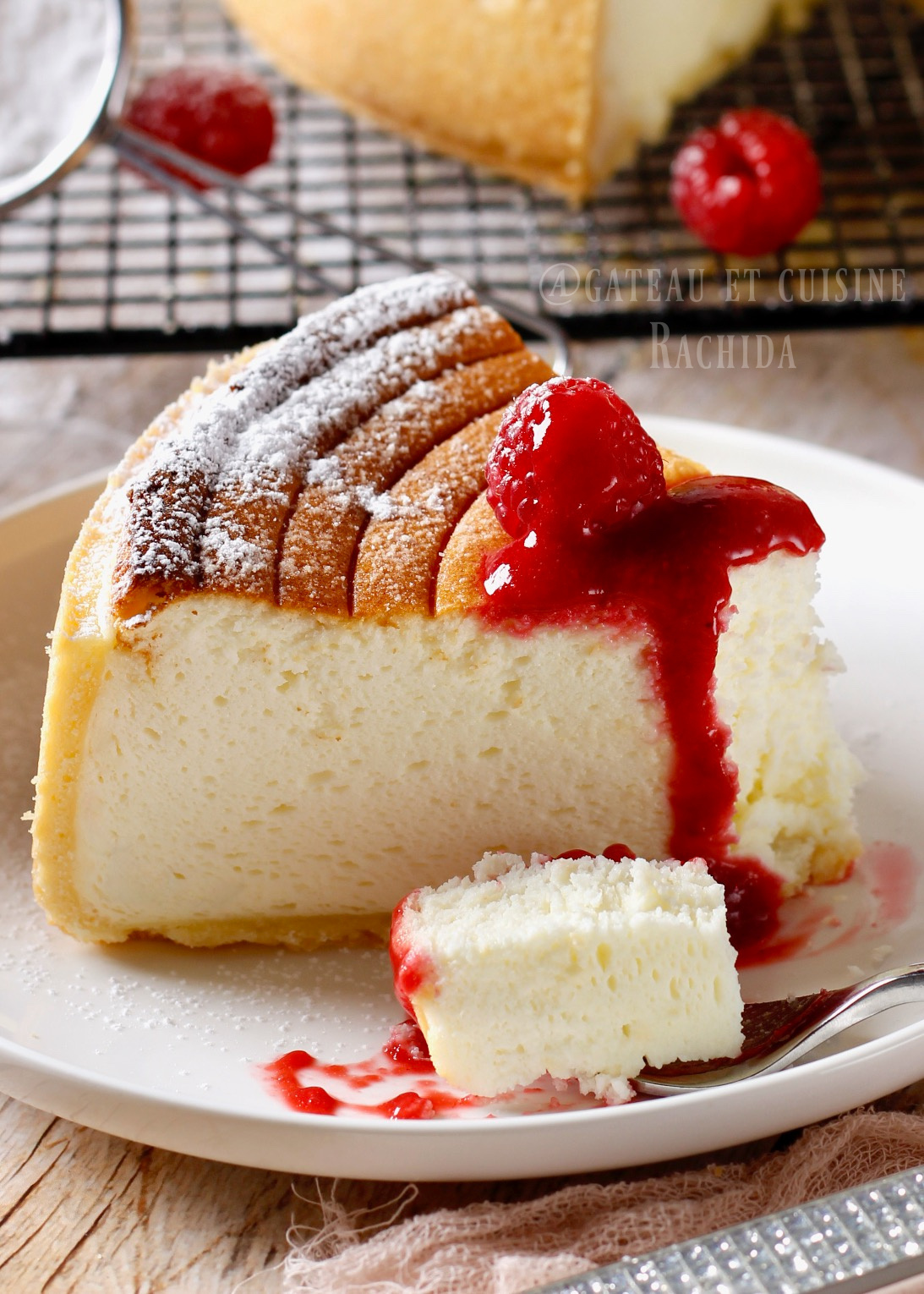
Table of Contents
What you’ll love about German cheesecake
Easy to make: A simple recipe with everyday ingredients, perfect even for beginners.
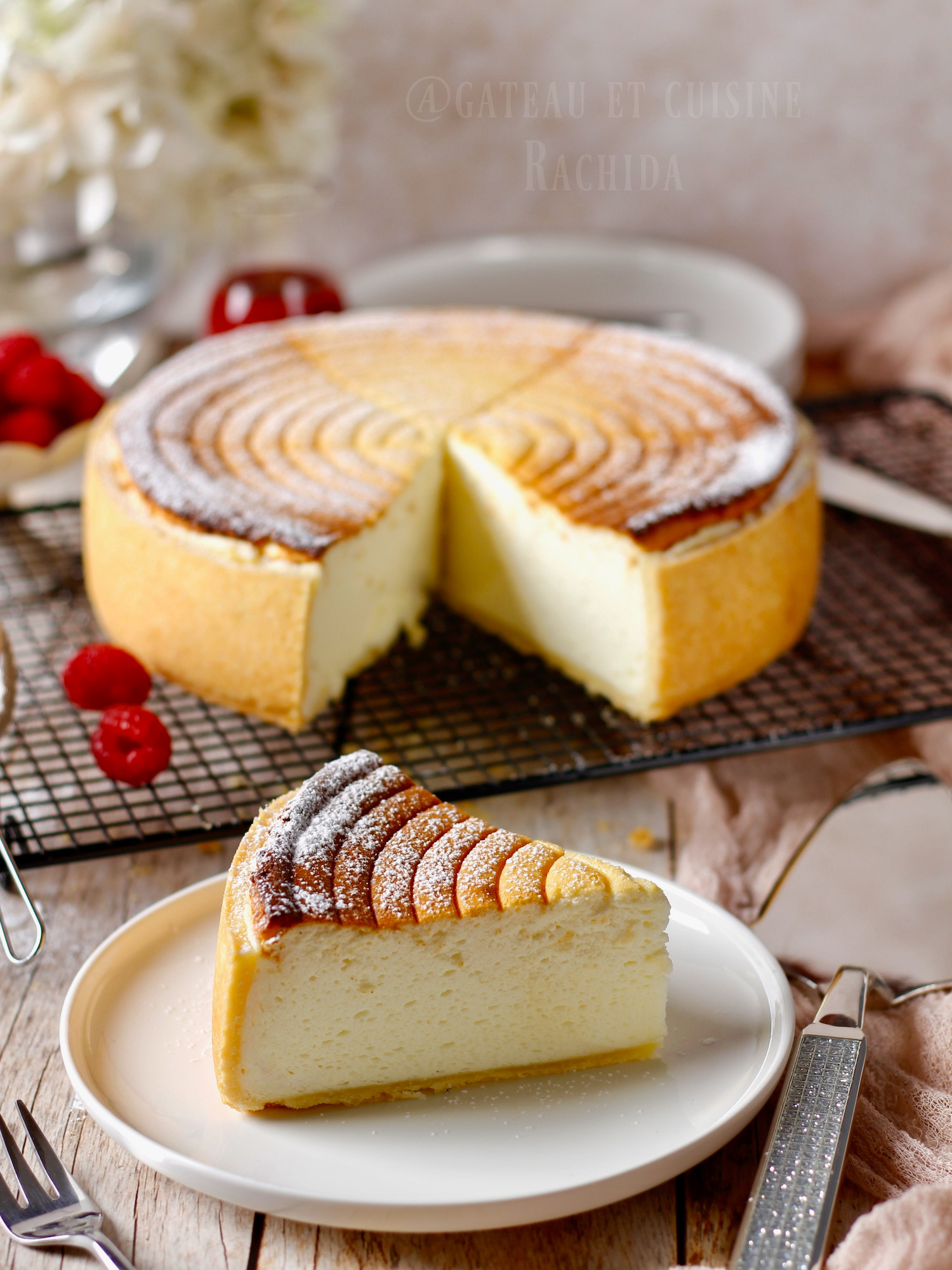
Light and airy texture: Thanks to whipped egg whites, the filling is soft and delicate, with a texture that melts in your mouth. The contrast between the crisp crust and the light filling makes every bite enjoyable.
Budget-friendly: A family-style recipe made with simple, affordable ingredients.
American cheesecake vs German cheesecake
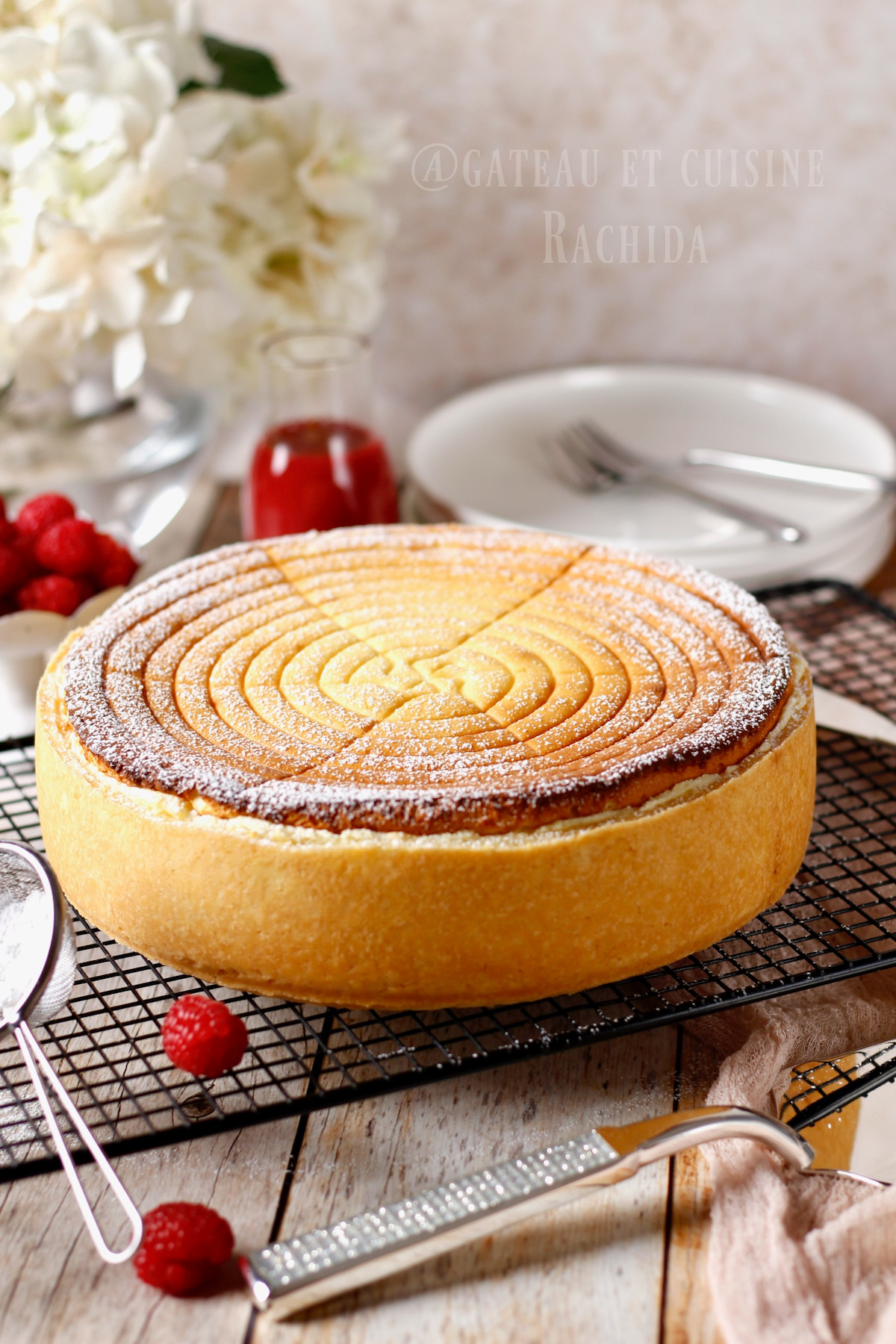
German cheesecake is light and airy, thanks to whipped egg whites, and is made with quark, a fresh cheese. It’s usually baked in a pastry crust, similar to a tart.
American cheesecake, on the other hand, is denser and creamier, made with cream cheese and typically set on a graham cracker crust.
Both are delicious, just different in texture, ingredients, and overall richness.
Ingredients:
Note: You’ll find the printable recipe card at the end of this post..
9-inch (24 cm) springform pan, 2.5 inches (6 cm) deep
Shortcrust pastry
- 300 g all-purpose flour (10.6 oz) (cake flour can also be used)
- 150 g unsalted butter, cold and cut into pieces (5.3 oz)
- 2 small egg yolks or 1 large (about 30 g / 1 oz)
- 60 ml cold water (2 fl oz)
- 1/2 teaspoon salt
- 35 g granulated sugar (1.2 oz)
Cheesecake Filling
- 5 medium eggs (separated)(for more accuracy: 150 g egg whites / 5.3 oz)
- 55 g flour (1.9 oz)
- 25 g cornstarch (0.9 oz)
- 120 g granulated sugar (4.2 oz)
- 850 g quark (7 to 8% fat) (30 oz) (or fromage blanc, see notes below)
- Zest of 1 lemon
- 2 packets vanilla sugar (15 g / 0.5 oz) or 2 teaspoons vanilla extract
Topping
- Powdered sugar
- Fruit sauce (raspberry, for example)
Ingredient Notes
Quark / Fromage blanc: Quark is a traditional German fresh cheese with a smooth, creamy texture and a mild, slightly tangy flavor. It’s similar to French fromage blanc, but usually thicker and less watery.
If you can’t find quark, you can use fromage blanc, or substitute with full-fat Greek yogurt. If using Greek yogurt, choose a thick, creamy variety for the best texture.
You can also use a mixture of mascarpone and Greek yogurt (equal parts) for a rich and creamy texture close to quark. Avoid using cottage cheese, as the texture is too grainy.
Crust: A shortcrust pastry works best. It gives a crisp base that holds the filling well.
Flour and cornstarch: Using both helps create a light texture while keeping the filling stable and well set.
How to Make German Cheesecake
Shortcrust Pastry
Prepare the dough preferably the day before, or at least 1 hour in advance.
You can also check my dedicated article on shortcrust pastry or the pastry used for French custard tart (flan pâtissier).
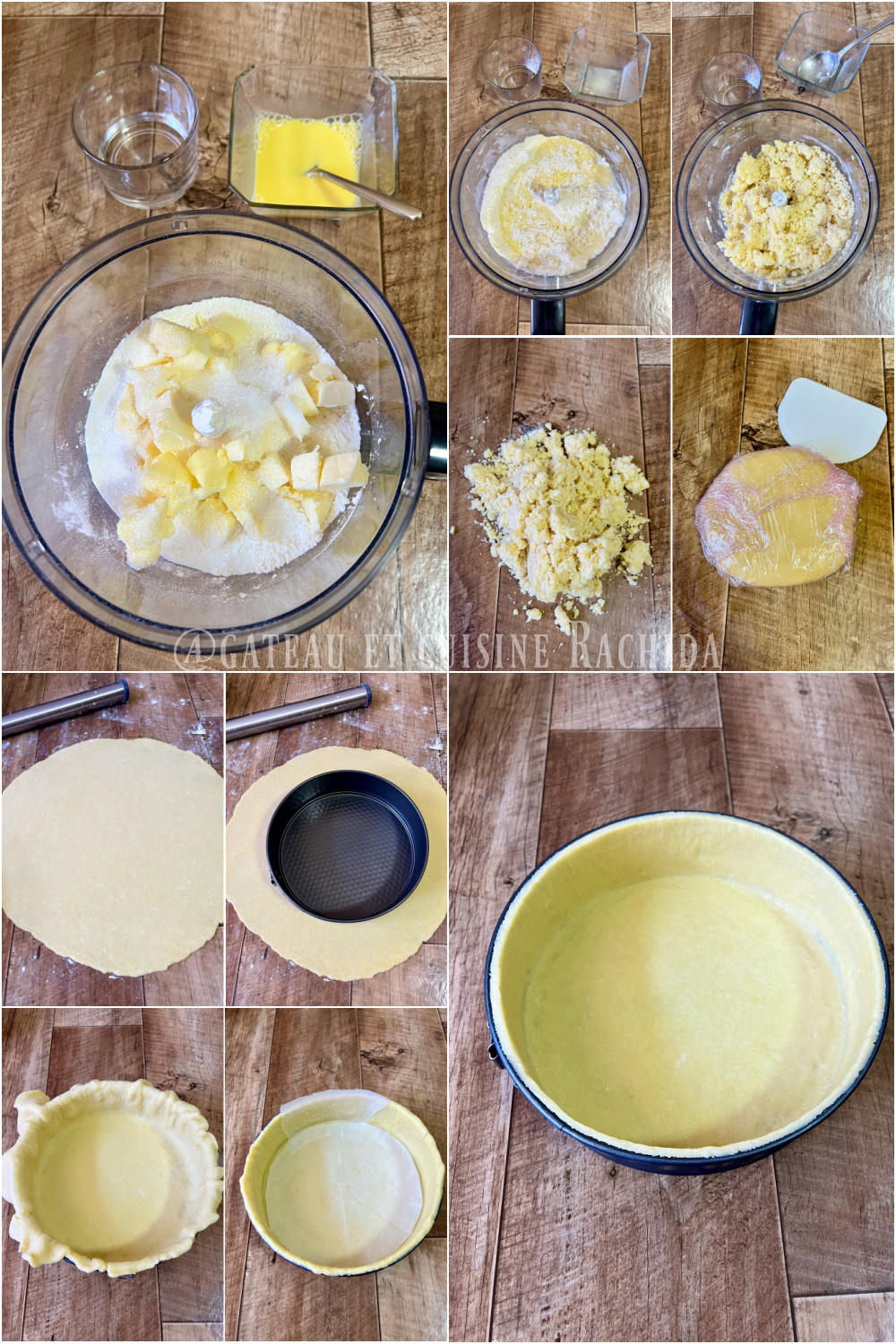
In a food processor, combine the flour, sugar, salt, and cold butter (not too hard), cut into pieces. Pulse until the mixture resembles coarse crumbs. Then add the cold water mixed with the egg yolk.
Mix just until the dough comes together. It should be cohesive and smooth, with no visible flour, but not fully formed into a ball. Turn it out onto a work surface and gently press the dough forward with the palm of your hand 2 to 3 times to bring it together without kneading.
Shape the dough into a ball, flatten it slightly, and wrap it in plastic wrap. Chill in the refrigerator for at least 45 minutes to 1 hour to help prevent shrinking during baking.
After chilling, roll out the dough on a lightly floured surface to about 4 mm (1/6 inch) thick. Line a 9-inch (24 cm) springform pan, greased and lightly floured, and trim the excess with a knife.
Note: For a smooth crust after baking, use a piece of parchment paper to press the dough firmly into the pan. Then run your fingers over it in a back-and-forth motion to smooth the surface and remove any air bubbles or marks.
Prick the bottom of the crust with a fork and place it in the freezer while you prepare the filling.
Cheesecake Filling
Preheat the oven to 350°F (180°C).
Separate the egg whites from the yolks.
Beat the egg whites until stiff peaks form, gradually adding one-third of the sugar.
In a large mixing bowl, whisk the egg yolks with the remaining sugar, vanilla extract (or vanilla sugar), and lemon zest until slightly pale.
Sift in the flour and cornstarch, then gently mix until smooth, without overwhipping.
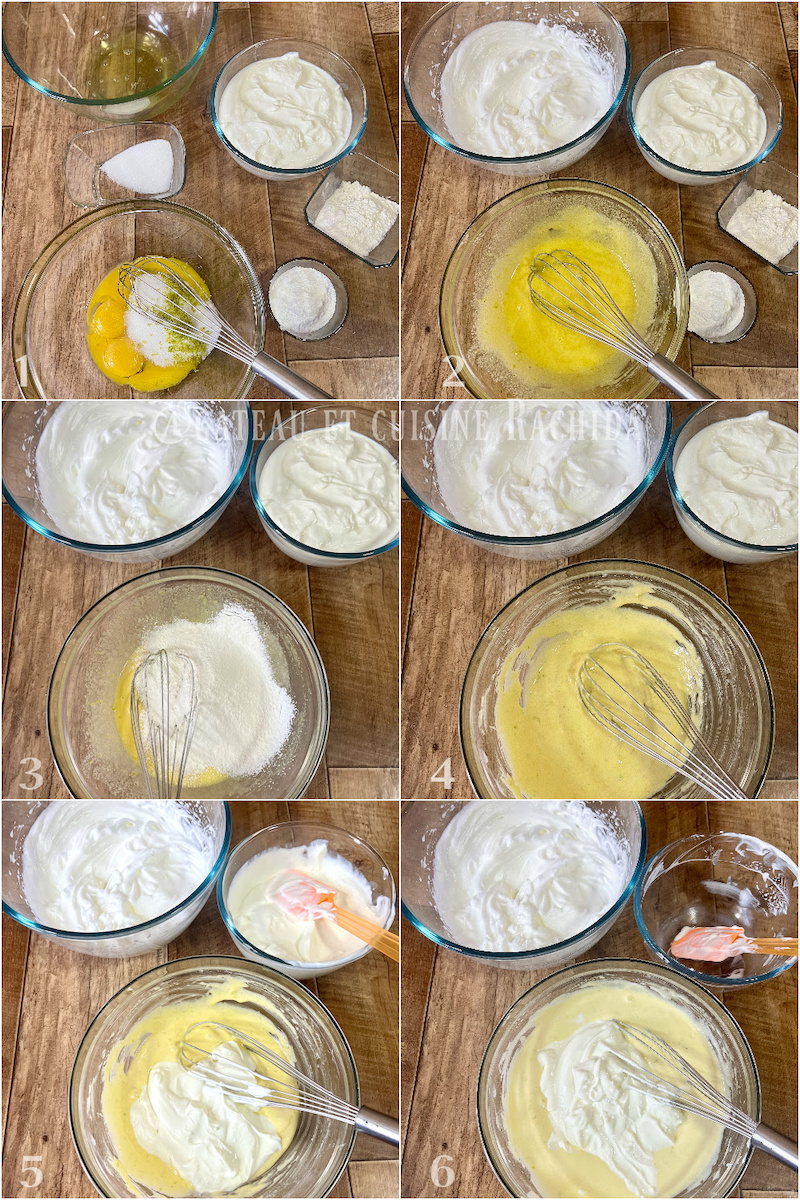
Add the quark in three additions, mixing gently without whisking, until smooth and well combined.
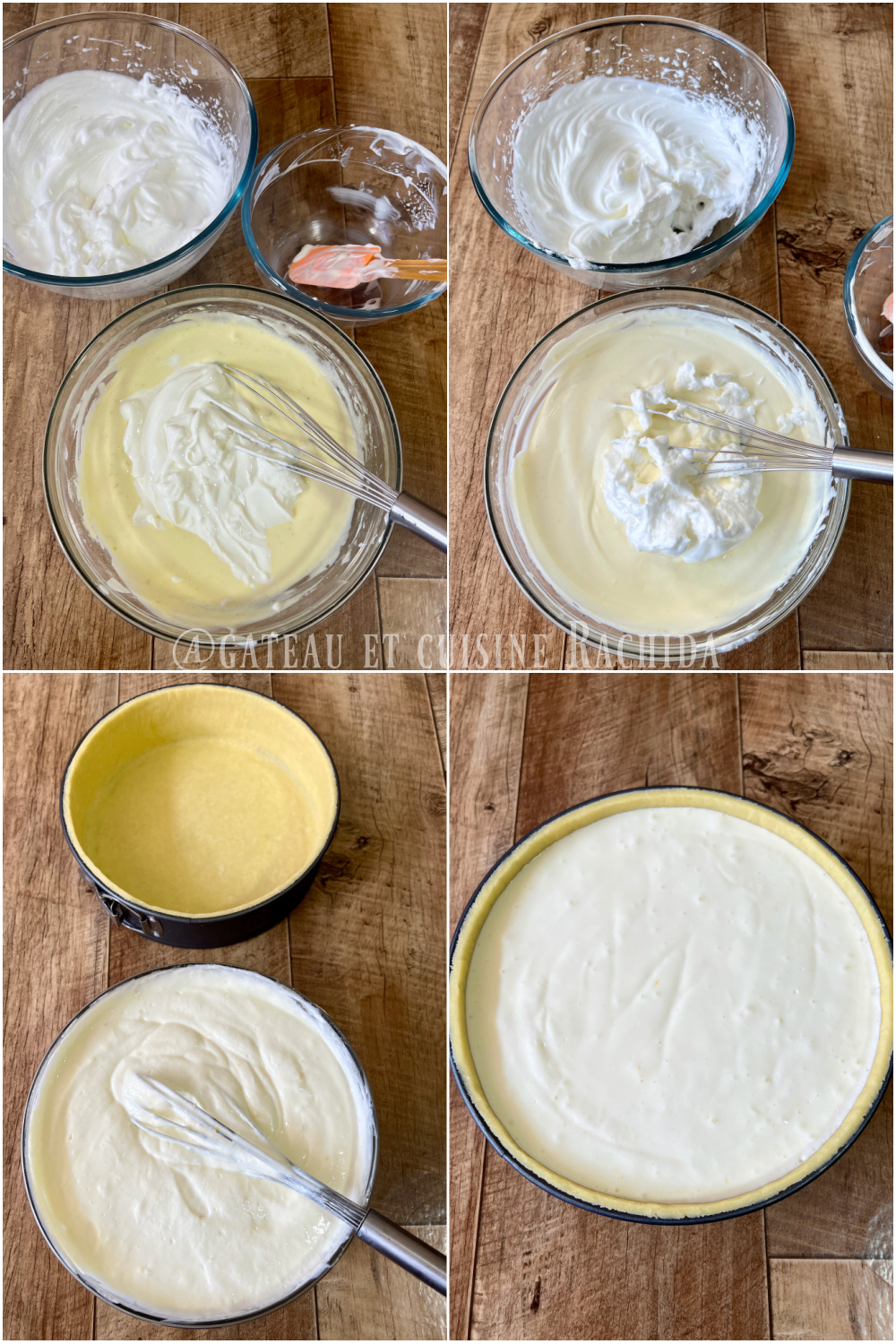
Fold in the whipped egg whites gradually, working in batches. I like to use a whisk, lifting the mixture from the bottom up to keep it light and airy. Gently tap the whisk against the side of the bowl from time to time. You can also use a spatula if you’re worried about deflating the egg whites.
Remove the pan from the freezer and pour the filling over the crust. Then gently stir with a wooden skewer to release any air bubbles, which helps prevent small holes in the filling after baking.
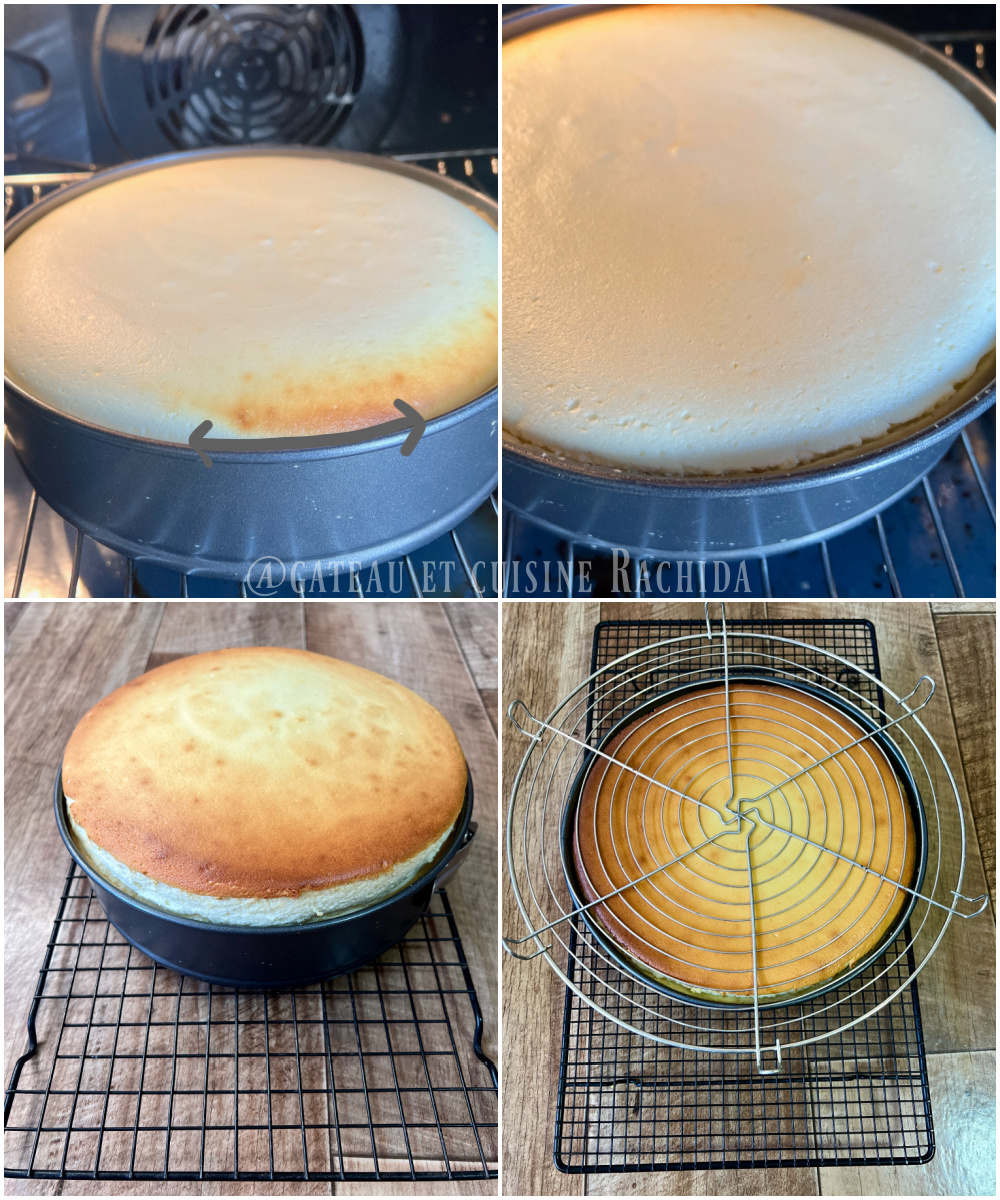
Bake for about 1 hour 15 minutes, or less depending on your oven. If you notice it browning too quickly toward the end, place a baking sheet on the rack above to protect the top. You can also loosely cover it with aluminum foil. The cheesecake will rise significantly, like a soufflé.
To prevent the top from cracking, after about 25 minutes of baking, gently run the tip of a knife around the edge of the cheesecake, between the filling and the crust, as shown by the gray arrow in the photo below.
At the end of baking, the cheesecake should be set and no longer jiggly. If you insert a wooden skewer into the center, it should come out clean.
Remove the pan from the oven and let the cheesecake settle until it drops back to the level of the pan. This takes about 10 minutes. Then place a round cooling rack on top and carefully invert it.
Let it rest this way for about 30 minutes, then gently remove the pan. Allow it to cool completely before turning it right side up onto a serving plate. Refrigerate for at least 2 to 3 hours. It tastes even better when fully chilled.
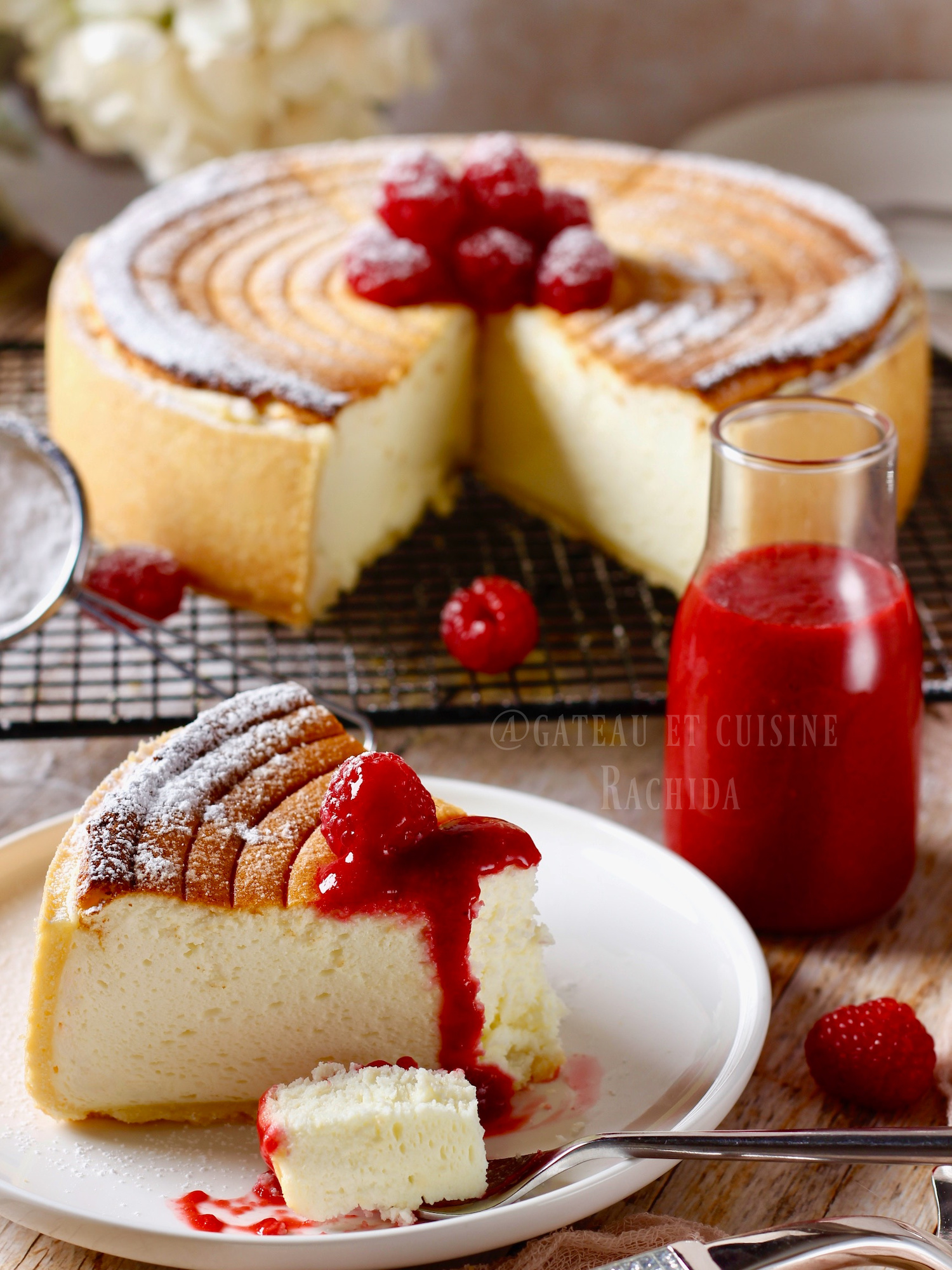
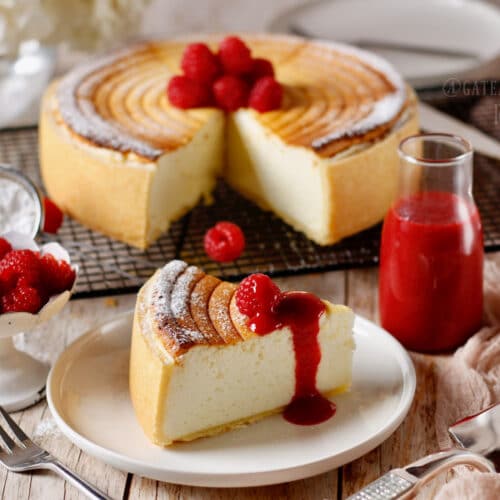
Serve the cheesecake dusted with powdered sugar and accompanied by a raspberry sauce.
Tips and tricks for the Perfect German Cheesecake
How to prevent cracks on top?
During baking, the cheesecake rises like a soufflé. The filling naturally pulls away slightly from the sides of the crust, allowing it to lift as it expands. This helps prevent cracks from forming on the surface.
However, in some spots, the filling may stick to the sides of the pan, which can lead to cracks on the surface. To prevent this, after about 25 minutes of baking, gently run the tip of a knife around the edge of the cheesecake, between the filling and the crust. You can see exactly where to do this in the photo above.
How to prevent the cheesecake from sinking?
The cheesecake rises like a soufflé during baking, then settles back down to the level of the crust. What you want to avoid is it collapsing further and forming a dip in the center.
To prevent this, once baking is complete, remove the cheesecake from the oven and place it on a cooling rack. Let it settle until it reaches the level of the crust, then carefully invert it onto a round cooling rack.
Turning it upside down helps prevent it from sinking. The rack will also leave a light grid pattern on the surface.
How to Get a Nicely Golden Crust?
You can blind bake the crust for about 25 minutes at 350°F (180°C) before adding the filling. Line the crust with parchment paper and fill it with pie weights or dried chickpeas.
Storage
Store the cheesecake in the refrigerator for 3 to 4 days, well covered or in an airtight container to prevent it from drying out.
Take it out of the fridge about 20 to 30 minutes before serving so it can soften and regain its full flavor.
It can also be frozen, preferably in individual slices. To serve, let it thaw slowly in the refrigerator.
More recipes you might enjoy
German Cheesecake Recipe (Käsekuchen)
INGREDIENTS
Shortcrust pastry
- 300 g all-purpose flour (cake flour can also be used)
- 150 g unsalted butter cold and cut into pieces
- 2 small egg yolks or 1 large about 30 g / 1 oz
- 60 ml cold water
- 1/2 teaspoon salt
- 35 g granulated sugar
Cheesecake Filling
- 5 medium eggs separated(for more accuracy: 150 g egg whites / 5.3 oz)
- 55 g flour
- 25 g cornstarch
- 120 g granulated sugar
- 850 g quark 7 to 8% fat (1.9 lb) (or fromage blanc, See notes above for ingredient details and substitutions)
- Zest of 1 lemon
- 2 packets vanilla sugar or 2 teaspoons vanilla extract 15 g / 0.5 oz
Topping
- Powdered sugar
- Fruit sauce raspberry, for example
PREPARATION
Shortcrust Pastry
- Prepare the dough preferably the day before, or at least 1 hour in advance.
- In a food processor, combine the flour, sugar, salt, and cold butter (not too hard), cut into pieces. Pulse until the mixture resembles coarse crumbs. Then add the cold water mixed with the egg yolk.
- Mix just until the dough comes together. It should be cohesive and smooth, with no visible flour, but not fully formed into a ball. Turn it out onto a work surface and gently press the dough forward with the palm of your hand 2 to 3 times to bring it together without kneading.
- Shape the dough into a ball, flatten it slightly, and wrap it in plastic wrap. Chill in the refrigerator for at least 45 minutes to 1 hour to help prevent shrinking during baking.
- After chilling, roll out the dough on a lightly floured surface to about 4 mm (1/6 inch) thick. Line a 9-inch (24 cm) springform pan, greased and lightly floured, and trim the excess with a knife.
- Prick the bottom of the crust with a fork and place it in the freezer while you prepare the filling.
Cheesecake Filling
- Preheat the oven to 350°F (180°C).
- Separate the egg whites from the yolks.
- Beat the egg whites until stiff peaks form, gradually adding one-third of the sugar.
- In a large mixing bowl, whisk the egg yolks with the remaining sugar, vanilla extract (or vanilla sugar), and lemon zest until slightly pale.
- Sift in the flour and cornstarch, then gently mix until smooth, without overwhipping.
- Add the quark in three additions, mixing gently without whisking, until smooth and well combined.
- Fold in the whipped egg whites gradually, working in batches. I like to use a whisk, lifting the mixture from the bottom up to keep it light and airy. Gently tap the whisk against the side of the bowl from time to time. You can also use a spatula if you’re worried about deflating the egg whites.
- Remove the pan from the freezer and pour the filling over the crust. Then gently stir with a wooden skewer to release any air bubbles, which helps prevent small holes in the filling after baking.
- Bake for about 1 hour 15 minutes, or less depending on your oven. If you notice it browning too quickly toward the end, place a baking sheet on the rack above to protect the top. You can also loosely cover it with aluminum foil. The cheesecake will rise significantly, like a soufflé.
- To prevent the top from cracking, after about 25 minutes of baking, gently run the tip of a knife around the edge of the cheesecake, between the filling and the crust, as shown by the gray arrow in the photo below.
- At the end of baking, the cheesecake should be set and no longer jiggly. If you insert a wooden skewer into the center, it should come out clean.
- Remove the pan from the oven and let the cheesecake settle until it drops back to the level of the pan. This takes about 10 minutes. Then place a round cooling rack on top and carefully invert it.
- Let it rest this way for about 30 minutes, then gently remove the pan. Allow it to cool completely before turning it right side up onto a serving plate. Refrigerate for at least 2 to 3 hours. It tastes even better when fully chilled.
- Serve the cheesecake dusted with powdered sugar and accompanied by a raspberry sauce.
Thank you for your visit and comments.